Is AI Coming for Our Jobs?

Vivek Chibber

Artificial intelligence is unlikely to produce permanent mass unemployment, Vivek Chibber argues. But without class struggle from below and state action, automation will deepen inequality and leave workers to bear its costs.
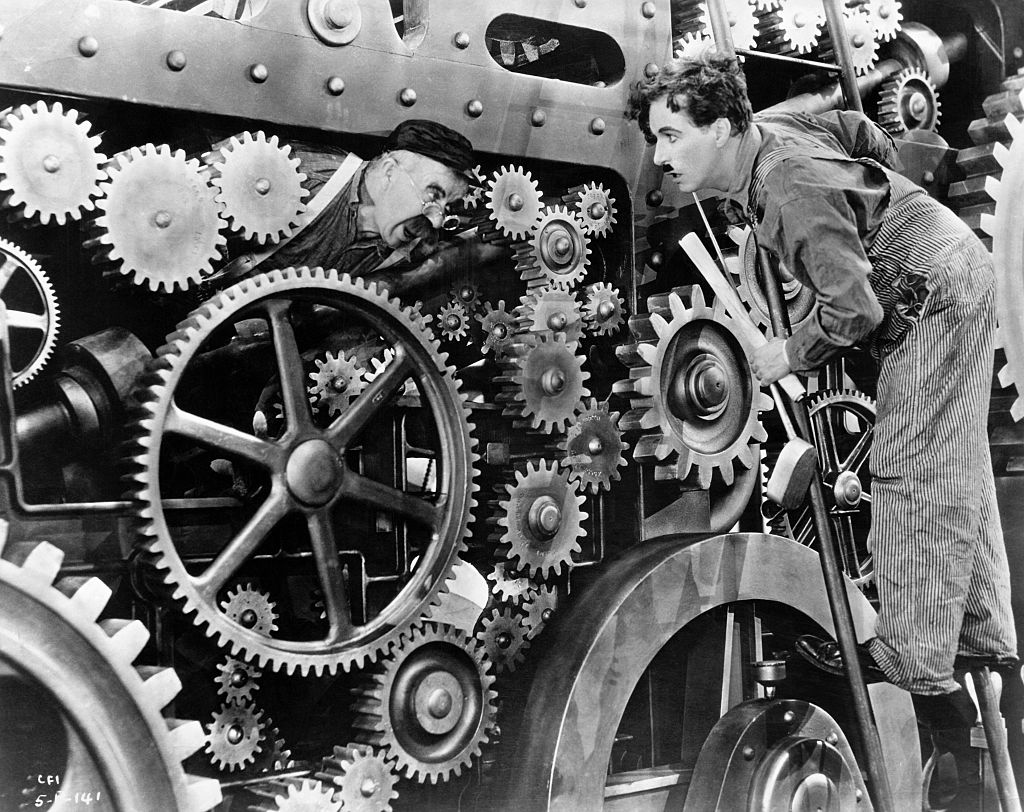
Whether AI is truly a revolutionary break from the past or just capital's latest technological tool, the answer is the same: challenge capitalists to harness the tech for human flourishing rather than profit. (Bettman Archive via Getty Images)

Interview by
Melissa Naschek

The developments in artificial intelligence appear to promise a radical transformation of modern work. But what happens if AI turns out to be much more like previous waves of technological change?

In this episode of the Jacobin Radio podcast Confronting Capitalism, Vivek Chibber and Melissa Naschek discuss the history of automation, the effects of technology on employment and wages, and why socialists should want to harness AI to create human flourishing.

Confronting Capitalism with Vivek Chibber is produced by Catalyst: A Journal of Theory and Strategy and published by Jacobin. You can listen to the full episode here. This transcript has been edited for clarity.


Melissa Naschek

People like Elon Musk and Sam Altman are now telling the world that artificial intelligence is coming to completely remake the entire American economy and replace us. Supposedly, they say, we’ll all be able to kick up our heels and live in a post-work utopia, but I think there are reasons to be suspicious. Do you think that these sorts of predictions could actually come true?

Vivek Chibber

I am very skeptical that they could come true, even though I think AI has the potential to be a new type of technology. And the reason I’m skeptical that they could come true is that we’ve seen waves of technological change before. We’ve seen revolutionary technologies in the past. We’ve also seen the same doubts and fears expressed in those contexts, and they have not come true in the past.

It’s certainly possible that AI could be so labor-displacing and revolutionary in its effects that it results in enormous job loss. That’s certainly possible. But there are two things we should keep in mind.

One is that it’s very early in the game. And what we’ve seen so far from artificial intelligence is that the labor market effects, the employment effects, have been very, very small. And secondly, to the extent that there have been any effects, it’s more like an extension and a deepening of what computers do. That is to say, it’s deepening the grooves along which technological change has occurred over the past thirty-five years. It isn’t a radically new kind of change.

Now, because we cannot predict the future, when we think about the likely effects of a change, like a new technology or a new form of automation, the best indicator of what we should expect is to look at the past.

How Technology Changes Work

Melissa Naschek

So what does the past tell us about the relationship between automation and job loss?

Vivek Chibber

Let’s start with what automation is. Automation is machines of some kind replacing things that workers used to do. This can be of two kinds.

An entire worker can be replaced. Consider a spinner in the nineteenth century who sits at home and turns wool into cloth. And then a new technology enters the textile sector that automates spinning, making the spinner obsolete. The result is that the entire job is gone.

But then consider a technician in the early twentieth century, when electricity enabled the invention of the electric drill. So now, with the electric drill, the manual task of drilling is replaced by an electric one, and later by a battery-operated one. The worker is not replaced, what’s replaced is a tool.

These are two kinds of automation. Both of them have one effect, which is that productivity increases, but they don’t both necessarily displace the worker. In one case, that of the electric drill, it just changes the task. In the other case, it replaces the worker.

Melissa Naschek

When you say productivity increases, can you just clarify what you mean by that?

Vivek Chibber

It means that more stuff can be made with the same amount of labor. There are different ways of measuring that.

Sometimes labor productivity is measured by looking at how much you can produce with the same workers in a certain amount of time, but that doesn’t really express what increasing labor productivity is. It’s not so much increasing production in the same amount of time but increasing production with the same amount of labor inputs. Now, those are hard to measure, and because they’re hard to measure, people substitute by looking at time.

Setting that aside, the main thing productivity increases do is make it possible to make more stuff with the same amount of work, or the same amount of stuff with less work. Either way, it potentially means you have to hire fewer people. Because you may have to hire fewer people, that often means people do end up losing their jobs when new technology is implemented. That’s the rational basis for the fear that technological innovation will result in job loss.

Now, what we’ve seen in the past is that there’s a difference between job losses in certain jobs and job losses in the aggregate — that is, total job loss. The theoretical question, which we’ll come back to, is: Why is it that you can have job losses without having a decrease in overall employment?

Melissa Naschek

You mentioned that AI builds off of what computers can do. How is AI unique as a technological innovation?

Vivek Chibber

Let’s start with what computers do. Computers are really good at doing calculations. That means easily defined, easily replicable tasks with clear rules — for example, mathematical problems, algebraic problems, and logical problems. These have very clear rules. If you just give somebody a problem, they know exactly what to do with it.

Melissa Naschek

Microsoft Excel is flashing through my brain as you’re talking about it.

Vivek Chibber

In the labor market, these easily defined, easily replicable tasks were part of what’s called middle-skill jobs — such as building spreadsheets, doing accounting, and solving graphics problems.

Melissa Naschek

When you say those jobs were lost, what did they look like before and after?

Vivek Chibber

As I said before, there are two kinds of ways in which computers replaced people doing this work. One is when they replaced actual workers. So, imagine an accountant who had been employed in a firm to use spreadsheets or to make their surveys and annual profit-and-loss statements. Now with automation, a computer does that, and you don’t need the accountant anymore.

But the second way it’s done is by replacing particular aspects of a job. So imagine that an accountant in 1970 was somebody who did three sorts of tasks in his job. But then, suppose that two of those tasks are taken over by a computer. So instead of doing manual calculations for the different kinds of losses and products, he just puts them in a spreadsheet, and the spreadsheet does the work. You’ve retained the accountant, but the kinds of tasks that the accountant is doing have now shifted.

Melissa Naschek

And it’s clear why that would lead to productivity gains. The firm can hire fewer accountants, and those accountants can take on more clients, do more work in the same amount of time.

Vivek Chibber

And while the accountant has kept his job, the job has become more productive. So that doesn’t necessarily result in job loss.

In fact, the jobs themselves being automated don’t have to mean those jobs disappear. So, to give a good example that you sometimes see, automatic teller machines (ATMs) replaced what were called bank tellers. It was predicted that as ATMs increased in number, bank tellers as a profession would be wiped out — the job itself would disappear.

What happened instead was that, from the 1990s to the early 2000s, the number of ATMs increased exponentially across the economy, but the number of job listings for bank tellers actually rose by about 10 to 15 percent, I think.

So, how could this happen? How can something that makes a bank teller obsolete end up actually creating more bank teller jobs? Well, it’s because what happened was that ATMs increased bank profitability, and as banks increased their profits, they opened up more bank branches. More bank branches meant greater demand for jobs within banks.

But why would there be more demand for bank teller jobs? Why not other jobs? What ended up happening was, just as with the accountant, who started using computers and spreadsheets as his job changed, the job of the bank teller changed.

Bank tellers were simply clerks in the 1950s, ’60s, and ’70s. Automation reinvented them as customer relations jobs. So now, when you walk into a bank, there are going to be bank tellers, but they don’t sit behind a window cashing out your checks. They greet you, and then you go and sit down with them, and you talk to them about what kind of financial services you want, etc.

Technical Change, Linkages, and Unemployment

Melissa Naschek

Automation and new technology are typically associated with job loss. So how could an increase in that technology not result in job loss?

Vivek Chibber

This is where I think people miss the overall picture by focusing only on part of it. Bringing in new techniques, new machines, and new technology does oftentimes displace existing labor by making it redundant. That does result in job loss. But people think that as the same technology proliferates and spreads across the economy, it will take up more and more of other people’s jobs. And so unemployment increases, and people will be left scrounging around for jobs.

There are two problems with this. One is that it operates on the assumption that the total number of jobs in the economy is fixed at any given point. And over time, that same number of jobs is reduced by technology coming in.

But the most important fact about capitalism is that the economy is always growing. So there is a constant process by which, as the economy grows, there’s also a demand for more jobs — sometimes more jobs of the same kind, and other times, entirely new jobs, entirely new occupations that didn’t exist before.

When you take that dynamic aspect into account, here’s what you find. As new technology comes in, it of course displaces labor, but it also increases productivity. And what do the increases in productivity mean? They mean that the economy potentially is growing even faster as it becomes more efficient. As it grows faster and becomes more efficient, it means new plants, new shops, and new hotels opening, which also creates demand for more labor.

So one thing that happens is that, as people are displaced from one sector of the economy or one factory where new technology has come in, because demand is growing in other sectors, they’re sucked into new jobs.

This is something Karl Marx pointed out very early on. He says that there are two things happening simultaneously in capitalism. One is that technical change, which is the term he used for new machines coming in, displaces labor. But that same technical change also increases the pace of economic growth. And that means that there’s a demand for labor in the other sectors of the economy that are growing faster. And the labor that was displaced is sucked up into the new ones. Two things are happening at the same time.

What the fear of job loss and the fear of technology are based on is what economists call a “partial equilibrium” model of the economy. You’re only looking at one sector or one line, and you’re projecting onto the rest of the economy what’s happening in that one line.

But in fact, sectors are related to each other. And there are what we call linkage effects. What happens in one sector affects what happens in other sectors. So the technological change in one can speed up the economy. And that means also speeding up the rate of labor absorption in other sectors. People who are laid off in one sector get picked up in other sectors.

This is why, over the decades and the centuries, technological change has been a constant in capitalism. Enormous new technologies have come in. Waves of technology have displaced labor. And what you see is jobs in particular sectors disappearing. But there has never been a long-term tendency for unemployment to increase as new technology is introduced.

In fact, in the history of capitalism, the level of unemployment has remained basically constant, oscillating around the rate of accumulation. So in the aggregate, technological change per se should not be feared. What we should focus on is how to deal with it and how the distributive consequences of technological change occur.

Melissa Naschek

Can you use the historical record to talk more about the dynamics of technological innovation within and across sectors?

Vivek Chibber

There have been waves of technological change in the history of capitalism. One was the early nineteenth century, when textiles, spinning, and weaving were automated. Then there was the mid-nineteenth century, when steam power took over factories. The late nineteenth century was when electricity and electrification came in.

You look at any one of these times where people in the older professions were experiencing technological shifts and being pushed out of those professions, and what you find is two things happening simultaneously.

Income increases because technological change means that the economy is growing faster. And as demand increases, entirely new services and entirely new jobs are created by the people whose income is growing. And the workers who have been displaced in one sector find jobs in the other.

The other thing is that it all kind of depends on where the automation is happening. Suppose the automation is happening in what’s called the capital goods industries — industries that produce machines that other industries buy to make their products — or industries that produce raw materials for other industries. Now, if they become more efficient, the price of machines will go down. The price of raw materials will go down. As those prices go down, production becomes much more profitable for the companies that buy the raw materials and machines at lower prices. So those downstream industries now produce more. They invest more. And as they expand faster, they suck in more labor.

So there are two sources of job growth. One is what we call an income effect. As people’s incomes go up, they raise the level of aggregate demand, which calls forth new jobs and new occupations, oftentimes in the service sector but also in manufacturing.

The other is what’s called a price effect: if the technological change is in the machine goods sector, then sectors that use the cheaper machinery can expand faster, which sucks in more employment as well.

This goes back to what we said about Marx’s model. Two things are happening simultaneously.

Technical change is throwing people into what he called the reserve army of labor. And the people in the reserve army of labor are being sucked up into new jobs because technological change increases aggregate income. Now, we don’t know whose income is being increased. It might be the capitalist’s income. It might be the worker’s income, but the economy doesn’t care about that. It’s aggregate income that’s being increased.

The other thing technical change does is that it lowers the price of inputs, which means that people using those inputs can expand their production at a faster rate.

The aggregate result is that jobs are being lost in one sector, but overall employment in the economy is not declining. And that means the overall tempo, not just of economic growth, but of employment and employment absorption, is going up.

Melissa Naschek

So when you say the reserve army of labor, you’re referring to people who might have lost their original employment due, in this case, to automation but then may be hired in either another sector or potentially within that same sector at another firm . . .

Vivek Chibber

Well, the reserve army of labor is people who are unemployed. That’s what it means. Unemployment can result from automation, as you said. But the point is, the picture people have in their minds is that because of automation the ranks of the unemployed will grow and grow and grow. My point is that’s just half the picture.

The people who are being thrown out of their jobs because of automation do not become a permanently unemployed pool of labor. They are sucked up into new jobs because the economy as a whole is still growing. The reserve army of labor, which is the ranks of the unemployed, therefore does not grow over time. It actually remains fairly stable at a very low level.

Melissa Naschek

Why do you think there’s so much anxiety then about the coming wave of AI and the potential job loss?

Vivek Chibber

It’s a very good question because it’s not new. If you look back over the past 180 years or so, and you go to the business press to see what they’re saying about jobs, it’s the same story. In the 1870s, the 1920s, the 1950s, and then the 1980s, it’s the same story. Every time there’s a wave of technological innovations, the business press says, “Well, this is the end. This is it. It’s the apocalypse. We’ll never get more jobs again.”

The only sense I can make of it is this pervasive analytical error that the journalistic core makes. I don’t blame workers for worrying about this, but you do kind of wonder where journalists get their education, because of course they should know the difference between specific sectoral effects of technical change and economy-wide effects.

You cannot project what’s happening in one sector to the entire economy because the way that sector feeds into the rest of the economy is multidimensional. Sure, people are being laid off, but those same layoffs are also lowering input prices, accelerating economic growth, and boosting the incomes of people downstream of that sector and some within it. You have to net out all those effects.

It’s a very good sign for us that this is not the first time revolutionary technology has come into the economy. If you look back at other instances where revolutionary technology did come in, it was never an apocalypse. It never has been. At least if we think that this is not qualitatively different from the other times that technology has come in, we shouldn’t expect qualitatively different results either.

Now, there is one difference that AI has relative to other kinds of technologies and other waves of innovation. Many technological innovations are really only about this or that technique or this or that task — think of X-ray machines that make diagnoses easier, or manual drill operators being replaced by electric drill operators. These are ways of improving tasks. Then there’s something called general-purpose technologies.

General-purpose technologies are innovations that don’t just improve particular tasks or particular kinds of jobs, but fan out across the economy and simultaneously — potentially at least — improve many, many different sorts of tasks. Electricity is one example. With electricity, you were able to suddenly harness it to all different sorts of production techniques. Computers are another example. They can be used in many, many different sorts of settings. AI is something like that.

So where AI differs is that it won’t just have a sectoral effect. It won’t just make this or that line or this or that technology better. It’ll improve technologies all over the place. That’s an important difference, and it could mean its effects are more widespread, but it’s not necessarily revolutionary because we’ve seen general-purpose technologies before. So, while it could mean AI will have much broader effects, I don’t think it’s unique.

Now, one thing we should keep in mind is that because it’s a general-purpose technology, these tend to take a little bit longer to exercise their effects because they aren’t just implemented in, say, an auto factory or a textile factory. They’re going to be implemented all over the place, which means it’s going to take some time for them to filter through the economy and for their full impact to be seen.

That’s an important distinction. But none of that, I think, changes the general analysis, which is that in the past, when general-purpose technologies have come around, we’ve seen that economies adjust, jobs are lost, but then new occupations come up, jobs are picked up elsewhere, and the overall unemployment rate goes through a brief transition but then settles down again to its normal place.

Automation and Profitability

Melissa Naschek

So, on a macro level, the most likely scenario is that there will not be a net job loss, but rather a displacement of workers, either from one sector to another or between firms, as the economy adapts and incorporates this new technology.

I think some of the anxiety expressed isn’t just about the question of, “Will I still have a job?” but rather, “What will my job look like after the AI apocalypse?” Can you talk about how automation impacts the labor process and the experience of work?

Vivek Chibber

Yeah. Historically, the way in which technology affects the actual experience of work is not determinate. It’s indeterminate, in principle, at least.

And you can find instances in which it’s made work easier and better. So, for example, a lot of the machines and robots that came in the early to mid-twentieth century didn’t displace jobs per se,  but they displaced the most physically demanding and the most difficult jobs, where workers were breaking their backs. Think of the crane or other construction machinery that’s come in.

It displaced work that people didn’t want to do — really arduous, backbreaking work that machines ended up doing. And what people then did was they operated those machines, sitting down, turning levers, and that just made those jobs a lot easier. By any definition, that technical change made the experience of work better.

But then you can find instances in the opposite direction, too. So think of the production line, the classic Fordist production line that you see in the Charlie Chaplin movie [Modern Times]. What did that do? It dramatically increased productivity by increasing the pace of work. But that increased pace of work made jobs a lot worse.

First of all, it took all the creativity out of the jobs. Machines are now doing all the, as it were, key automated tasks. Workers are just operating the machines, and they have become cogs in the machine in the classic sense.

But they also increased the pace of work, so that workers had to now pay such close attention to the speed of everything that they couldn’t afford to lose track for even half a second. That makes even the experience of work, I think, a lot worse.

Melissa Naschek

Right. And more dangerous.

Vivek Chibber

Both things. So what can we say about how technology works? It can go both ways.

Now, it just so happens that in capitalism, it tends to go one way. It tends to be the case that the capitalist is not interested in making the job easier for workers. He’s interested in using the technology to maximize his profits.

As a by-product, that can mean certain things get easier. So with the crane, the bulldozer, and other construction tools, why did they come in and make jobs easier? Not because employers were saying, “Hey, well, now this guy can finally stop going to the chiropractor twice a month.” They did it because it made output a lot faster. And the by-product was the job becoming easier. But that’s a by-product. Most of the time, it makes jobs worse.

Melissa Naschek

Can you talk about how the profit motive shapes the incorporation of technology into work?

Vivek Chibber

What motivates capitalists fundamentally is profit. Everything that they do, they do for profit.

Now, there is a venerable position within radical political economy among Marxists that what capitalists try to do is bring in technology that’ll better help them control labor. This argument says the capitalist’s motivation is control over labor. There is some basis for agreeing to this because unless they can control their workers and how the workers work, how fast they work, and how well they work, capital is going to have a hard time.

But it’s important to realize that the control of labor on the shop floor is a means to an end. It is not an end in itself. If it were an end in itself, you’d see capitalists bringing in technology that had no effect on productivity per se, but that only helped them monitor or control labor. And that’s just not the case.

Melissa Naschek

Or they might make work more pleasant.

Vivek Chibber

Exactly — if they happen to be nice capitalists, right? If they happen to be nice people. Ben and Jerry’s could be the model for everyone: you’re a nice employer, and you want to make life better for your workers. But that’s not normal.

Marx’s argument, which is a really, really important one, was that capitalists are prisoners to the market in the same way that workers are.

Workers are forced to go out and look for jobs, scrounge for those jobs, compete with each other, climb over each other, and then do everything they can to retain the job. Capitalists are not sitting on top, controlling the world. The capitalist controls his workers, but he himself is controlled by the market.

And that control is the market telling him, “You have to do whatever it takes to beat out your competitor.” And what it takes to beat out his competitor is to drive down the price of his goods by increasing his efficiency and lowering the unit cost of those goods.

So the technology is introduced to lower the unit cost of his goods. And in so doing, he has to control the workers, to make sure they use the technology well and appropriately. Otherwise, all the money he spent on the new machines and all the effort he put into reorganizing the workplace would go to waste.

Melissa Naschek

With that understanding of why capitalists implement technological innovations in their workplaces, do you think that gives us an indication of where and how AI will be used in the economy?

Vivek Chibber

Yeah, I think it does give an indication. It’s going to be operated by the same principles that it’s always been, which is that AI will be brought in to increase profitability and to shore up the bottom line, which means that if it helps the workers at all in the experience of work, it’s going to be at best a by-product. That means by accident, it might make the workplace better. It might make the experience of work better, but that’s not the goal.

And that brings up an interesting point. When socialists and Marxists critique the introduction of technology, they’re not saying you shouldn’t bring in technology per se. They’re saying that the existing kinds of technology and the level of productivity could be implemented in a different way so that it would be less corrosive to people’s livelihoods, so that it would be less onerous to the experience of the workplace.

So that if you took away the profit motive as the overriding imperative, and if you took away the control mechanism that capitalists need, technology could be deployed in a very different way, in a way that increased people’s life chances, that increased people’s incomes, and that made the possibility of meaningful work a reality.

Seizing the Means of Prediction

Melissa Naschek

I think there’s a tension in what we’re talking about right now because, on the one hand, what you’re saying is that the most likely situation is that the labor market as a whole will be able to absorb whatever jobs are lost in certain occupations or potentially sectors. On the other hand, there’s the individual personal experience of being displaced from your job, especially in America, where the welfare state is in shambles, and it’s designed to make being unemployed as unpleasant as possible. How do we square the circle on that?

Vivek Chibber

Well, I think we have to start with the basics. You’re absolutely right that the experience of job loss is traumatic for most people because you’re not just losing your income. People identify with their jobs, they take pride in their jobs, and those jobs are connected to their community, to their social relations. And when you lose a job and you have to try to find a new one, oftentimes it’s in a different city, and it’s in a particular kind of occupation that you never thought about before, in a job that you never thought about before, and you may not even enjoy doing it.

Melissa Naschek

There’s also a lot of shame associated with losing your job, even when it’s completely beyond your control.

Vivek Chibber

That’s absolutely right, and economists oftentimes kind of shrug and go, “Yeah, well, that’s life, and as long as you have a job, why are you complaining?” Now, that sounds cold, and it is, but the response sometimes on the Left is to demand something like a right to a job or job permanence.

My view is that the economists are wrong in being so blasé and coldhearted about what it means to lose a job and what it means to find a new job. But the solution isn’t to argue against or try to block technical change or to block the possibility of job loss, and the reason is this.

Even though job loss is traumatic and it’s difficult to go from one job to the other, that is how an aggregate good for all of us works itself out, and the aggregate good is that the new technology, the automation, whether it’s robots or whether it’s AI that’s coming in, is increasing overall social productivity and the wealth of the country, which means that the pie is expanding. And not only is the pie expanding, but it’s now possible to think of people working less in their own lives and having more free time to do everything they want.

None of that is possible without automation, without technical change, so it’s not just that in capitalism we want that. I think even in a postcapitalist society, we’re going to want increases in productivity. We’re going to want a more efficient economy. We’re going to want new goods coming in that make our lives easier, that reduce toil, that make us able to work less.

So, the question then becomes, how do we deal with all the negative sides of the changes in occupations and the loss of jobs?

Melissa Naschek

Right, because I’m thinking about Friedrich Engels’s writing on the anarchy of production and social relations within capitalism, where part of the problem is that there is no real social planning because everything is just driven by the market and the drive to accumulate, and not by this idea that society should be well organized and everybody should be taken care of as we’re advancing.

Vivek Chibber

Yeah, so what that means concretely is that in an unregulated capitalism, all the costs of job loss, of reemployment, of moving from one place to the other to find employment, all of those costs are absorbed by the individual worker, and that’s what makes workers so unhappy about automation and about technological change.

The response ought to be to reduce those costs on the worker and to spread them out over the rest of society as much as possible. And the reason for that is automation helped the aggregate economy and the aggregate population while making individual workers bear all the costs. So, if we’re all benefiting from it, we have a social responsibility to help workers reduce those costs and to better absorb them.

Now, how might we do that? Well, through things like very generous unemployment insurance, so that in between jobs, they’re taken care of, and the trauma of income loss is reduced. There have to be very, very ambitious retraining programs so that when they are forced to look for a new job and acquire new skills, it isn’t all on them. There needs to be a very generous welfare state that provides social services, medical care, and child care. All those things that people lose when they lose a job should be given to them for free.

And then at the end of it, yeah, you’re never going to bring those costs down to zero. But if people know that they’re not alone in suffering this, that society as a whole is churning, and that people are moving in and out of jobs, automation is making those jobs easier so that the physical arduousness is done. You reduce the time people work from forty or sixty hours a week to eighteen or fifteen hours a week.

You give them the social support so that job loss doesn’t end up meaning welfare loss. We haven’t eliminated the costs of moving from one job to another, but we’ve reduced them. And it becomes a shared burden for everyone in society, rather than a targeted burden on the poorest and most vulnerable.

With that, I think we would be moving toward something that Engels would have approved of. Instead of having the anarchy of the market where profitability rules above everything else, where all of us are pitted against each other, and we’re trying to hold on desperately to jobs because we don’t know if we’ll find a new job, and we don’t know if that job will be any good when we do find it. Instead, we try to reduce all those risks.

And that would entail a sense of a common endeavor and a common responsibility that if technological change means the potential for overall welfare increases and overall increases in people’s standard of living, then everybody in the labor market should share in the costs and in the vulnerabilities equally.

Melissa Naschek

Yeah, listening to you talk about this reminds me that we need to put out episodes on economic planning and market socialism so we can get into more detail about what this could actually look like and its implications for the transformation of society, which is really at the heart of socialism.

Vivek Chibber

The essence of the socialist project is to harness two things simultaneously: the productive capabilities of human society, which are unending, they’re limitless; and the possibility of sharing the costs of harnessing that productive possibility so that people cannot be ruled by the market and ruled by profits but can use their jobs as a means to a greater end.

And that greater end is human flourishing. You cannot have human flourishing in conditions of horrible poverty at the level of society as a whole. This is why you want productivity. It’s why degrowth is such a bad idea. You want increases in productivity. You want increases in efficiency because that is the material basis for reducing human toil.

And human beings cannot flourish if they spend most of their time toiling away in workplaces, no matter what those workplaces are. What we want to do is increase people’s free time. We want to make their work as meaningful and democratic as possible, but make no mistake: we want to reduce work time. And the only way you do that is by constantly and steadily improving efficiency. You don’t necessarily do it at the same pace as in capitalism. You might have other goals as well.

But to imagine a just and humane society that is economically and technologically stagnant is simply impossible. It’s just not going to happen. And therefore, if we’re waiting around for socialism, for all these things to be possible, we’re going to be disappointed because we don’t know if and when we’re going to get socialism.

What we can do is make all these things in capitalism more bearable. Now, that requires political struggle and political organizing. What we’ve seen in the past is that if you leave capital to its own ends, whatever technology it brings in, sure, it will increase profits. Sure, it’ll increase the pie, but it’s going to do it in a way that people at the top benefit from it. And the working class gets just a tiny fraction of whatever benefits come from it. And that’s what we have to change.

Technology and Income Inequality

Melissa Naschek

We focused earlier on the macroeconomic aspects of the labor market and job loss. But there’s another component to this that economists have pointed out, which is that in the modern era, starting sometime in the 1970s, we’ve seen a change in the relationship between productivity increases in the workplace and wages. Whereas previously wages rose with increases in productivity, now we see productivity rising while wages have remained relatively stagnant or even declining. So why is this phenomenon occurring now?

Vivek Chibber

The point you raise is absolutely correct, Melissa, which is that starting in the mid-1970s, something fairly new happened. In the history of capitalism, there have been constant changes in productivity, constant changes in automation and bringing in of new machines, and those have resulted in transfers of jobs from one sector to another. But employment has remained fairly steady in capitalism, so the overall effects have not been so bad, and wages tended to stay in line with increases in productivity as far back as we know. The data we have goes from about the 1860s in the United States to now. From 1860 to 1970, you saw productivity and wages moving more or less in tandem.

(Economic Policy Institute)

What happens in the middle of the 1970s, though, is that wages start to fall off even while productivity continues to increase. So you have something like an alligator’s mouth, right? The jaw opening where the bottom of the jaw is so far away from the top. And the question is: Why did it happen? And there are a lot of theories about why it happened.

Two things seem closely related to it.

One is that this is more or less exactly the time when the bottom falls out for the trade union movement. And that’s important because as profits are increasing, if there is some strength in the labor movement, then it can demand from employers that, “Hey, if our work is leading to your profits going up through productivity increases, we should get something back for it.” The way they get something back is through some of those increased profits going toward wages. And so as profits go up, so do the wages.

But once the trade unions were dismantled, capitalists could take all the new revenue they were getting from increased productivity and put it in their own pockets, which is what seems to be happening.

Well, the second thing that’s important right about that time is that internationalization of production, globalization, was also taking off. And in particular, that meant that employers were able to engage in what’s called whipsawing, which is when they play domestic workers off against international workers, and use the lower wages international workers are willing to work for to bid down the wages over here.

I don’t think it’s a complete picture by any means, but I think these two things were important. And what that tells you, then, is that even while technological change doesn’t have to result in overall job loss, it can nevertheless result in very unhappy distributional consequences. That is, unhappy consequences for the distribution of income between labor and capital.

That means these changes are politically mediated. The effects of technical change, the effects of automation, aren’t simply blandly determined by economic structures. There’s also the fact of the power of labor and the power of capital. And how the increasing revenues that come out of increased efficiency are distributed depends on the bargaining power that workers have, and capitalists have to get to that happy state that we just talked about, where automation and improved productivity result in people’s lives being made better within the working class and not just among the rich. That requires an organized and institutionally embedded working class that’s able to bargain with the capitalist class even if you’re inside capitalism.

That means that our main focus should not be on technology, and how bad it is, that it’s going to be job loss, this, that, and the other. Our main focus should be: given that technological change is inevitable within capitalism, how do we create social institutions that enable the majority of the population to harness its benefits so that those benefits don’t simply go to employers and the very wealthy? That’s the key question.

Melissa Naschek

Do you think that either the American labor movement or the American left is going to be able to put up some kind of bulwark against the most harmful potential impacts of AI?

Vivek Chibber

It’s not so clear. The state we’re in right now is very hard because labor just has no power. And at the moment, the biggest tech industries don’t just have more power than labor, they’re also bringing the state to its knees. And so they’re calling the shots all the way around. And we don’t really know what the full impact of artificial intelligence will be just yet.

We don’t know the full impact of all the new improvements and increases in social productivity. They not only make workplaces different, but they make surveillance a lot easier. They’ve increased people’s isolation from each other. Children’s lives are being destroyed. All of these things are the direct result of this new wave of innovation.

There’s a very clear understanding among people that this could turn out to be disastrous. But averting that disaster takes political power. And averting the disaster in a way that doesn’t just mitigate its negative effects, but enables us to harness it toward workers’ lives and make them better, that’s going to require a very specific kind of power. And that’s labor power, trade union power.

But that’s nowhere on the scene right now. We’re only at the stage of just seeing the barest glimmerings of it. So I don’t see any reason to be optimistic about that just yet. But awareness is a start. It’s a beginning toward that.

Looking Past the AI Hype

Melissa Naschek

Okay. So what is AI promising to do that is new?

Vivek Chibber

What’s new with AI is that it has the promise of not simply being a machine that replicates things according to clear-cut rules, the way computers do. What AI is purported to be able to do is actually to do the kinds of work that require judgment, instinct, creativity, and things like that.

There’s a distinction that economists make between explicit knowledge that’s replicable and can be put into algorithms, and something called tacit knowledge. Tacit knowledge is the stuff you know but can’t articulate. And that’s what is specific to human beings. The promise of AI is that it can make the transition from articulate, replicable knowledge to tacit knowledge.

So far, its ability to do that has been very, very limited. And that’s why the jobs that it’s taken over are very much like the kinds of jobs that computers took over — it’s accounting, it’s spreadsheets, things like that. And that’s why the effects of that are both small and not yet new. It’s very much moving in the grooves that computers did in the past. If AI is going to be something that’s novel, it’s going to have to make that switch.

And right now, there’s no real sign that it’s doing that. Or if it’s doing that, it’s at such a minuscule level that it’s not yet any big threat to jobs as we know them. So, because AI hasn’t yet been able to really deploy tacit knowledge and creativity, what you’ve seen happening is one of two things.

Either it’s displacing tasks and jobs that are very low-end, much like what computers did, or it’s actually being used as a tool by people in their existing occupations. So instead of displacing coders, what it’s able to do so far is help coders be better at the job that they’re doing. Instead of displacing accountants, AI makes accountants better at the jobs that they’re doing. And that’s mitigating the job losses.

Could that change in the future? Could it become that they not only start displacing these people, but the final act of codes creating new codes, of AI creating new robots? Well, maybe. But again, this easily slides into science fiction.

There is something unique about human intelligence. There’s something very, very different about it. And that difference is one that AI might be able to replicate, but we haven’t seen any signs that that’s on the agenda right now.

I don’t want to minimize the near-term effects of AI, but the near-term effects are probably going to be a deepening of what computers have done so far. The medium- to long-run, well, we don’t know. And we’ll have to see when that happens.

Melissa Naschek

So far, AI, it seems to be most prevalent as a consumer product.

Vivek Chibber

Yeah. People use it at home. It’s a better version of a Google search for finding good recipes or writing recommendation letters.

Melissa Naschek

It’s an amazing meme generator.

Vivek Chibber

Yeah. And so people are freaking out because they take small things AI is doing and then inject all the hype into it and make projections about the future, which are mainly based on that hype. But you have to understand, a lot of the hype is coming from the AI companies themselves.

Melissa Naschek

Right, the people who are selling a product.

Vivek Chibber

Yeah, because they want to hype up demand for it and expectations about future profitability. But the returns so far have been pretty meager.

Melissa Naschek

I know. Whenever I hear that Sam Altman has given some latest pronouncement about how he’s replacing work, I just think about how OpenAI is investing massive sums to make ChatGPT better at generating porn.

Vivek Chibber

And what we’ve seen so far is that, far from exponential increases in ability and creativity, it’s leveling off quickly. And every increment in efficiency and output requires far more energy as well, which means it’s more like a one-time, decent-but-not-explosive increase in capabilities, but so far, there are no signs of ever-growing exponential increases in efficiency.

Melissa Naschek

And there were those hearings pretty recently with the Waymo executives where they were talking about how even though they’re selling this service of a supposedly completely automated driverless car, they’re actually hiring workers internationally because somebody needs to be there if the car messes up. So it’s not even actually fully automated, which kind of blew my mind. I had no idea. I mean, it makes sense.

Vivek Chibber

The response is always going to be, “Yeah, but. Yeah, but it’s early. Yeah, but things could happen. Yeah, but it could become much more effective and creative.” And that’s all true to an extent.

I think the point we have to hammer home is this: all technological changes bring about, and have brought about, very dramatic shifts in the workplace, in the labor market, and in the distribution of income. And those shifts have sometimes been positive and sometimes been negative. And which way it’s gone has depended on the balance of class forces, on how well labor is positioned to point some of those gains toward its own ends and how well capital is positioned.

We know that, even if AI is just like every other big-change in technology, even if it doesn’t end up resulting in the Terminator scenario of robots making more robots, even if it ends up being something manageable, those effects are going to benefit whoever has more social power.

But technology like AI has the potential for actually freeing us up and liberating us from all sorts of tasks that no one ought to be performing anyway.

What we should focus on is what we’ve been urging people to focus on throughout all our episodes: You have to organize labor and activate people’s energies. You have to build social institutions to make sure that whatever changes come out of this go toward the general good and not just toward the welfare of these psychotic dreamers on top of the tech mountain.