How Economists Depoliticized the Economy
Economist Clara Mattei explains how her profession has provided elites with a justification for austerity and exploitation.
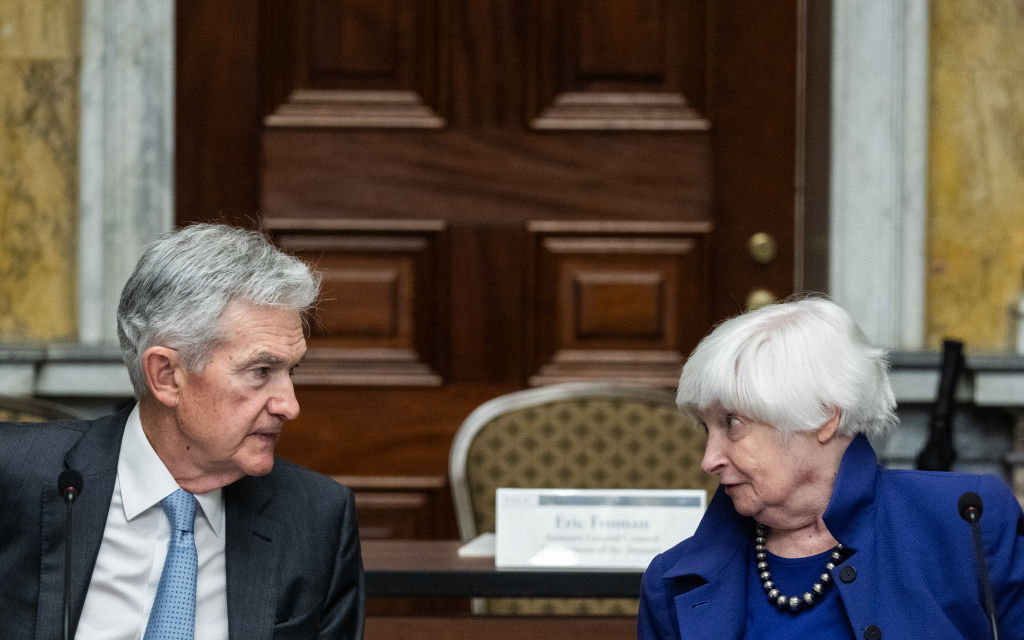
Since its inception, the economics profession has provided elites with a justification for austerity. But this is very often a thinly veiled defense of the interests of the rich. (Andrew Caballero-Reynolds / AFP via Getty Images)
It’s the autumn of 1920, and we are in Brussels. Politicians and economists from across Europe sit at worktables, gathered for the first international economic conference in history. Despite the formal tones and elegant attire, the tension in the air is palpable. Their statements reveal a sense of encirclement, even anguish, over what they consider an unacceptable disorder, a social chaos that is pushing the capitalist economy to the edge of the abyss.
“The manual workers,” declares the English financier Robert H. Brand,
were encouraged to expect, and do expect, some new way of life, some great betterment of their lot. These changes, they believe, at any rate in my country, can be achieved if the system of private industry is replaced by some sort of Government or common ownership. They do not realise the hard truth that . . . a better life can, owing to the losses of the war, be now reached only through labour and suffering.