Austerity Has Always Been a Project to Empower Capital at the Expense of Workers
Austerity policies originated with efforts by economic elites to crush working-class power and redistribute income upward after World War I. That history demonstrates the need for democratic control over economic policy to defend workers’ interests.
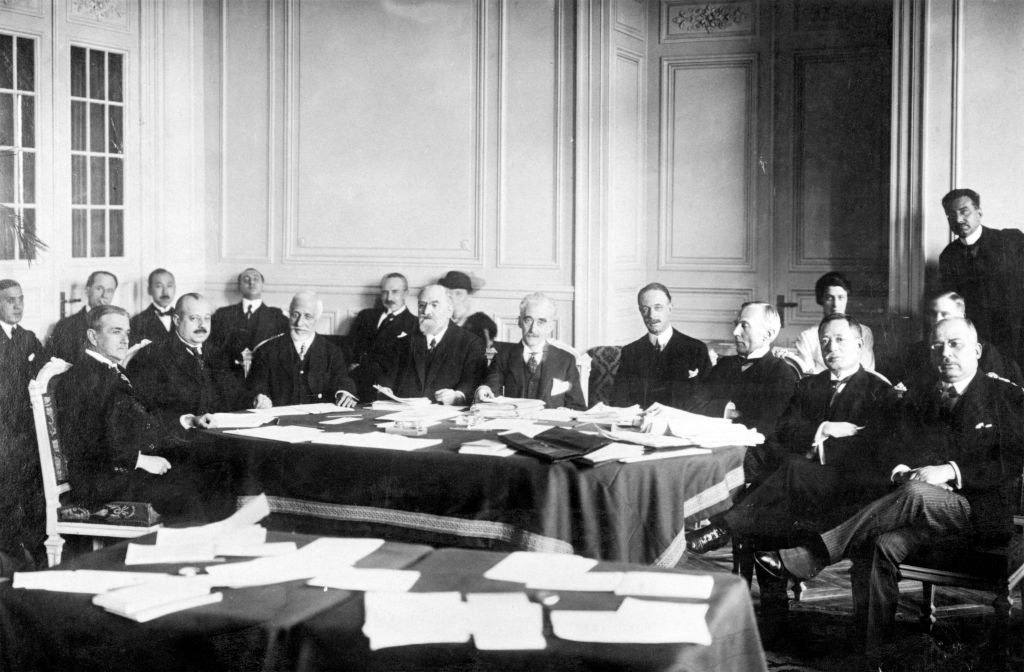
International leaders the first League of Nations conferences after WWI, 1920. (Interim Archives / Getty Images)
One of Karl Marx’s most penetrating insights was that a network of mechanisms embedded in the logic of capitalism not only fuel the system’s transformative dynamism but also undermine its cohesion. These internal contradictions operate across every dimension of the socioeconomic landscape, including its ideological characteristics and political institutions. In their relentless pursuit of profits, capitalist enterprises constantly strive to reduce their labor costs through wage suppression and mechanization. But reductions in the buying power of workers erode the primary source of demand for the products those enterprises must sell in order to realize profits.
Capitalism gave rise to a value system that teaches us to find meaning in our work; yet millions are employed in low-paying, soul-crushing jobs. And while modern capitalism promises — and is indeed fully capable of providing — broad-based prosperity, the system, via the state, routinely promotes and enforces austerity policies aimed at compelling people to work harder for lower pay and less job security. Output per worker increases year by year because of improvements in technology, but the austerity evangelists insist that if we want capitalism to continue to bestow its blessings on humanity, workers must accept lower living standards and the social safety net needs to be dismantled.
In The Capital Order, Clara Mattei brings to light the fascinating story of how austerity became a crucial weapon of class warfare. In this major contribution to the political and intellectual history of modern capitalism, Mattei traces the roots of neoliberalism to the political reaction against the militant working-class movements that emerged in Europe after World War I.