Save Our Brutalism
- Julia Damphouse
Five decades since the craze for Brutalism, most of the discussion about these buildings is about tearing them down. But the radical social vision that drove their rise has largely been forgotten.
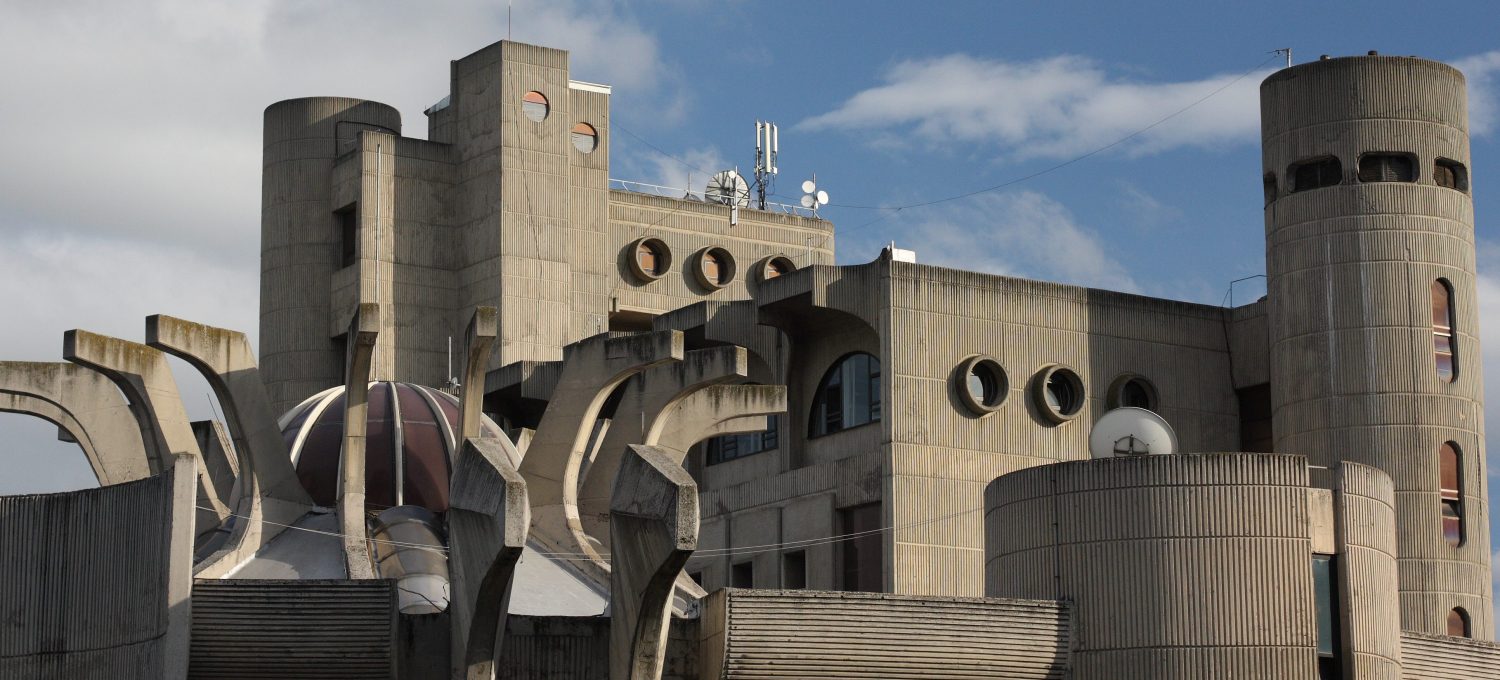
Janko Konstantinov: Telecommunication Center, Skopje, Macedonia, 1968-1981.yeowatzup / Flickr
In 1966 Brazilian architect Paulo Mendes da Rocha, a pioneer of postwar avant-garde architecture, built a figurative middle finger in Sao Paulo’s villa district. His creation: two identical geometric houses made of exposed concrete, showing complete disregard for the stylistic norms of his more establishment neighbors.
Just a few miles away, three years later, the University of São Paulo opened its Faculty of Architecture and Urban Planning. The building’s monumental concrete façade featured deliberately rough impressions created by unskilled workers, and was lauded as a brilliant expression of communist ideals.
Today, alas, there is more talk about tearing down buildings in this style than building new ones. But this also reflects a change in the idea of what architecture is for. Far from today’s neoliberal orthodoxy, many Brutalist buildings expressed a progressive or even utopian vision of communal living and public ownership. Today, the battle to protect them is also a fight to defend this social inheritance.