The Brutalist Is a Confounding but Beautiful Mess
The Brutalist is a big and bold story of the immigrant experience and the postwar American dream. It’s confounding yet always interesting — a heartening thing in these cinematically tough times.
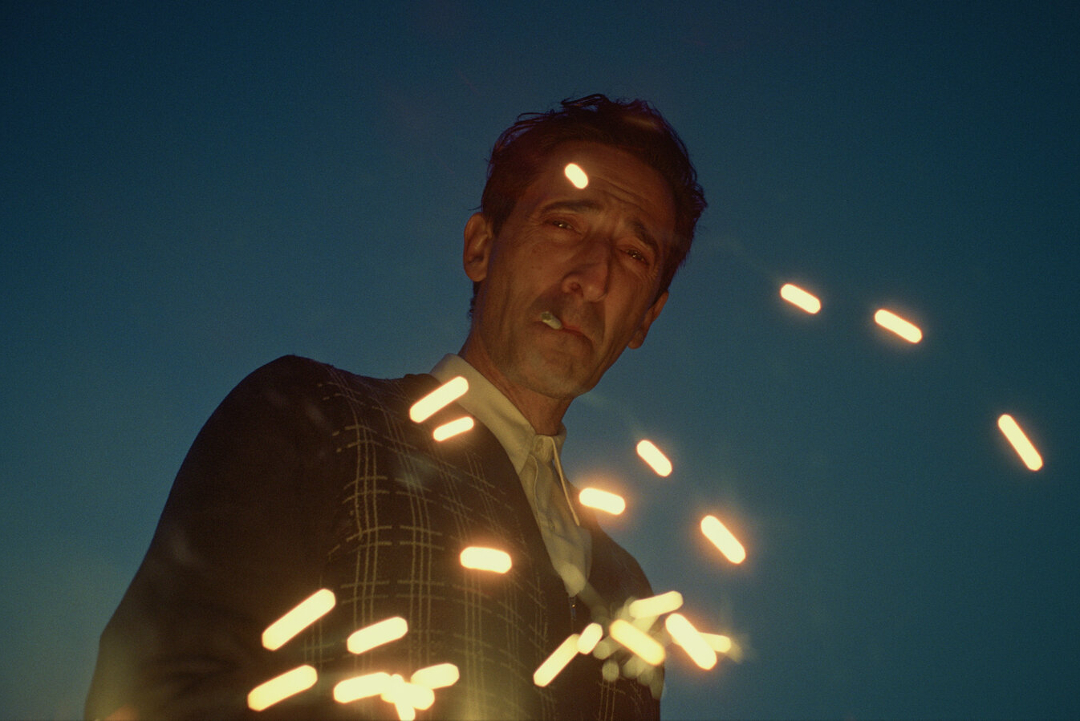
Adrien Brody stars in The Brutalist. (A24 / Universal Pictures)
By now, you’ve probably heard some of the critical hype around The Brutalist. You may have also heard about the unique way in which it was all shot — in VistaVision, a high-resolution 70mm widescreen film format created by Paramount Pictures in 1954 that was already fading out by the early 1960s. You probably saw it last when you watched White Christmas (1954) over the holidays.
That means the imagery in The Brutalist is sometimes so distractingly beautiful, it takes you out of the film entirely. There’s a close-up of lead actor Adrien Brody in the film that is so heartbreaking in the way lighting and color make him glow like a saint in a Renaissance painting that it should hang in a museum. Even more impressive is the fact that all of this was somehow achieved with a budget under $10 million.
Director Brady Corbet joins other analog-film-fanatic directors like Quentin Tarantino and Paul Thomas Anderson in trying to preserve the astonishing image quality that used to be taken for granted by viewers of Hollywood movies. I appreciate that. I appreciate many of Corbet’s visual flourishes, such as the wonderful opening-credit sequences featuring the resolute lines of modern architecture underscoring and boxing off the names listed, all mapped over the dynamic images of a train racing over tracks.