In Today’s Russia, Dissent Means Keeping Hope Alive
In Russia, signs of opposition to the war in Ukraine haven’t developed into a mass movement. State repression has closed off the avenues of mass politics, forcing dissidents into mainly symbolic protests.
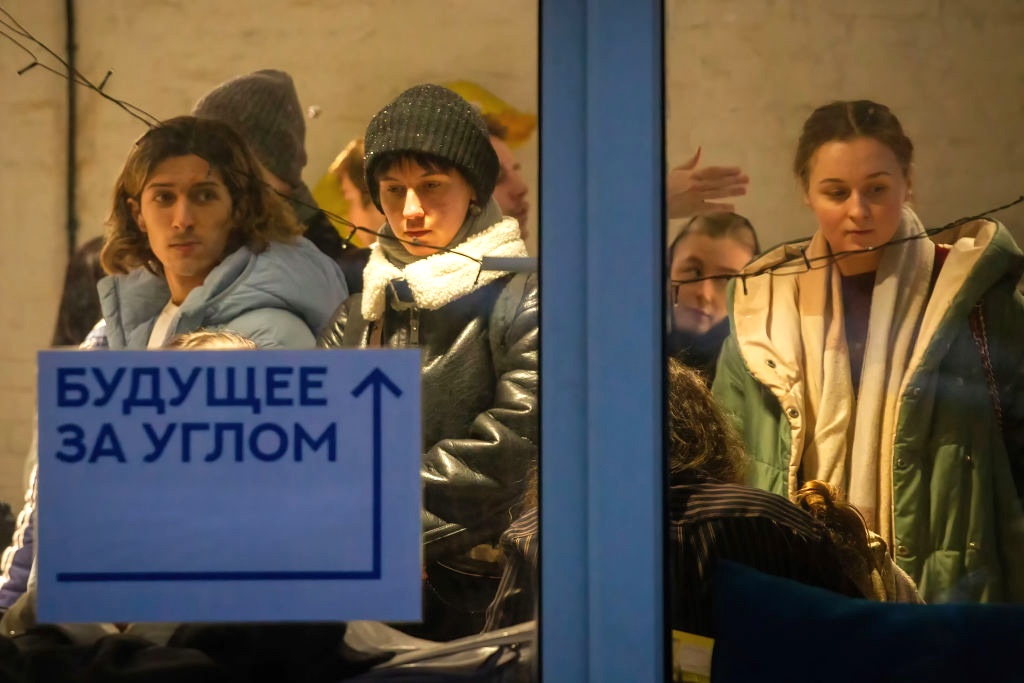
People signing support for the presidential candidate Boris Nadezhdin at his campaign headquarters in St Petersburg, Russia, January 25, 2024. (Artem Priakhin / SOPA Images / LightRocket via Getty Images)
If Russia has a long tradition of antiwar protest, such opposition has struggled to raise its head during the current offensive against Ukraine. Brief street actions at the start of the full-scale invasion on February 24, 2022, could not develop into a wider movement — with long prison sentences inflicted on many critics of the war.
But if Russians have not protested in large numbers, this seems less like a gauge of the popularity of the invasion than a sign of a politically demobilized society. True, Vladimir Putin’s Russia still has its periodic electoral rituals, and the state often cracks down hard on (supposed) oppositionists. But the dissent that does exist is sporadic, generally the work of small minorities, and often more symbolic than a material threat to the authorities.
Maria Chiara Franceschelli is coauthor of a recent book on repression and opposition in Putin’s Russia. In an interview, she told Jacobin’s David Broder about the lack of mass politics in contemporary Russian society, the reasons why the state represses even seemingly innocuous forms of dissent, and the role of the war in reshaping the terrain of protest.