Alexei Navalny’s Movement Reflects the Weakness of Russian Democracy
Faced with protests for opposition leader Alexei Navalny’s release, the Russian left is torn over whether to join a movement which raises no general social demands. Navalny’s personalized clash with Putin highlights the present hollowness of Russian democracy.
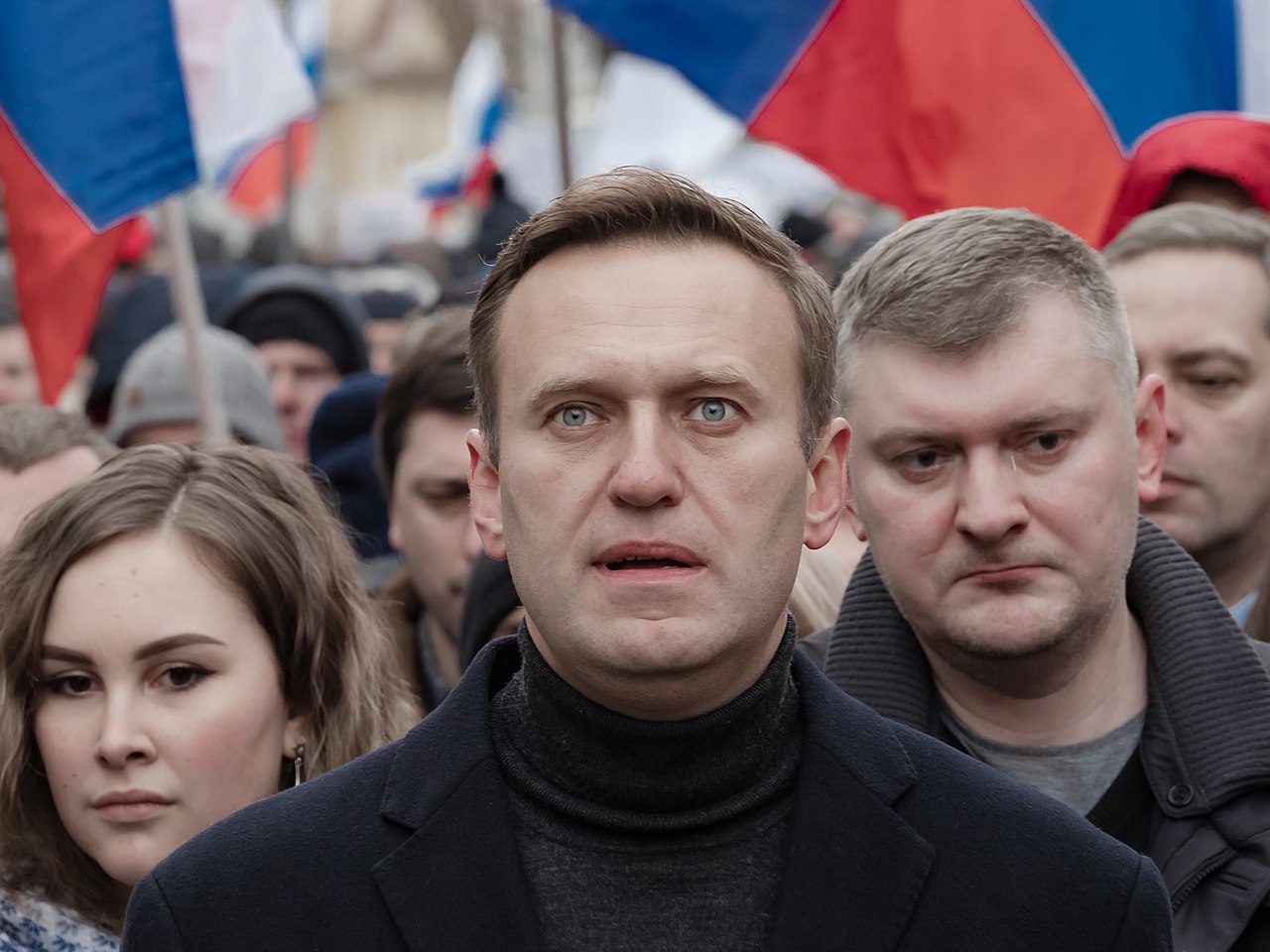
Russian opposition leader Alexei Navalny in 2020. (Wikimedia Commons)
February 14 again saw large-scale protests sweep across Russia, after previous such demonstrations on January 23 and 31. The rallies were prompted by the arrest of poisoned dissident Alexei Navalny; he had been jailed upon returning to Russia, though his team was nonetheless able to release his exposé into Vladimir Putin’s palace on the southern coast. Neither the COVID-19 pandemic, nor the fact that the rallies were unauthorized, was able to prevent tens of thousands of people from taking to the streets to protest against Putin’s dictatorial regime.
These actions, in which disgust at the Putin elite’s usurpation of the country’s power and wealth mixed with anger at state violence, marked a new stage in protest mobilization in Russia. However, after numerous arrests of protesters, the organizers of the actions — the leaders of the Navalny movement — called for the suspension of demonstrations, insisting that we must “keep our powder dry,” ahead of September’s parliamentary elections.
The action on February 14 thus seems to have been the last, for now, with no further mass mobilizations in the immediate future. But with the politicization of Russian society intensifying, the Left has to provide a response of its own.