How Paul Robeson Became a Socialist
Paul Robeson’s encounters with the international labor movement inspired his socialism and anti-imperialism.
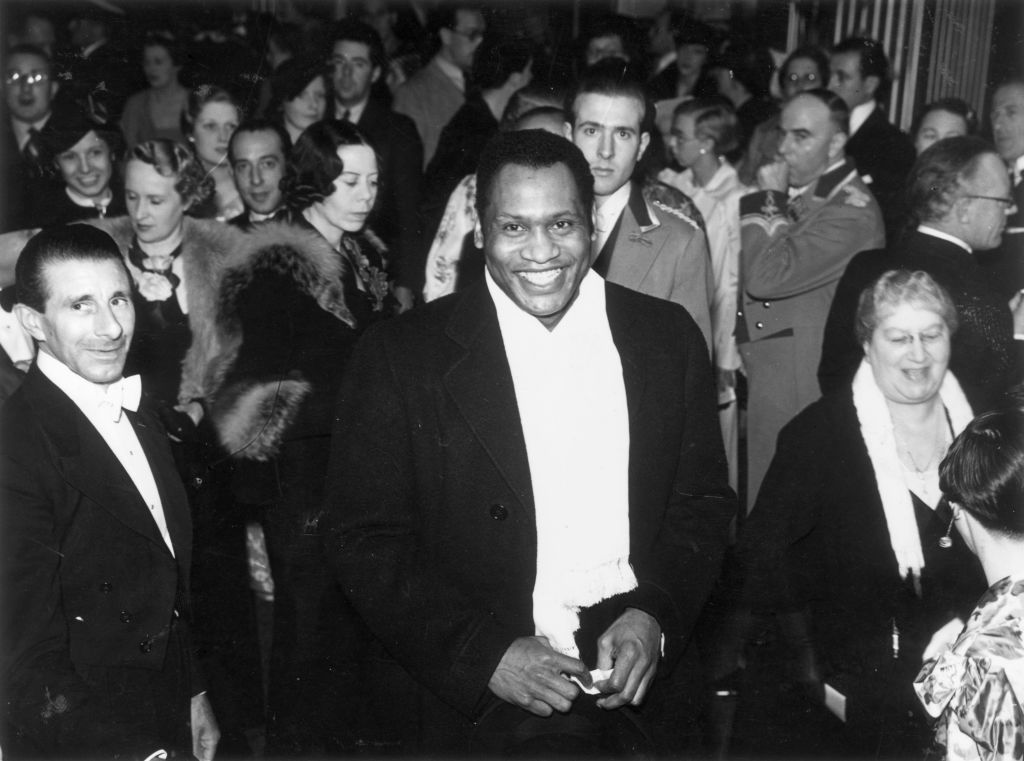
Paul Robeson at the first night of Show Boat at Leicester Square Theatre, London, 1936. (Sasha / Hulton Archive / Getty Images)
On a cool London day in 1928, the towering African American actor and singer Paul Robeson sat down for a much-anticipated lunch. Seated with him were his new acquaintances: a Miss Douglas, the Irish playwright Bernard Shaw, and Mrs Calvin Coolidge, the wife of US president Calvin Coolidge. Robeson witnessed a heated debate ensue between Shaw and Coolidge. The topic was socialism. “When Shaw asked me what I thought of Socialism,” Robeson recalled later, “I hadn’t anything to say. I’d never really thought about Socialism.”
Born in Princeton, New Jersey, in 1898, Paul Robeson was at that moment in the opening stages of an acting and singing career that would win him almost unparalleled international fame. This fame came in part due to the variety of his talents. “I never failed to be amazed at the combination in one person of great strength, great tenderness and great intellectuality,” the communist folk singer Pete Seeger wrote of Robeson. He exhibited the great strength of a professional football player, the tenderness of a stage actor, and the intellectuality of a lawyer who, despite racial prejudice, had finished at the top of his class. As a black man from a segregated country, the son of a freed slave with ancestors who were forced from their homeland, Robeson fought against the novel ideas of success that America had instilled in him, opting instead for what he described as building “the richest and highest development of one’s own potential.”
The part of this monumental life conducted in London, from the late 1920s through the 1930s, would stir Robeson personally, professionally, and above all politically. As the twentieth century progressed, he would become one of the most outspoken advocates for socialism — a politics that would result in the United States revoking his passport, blacklisting him, and purging his name from the history books.