How US “Foreign Aid” Has Helped Destabilize Haiti
A surge of gang violence in Haiti has now led to the resignation of Prime Minister Ariel Henry. Through its heavy-handed use of foreign aid to intervene in Haitian politics, the US government bears significant responsibility for Haiti’s ongoing instability.
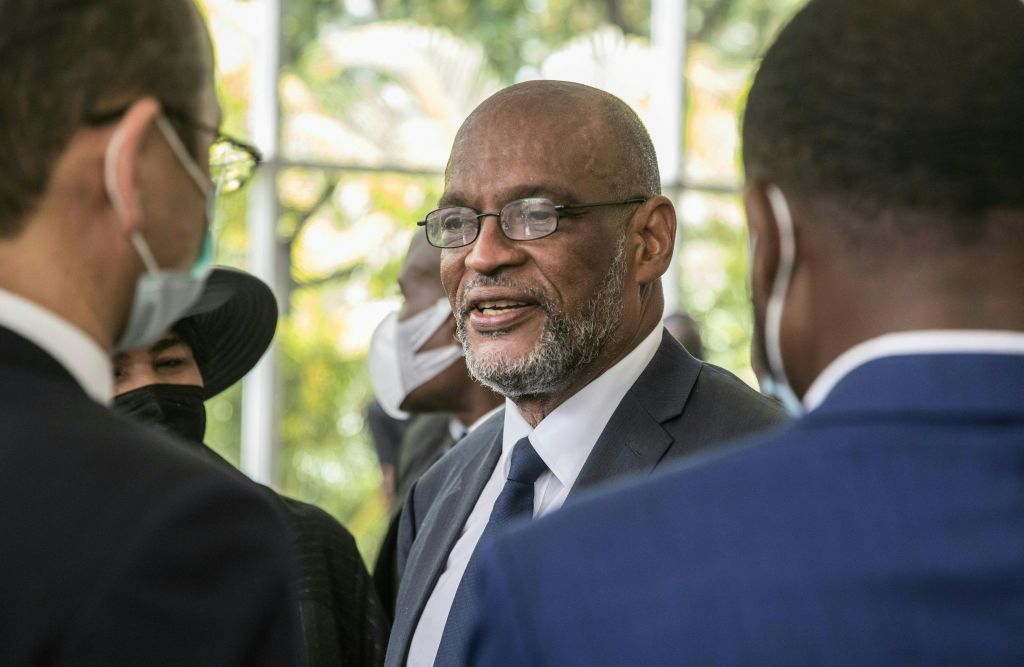
Prime Minister Ariel Henry attends a ceremony in honor of late Haitian president Jovenel Moïse in Port-au-Prince, Haiti, on July 20, 2021.(Valerie Baeriswyl / AFP via Getty Images)
The 2010 earthquake in Haiti meant a devastating loss of life, shelter, and livelihood. More than two hundred thousand people in the country died, 1.5 million became homeless, and upward of $7 billion worth of damage was incurred across the affected area. The massive scale of the earthquake’s destruction was met by an influx of foreign aid. In the United States, fundraising for the crisis reached unprecedented proportions, with some sources estimating that nearly half of all US families donated to the relief efforts.
Much of this money, however, did not go to feeding, sheltering, and supporting the financial recovery of Haitians. The US Agency for International Development (USAID), for example, distributed 130 tons of genetically modified seeds — donated by chemical giant Monsanto — in a costly relief program aimed at rural farmers. Haitian farmers, however, didn’t need foreign seeds: they needed money. And for a fraction of the cost of the USAID program, foreign donors could have purchased all necessary food aid from local rice producers, jumpstarting the rural economy.
In his new book, Aid State: Elite Panic, Disaster Capitalism, and the Battle to Control Haiti, Jake Johnston offers a century-long history of aid in Haiti. He shows that the Haitian earthquake, far from a singular disaster, was an inflection point in the history of a country whose experience of occupation and foreign interference has often been cloaked in the guise of aid. Arguing forcefully against the US-style intervention that has prioritized “stability” measures, he makes the case that Haiti needs self-determination to thrive.