Haiti’s Massive Protests Are a Repudiation of Authoritarianism and US Intervention
Haiti’s corrupt, US-backed president is facing massive demonstrations after refusing to step down. US intervention has stifled Haitian democracy and impoverished its people — and the protests are an effort to fight back.
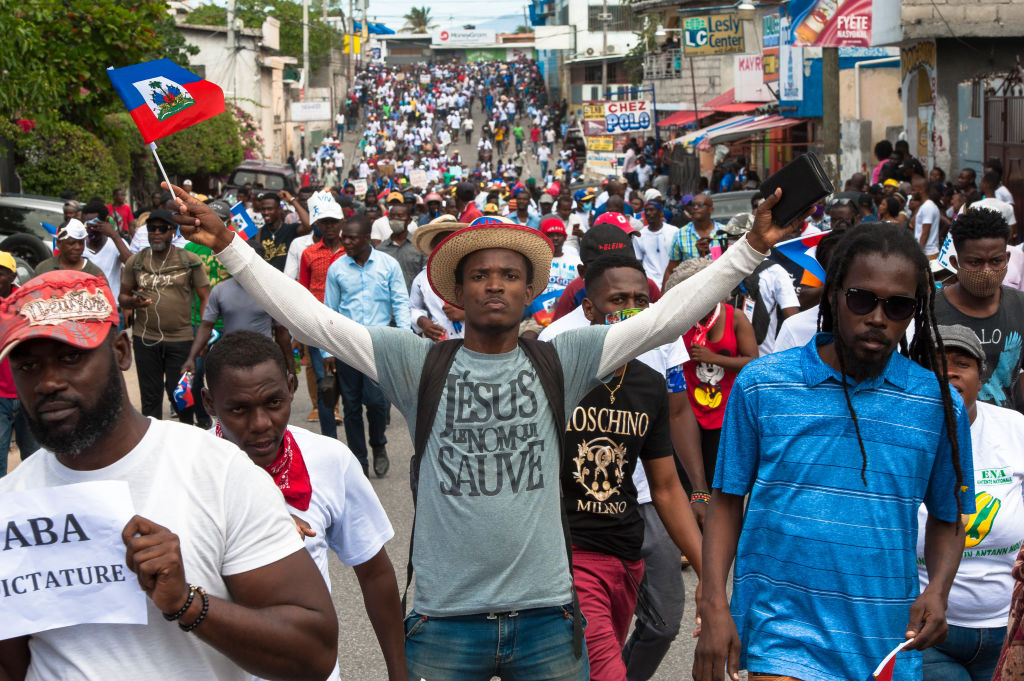
Haitians gather in the streets of Port-au-Prince, Haiti to stage a demonstration against President Jovenel Moïse, who refuses to step down. (Sabin Johnson / Anadolu Agency via Getty Images)
Since February 14, thousands of Haitians have taken to the streets every weekend in the capitol of Port-au-Prince and elsewhere to protest President Jovenel Moïse’s refusal to abdicate power. Moïse, who was elected with the backing of the United States in November 2016, has exploited a supposed loophole in Haiti’s constitution stating that the duration of the president’s term is five years. The constitution clarifies that terms must begin in February, but Moïse insists that his election in November — the delay stemming from previous US meddling — entitles him to more time in office. Thousands of Haitians disagree, but their demonstrations have been met with police violence, leaving dozens dead.
The rallying call of Haitian demonstrators has been, “Where is the Petrocaribe money?” Ostensibly a simple question of accounting, it points to the depth of corruption in Haiti under Moïse and his predecessor, Michel Martelly, who have squandered or stolen billions of dollars’ worth of oil and funds provided by Venezuela as part of Petrocaribe, a program meant to support regional development.
The combination of corruption and repression has critics branding Moïse and Martelly “neo-Duvalierists,” in reference to Francois “Papa Doc” Duvalier and Jean-Claude “Baby Doc” Duvalier, the father-son dictators who ruled Haiti from 1957 to 1986. The Duvalierists stand in contrast to Fanmi Lavalas, a social-democratic party founded by Jean-Bertrand Aristide, who became Haiti’s first democratically elected president in 1991 — before being deposed by a US-backed coup later that year.