US Foreign Aid Was Always About Furthering US Interests
Donald Trump’s freezing of US foreign aid has set off alarms across the foreign policy establishment — largely because aid has been such an effective means of furthering US and European geopolitical interests, especially in Latin America.
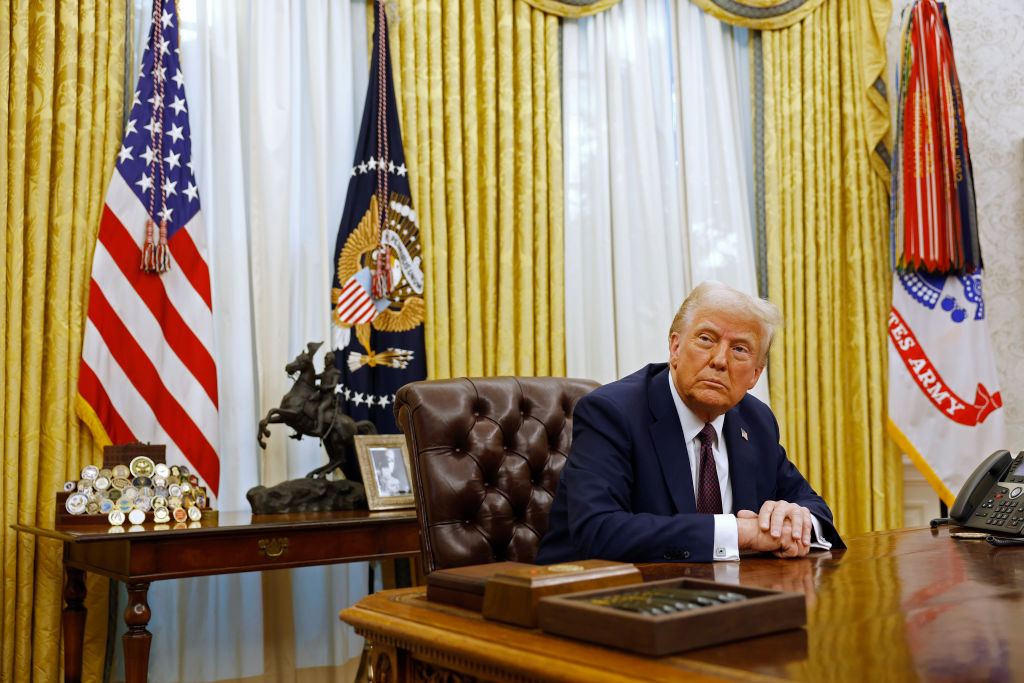
President Donald Trump speaks to reporters after signing a series of executive orders in the Oval Office of the White House on January 23, 2025, in Washington, DC. (Anna Moneymaker / Getty Images)
The announcement by the new Donald Trump administration to suspend foreign aid spending — approximately $68 billion annually — has sent shock waves across the world. This decision will not only affect military aid, which makes up a large percentage of the total, but also threatens funding for development aid, human rights campaigns, and initiatives that support democratic institutions — even as US foreign policy tends to undermine the stated goals of its aid. The executive order immediately raised concerns in the mainstream press about the United States neglecting its duty to Ukraine in its war with Russia and the abandonment of numerous humanitarian missions across the underdeveloped world.
The general response to this announcement, however, reinforces a long-standing false dichotomy: the notion that US and Western humanitarian and developmental interventionism operates independently of these nations’ broader, overtly aggressive geopolitical and imperialist interests. In this context, President Trump’s announcement should not be seen as an attack on the “friendlier” side of US foreign policy but rather an alignment of its outward form with its substance, unveiling the true purpose of foreign aid in serving US ruling-class interests — now all stick and no carrot.
USAID and NGOism
Alongside overt forms of domination — military interventions, territorial acquisition, direct political interference — Western powers have long developed parallel forms of intervention and control, sometimes called informal imperialism. Over the last few decades, a refinement and perfecting of these more subtle instruments of domination has sometimes partially displaced older forms. Due to its proximity to the United States, Latin America and the Caribbean have been important testing grounds for these practices.