Haiti’s Disorder Is Due to Elite Malfeasance and US Meddling
Many observers of Haiti’s social disorder today maintain that the island country has always been dysfunctional. But the poverty and chaos in Haiti is of recent vintage, the product of disastrous decisions by political elites and heavy-handed US interference.
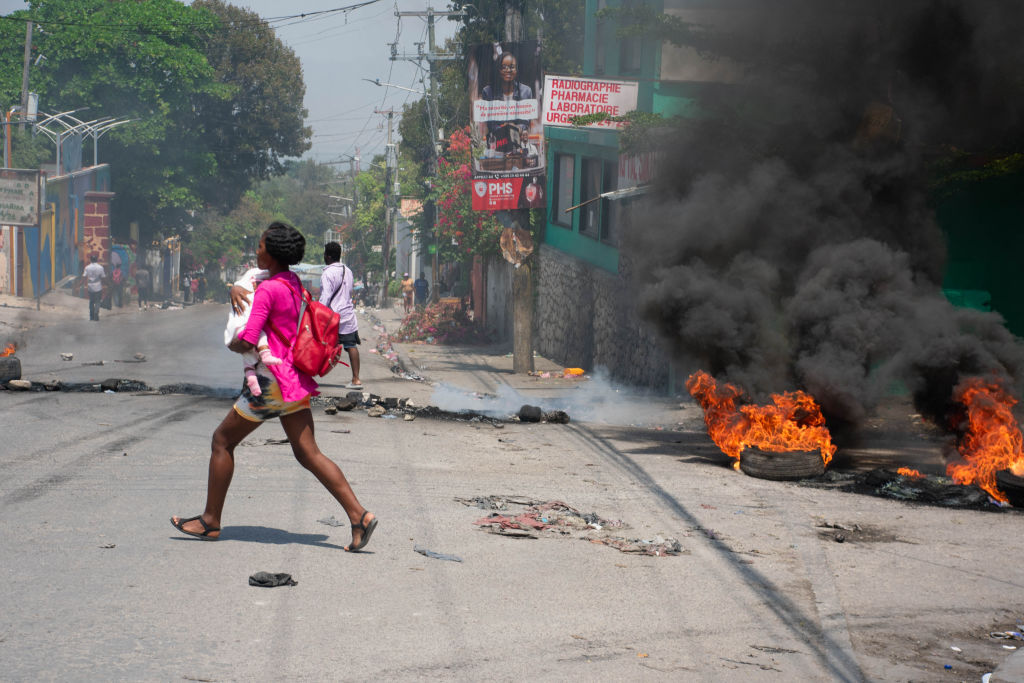
A woman carrying a child runs from the area after gunshots were heard in Port-au-Prince, Haiti, on March 20, 2024. (Clarens Siffroy / AFP via Getty Images)
Social disorder. Prisons emptied of violent criminals by gangs looking to rebuild their ranks. Schools, hospitals, and pharmacies targeted for looting and frequently burned. Corpses left rotting in the streets for fear of succumbing to the same fate by attempts to remove them. The capital’s port was captured and ransacked, with famine threatening. Meanwhile, on Haiti’s northern coast, cruise ships still disgorge foreign tourists to the protected (with no shortage of irony) “Columbus Cove Beach.”
There’s no sugarcoating it — the collapse of order in Haiti and the activities by gangs in recent months to capitalize on the situation is bad.
Just as with the Middle East, we hear the refrain that Haiti “has always been like this.” Except it hasn’t. Haiti’s history has been both storied and challenged. Reasonably educated persons often juxtapose Haiti to the comparatively thriving Dominican Republic (DR), the neighboring country with which Haiti shares an island. The comparison hints at a defect of the former relative to its better-off neighbor. (The subtext sometimes is that race explains their different fates.) Yet a long view of Haiti reveals its current poverty relative to the neighboring DR has been anything but constant — it only emerged in the past four decades.