The Pentagon Has Decided to Battle Chinese Film Censorship
A new Pentagon policy bars the US Defense Department from working on films that cooperate with Chinese censorship demands. It’s a new front in the economic battle with China — and it ignores the Defense Department's own influence over film content at home.
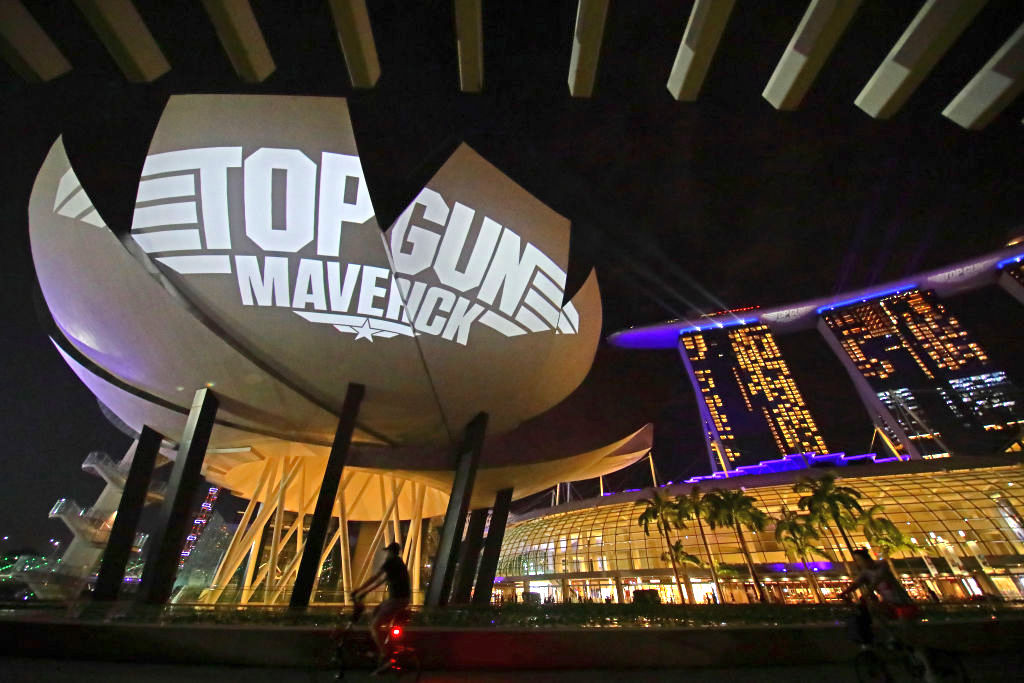
The Singapore premiere of Top Gun: Maverick at the Marina Bay Sands Event Plaza on May 21, 2022. (Suhaimi Abdullah / NurPhoto via Getty Images)
Amid brouhahas over make-believe Barbie maps and bomber jacket insignias in Top Gun: Maverick, the Pentagon will now no longer work with filmmakers that allow China to censor their films, and a GOP lawmaker is pushing for even stricter crackdowns on film censorship from the United States’ main economic rival.
But free speech advocates question why there’s not similar outcry over the Defense Department’s own shaping of films, whereby the Pentagon changes movie scripts in exchange for providing studios access to taxpayer-funded military machinery. In some cases, the Pentagon is potentially pitching story ideas to Hollywood studios, according to Air Force documents obtained by the Lever.
The Motion Picture Association (MPA) — the powerful film studio lobbying group that claims to be committed to “free speech and free expression unencumbered by government interference” — isn’t publicly fighting to stop either sort of censorship. In fact, behind the scenes, the group lobbied against the new anti-Chinese censorship policy, likely because it might hurt international revenues, and has actively promoted stronger connections between Hollywood and the Pentagon.