No, Karl Marx Was Not Eurocentric
Critics of Marx have accused him of imposing a European model of historical development on the rest of the world. But the real Marx rejected Eurocentric thinking and developed a sophisticated view of world history in all its diversity and complexity.
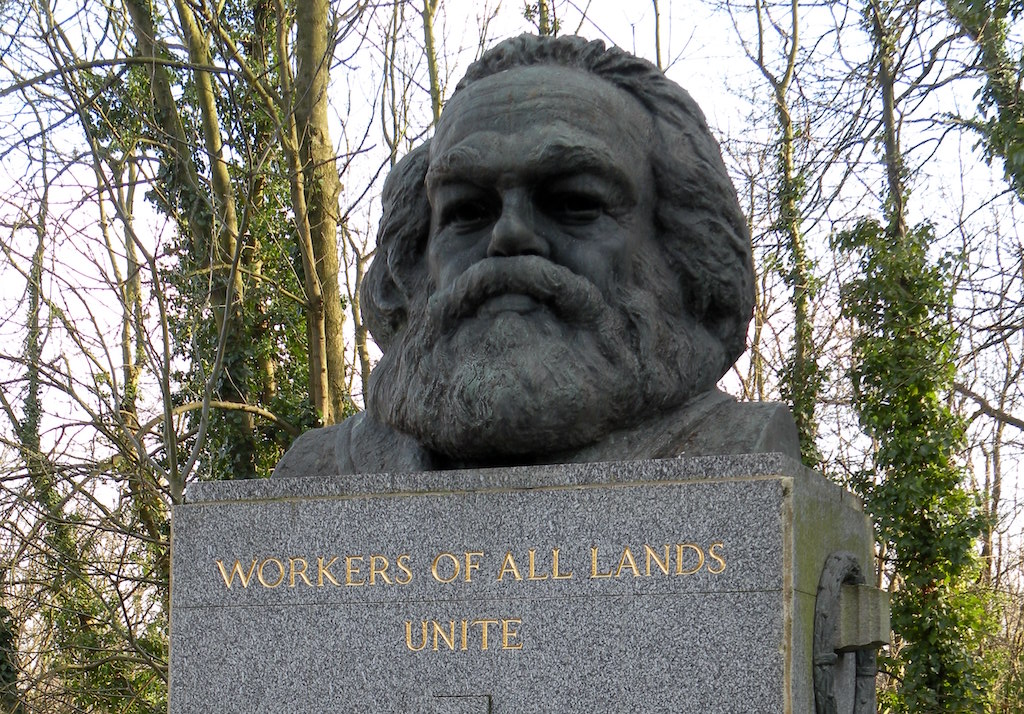
The gravestone of Karl Marx in North London, England. (Pedro Cambra / Flickr)
Despite a revival of interest in his critique of capitalism, attacks on Karl Marx continue from multiple directions. Despite their diversity, these critiques share the implication that Marxism is dead, outmoded, surpassed by newer theories and by events. But if Marxism is in fact dead, why do its critics feel the need to belabor the point, to “prove” their point over and over again?
The real answer is obvious. Marxism has never really died, although it has declined, been pronounced dead, and then been revived several times over the last hundred fifty years. Hence the need for Marx’s critics to keep trying to bury him, so far without success.
Edward Said’s Critique
The standard liberal perspective holds that Marxist socialism leads to totalitarianism and eventually economic collapse. In short, Marxist “experiments” — witness the Soviet Union! — are dangerous and we should stick to the more viable alternative, liberal capitalism. However, in the wake of the Great Recession and the growth of strong fascist tendencies in the Donald Trump era, growing doubts about the future of capitalism and of liberal democracy have weakened the foundations of such arguments.