Europe’s Migration Deal With Tunisia Is a Humanitarian Disaster
In July, the European Union announced a deal with Tunisia to police migration. The deal allowed the EU to outsource the dirty work of repressing migrants — but it’s done nothing to hide the mounting numbers of desperate people dying in the Mediterranean.
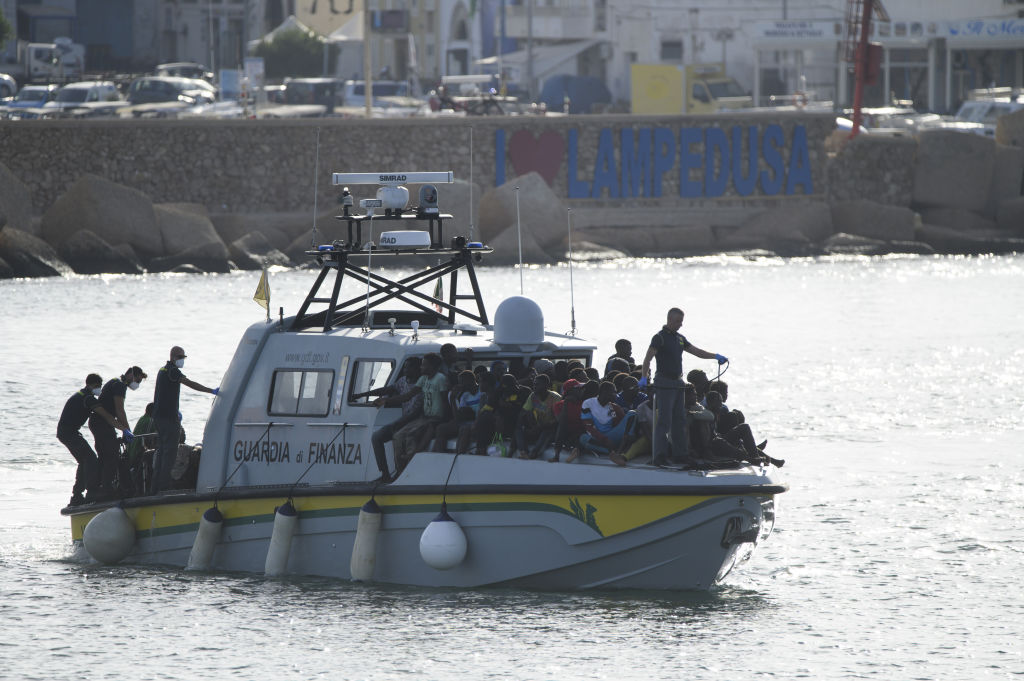
Migrants arrive at Lampedusa on September 16, 2023 in Italy. (Valeria Ferraro / Anadolu Agency via Getty Images)
Footage of European Commission president Ursula von der Leyen with Giorgia Meloni on the island of Lampedusa last weekend symbolized European authorities’ common determination to control migration — but it also wasn’t new. It echoed the pair’s visit to Tunisia in June 2023 when, together with Dutch premier Mark Rutte, they met the North African state’s president Kais Saied and presented an EU-Tunisia Memorandum of Understanding. The EU offered Tunisia an immediate financial support package of about $120 million in what it calls “migration funding,” the details of which remain opaque.
The funds have not yet been disbursed, despite ongoing Italian pressure to do so. Yet, it is clear that the deal has run into a number of problems — practical as well as humanitarian. One of the most obvious consequences of the agreement is that it provides political legitimization to Saied, who has been ruling Tunisia in an increasingly authoritarian fashion since his power grab in July 2021. In the two years since the coup, he has liquidated the independence of the judiciary, organized sham parliamentary elections, and imprisoned Rached Ghannouchi, the leader of the moderate Islamist Ennahda party, the largest party in parliament before Saied forced its closure in 2021.
In her visit to Tunis, von der Leyen stated that one of the objectives of the EU-Tunisia agreement was to provide funds to Tunisia “to support a holistic migration policy rooted in the respect of human rights.” However, it is complicated to see how migrants and asylum seekers can feel safe in Tunisia. In February 2023, Saied portrayed black Africans in Tunisia as “hordes” bringing “violence and crime” to the country. The Tunisian president took a page from white supremacist hate speech, adopting the “great replacement” conspiracy theory to blame sub-Saharan African countries for trying to change Tunisia’s demographic composition.