Can the UAW Rise Again?
Despite the ravages of deindustrialization, the United Auto Workers remains the most important American industrial union. Members recently elected a new leadership promising democracy, militancy, and an end to corruption. But change isn’t coming easy to the UAW.
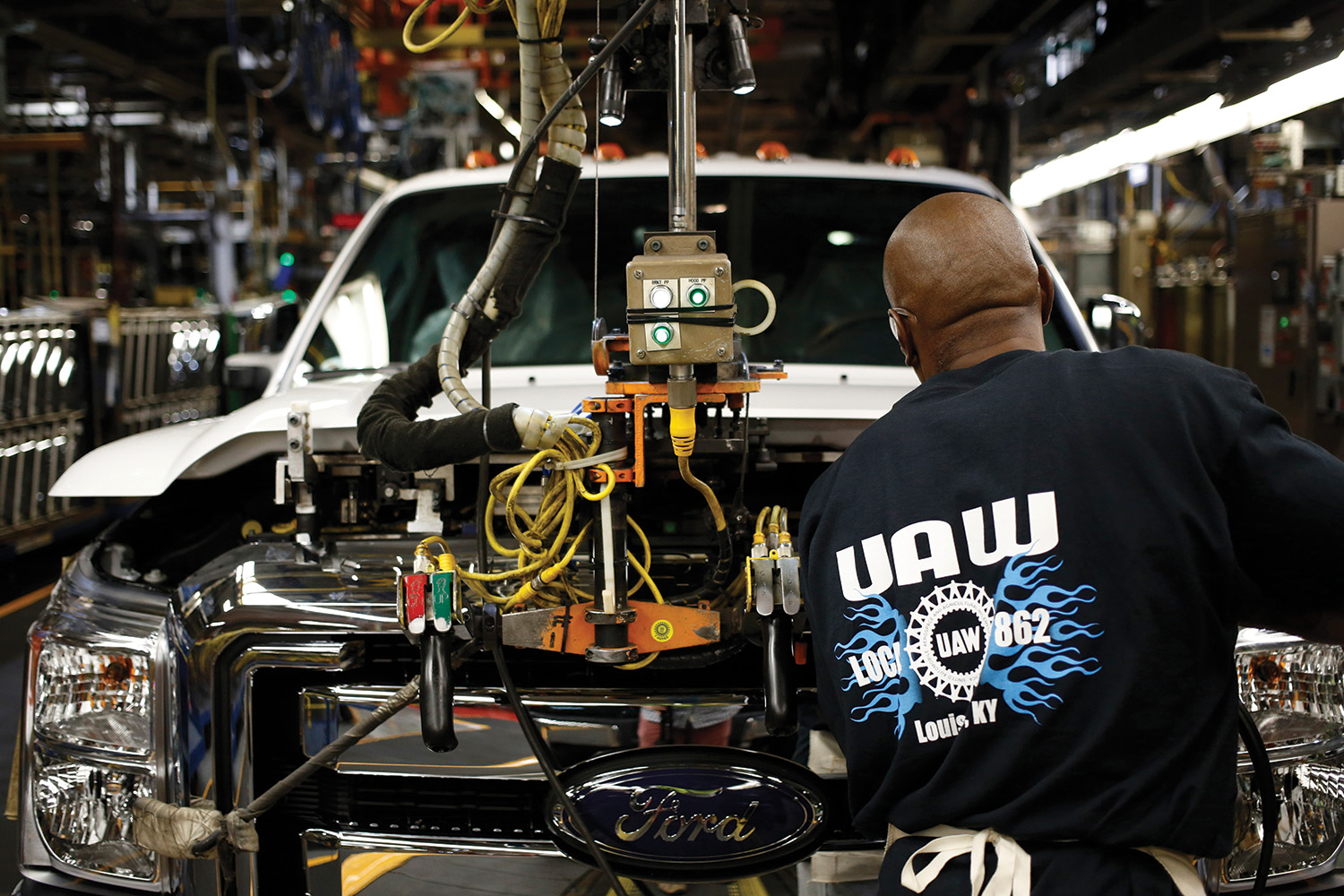
(Luke Sharrett / Bloomberg via Getty Images)
John Weyer remembers the day that he threw out his United Auto Workers (UAW) shirts.
He started as a member of Local 1264 in 1995, taking a production job at the Sterling Stamping Plant in Sterling Heights, Michigan. For the following two decades, he was a proud union member. But by 2014, he realized that some of the UAW leaders he had long looked up to were deeply corrupt, spending members’ dues on lavish, extended California vacations and luxury goods.
“Think about how hard one of our nurses in Toledo on the midnight shift has to work for two and a half hours of her time a month to pay union dues,” said Weyer when I asked him why a recent corruption scandal hit him so hard. “She’s cleaning somebody’s diaper, wiping somebody’s ass, and staying on her feet for twelve hours to pay those dues. Or think about the single mother who is working the second shift and can’t see her kids because they’re in school. How hard does she work for her dues? [The union’s leaders] were stealing that money from our members.”