Chinese Workers Are Facing Escalating Repression
The new working class created by China’s transformation has been learning how to organize and demand a better deal with help from labor NGOs and left-wing activists. But a crackdown on oppositional activity under Xi Jinping has made their job a lot harder.
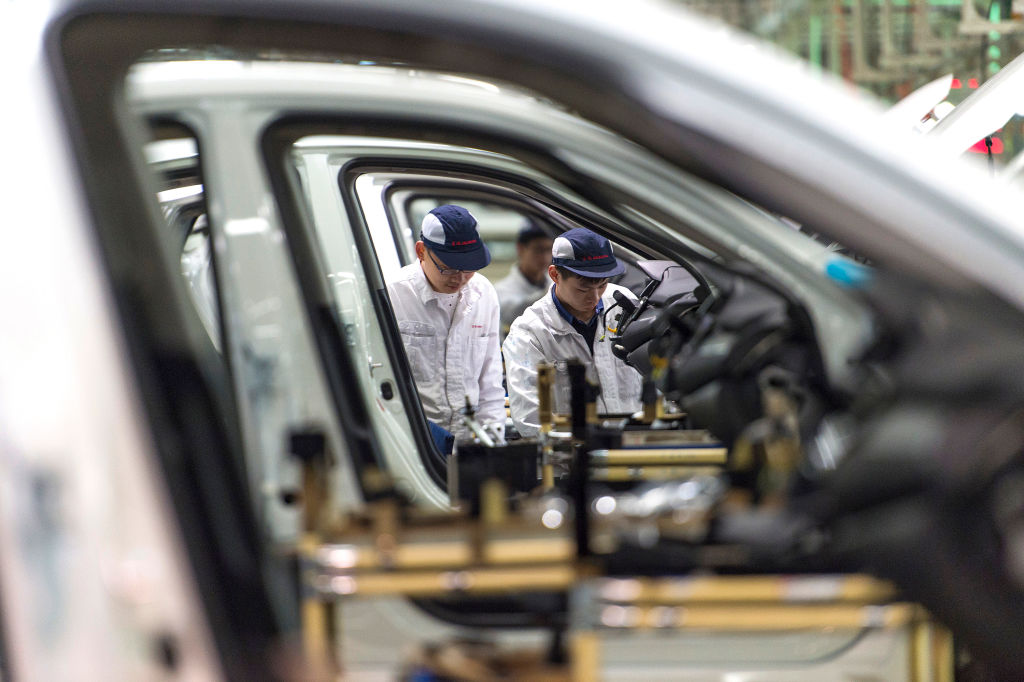
Employees work on the Honda Civic production line at the automaker’s Dongfeng Honda factory in Wuhan, Hubei Province, China. February 6, 2017. (STR / AFP via Getty Images)
In the 1990s, the People’s Republic of China (PRC) became the “factory of the world” for consumer goods. The boom in manufacturing, construction, and other sectors was built on the vast supply of migrant labor power from the countryside.
Labor unrest in response to the harsh conditions started with sporadic strikes in factories and on construction sites as well as short strike waves in provinces on the east coast and, especially, Guangdong. This unrest included hidden forms of everyday workplace resistance (sabotage, slowdowns, and what James Scott calls “weapons of the weak”).
The number of visible workers’ protests increased after 2003. By that time, migrants had gotten used to the labor regime and industrial work, and some of them acquired the ability to organize strikes and other forms of collective resistance.