Intellectual Property Killed the Movie Star
The lead actors in today’s blockbuster films are celebrities, not movie stars. That’s not their fault: the industry has reduced actors to stewards of profitable intellectual property, robbing them of the opportunity to connect with audiences and shine.
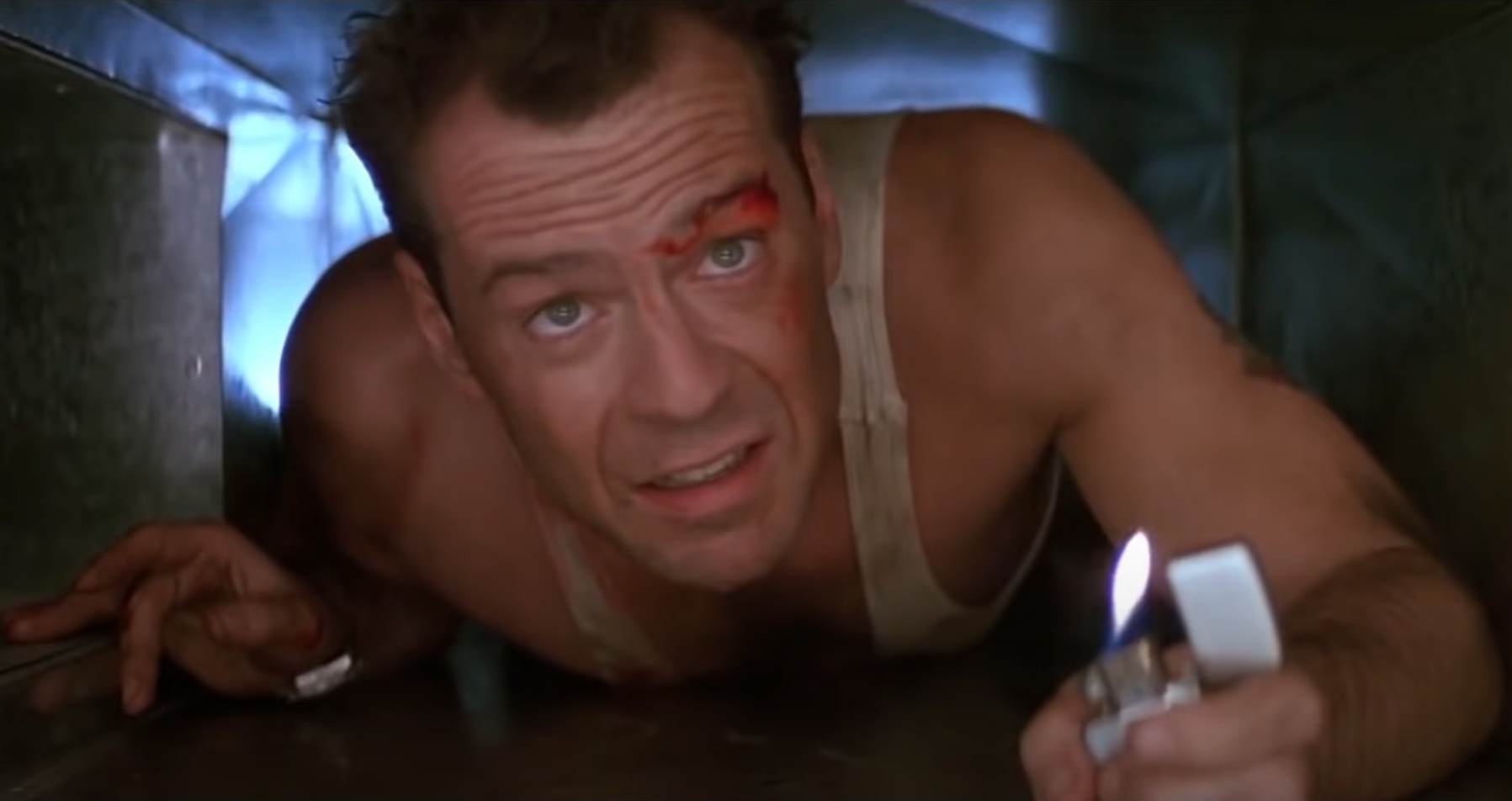
Bruce Willis as John McClane in Die Hard. (20th Century Fox, 1988)
At this point it’s hard to imagine Die Hard starring anyone but Bruce Willis. But when film producer Joel Silver was searching for the lead role of his 1988 summer blockbuster, the list included just about every leading man in Hollywood at the time. Clint Eastwood, Sylvester Stallone, Mel Gibson, and Arnold Schwarzenegger were among the prospects. The last two had worked with Silver in 1987 on Lethal Weapon and Predator respectively, both massive action hits.
Silver was contractually obligated to ask seventy-two-year-old Frank Sinatra first, since Sinatra had starred in a film that was legally considered a quasi-prequel. But after Sinatra turned down the role due to his age — a gesture that’s hard to imagine in 2023, with a new Indiana Jones starring eighty-year-old Harrison Ford currently in postproduction — Silver had a deep bench to choose from.
Hollywood didn’t just have actors then. It had movie stars. And everyone agreed on who they were, which is one of the category’s defining characteristics. We still have a few movie stars today — but the problem, as the Harrison Ford example shows, is that they’re the same ones Silver had to choose from thirty-five years ago. We’re running the old movie stars into the ground, and we aren’t making new ones.