Railroad Corporations Are Blocking Safety Regulations to Protect Profits
For years, rail companies have resisted federal safety regulations to cut costs. The major train derailment in Ohio last weekend, which resulted in the emergency evacuation of residents nearby, is the fruit of such profit maximization.
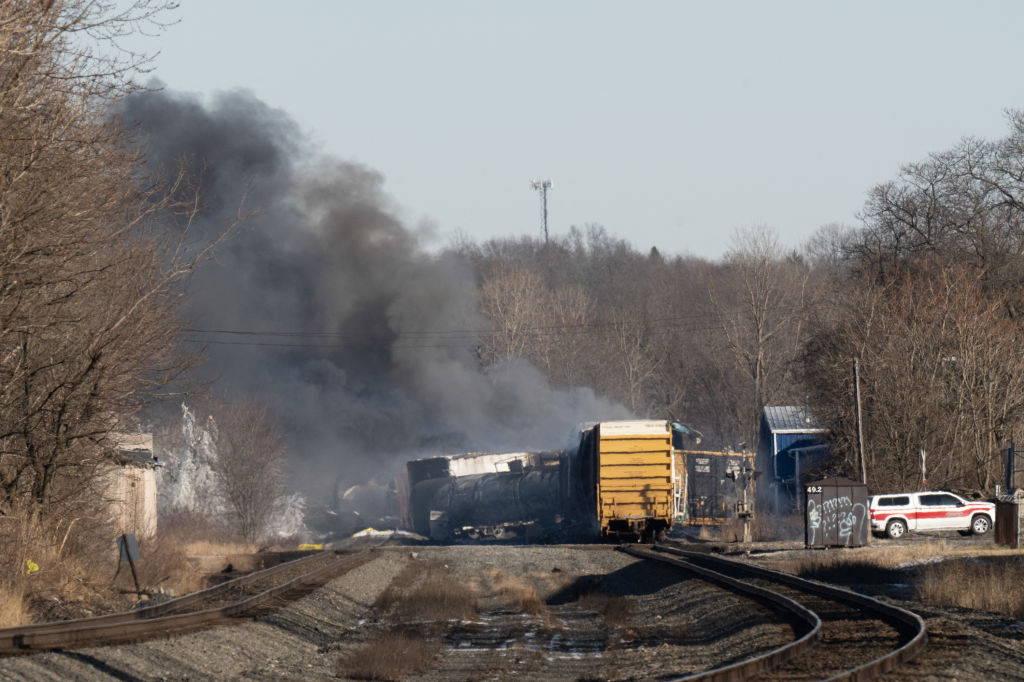
Smoke rises from a derailed cargo train in East Palestine, Ohio, on February 4, 2023. (Dustin Franz / AFP via Getty Images)
Before this weekend’s fiery Norfolk Southern train derailment prompted emergency evacuations in Ohio, the company helped kill a federal safety rule aimed at upgrading the rail industry’s Civil War–era braking systems, according to documents reviewed by the Lever.
Though the company’s 150-car train in Ohio reportedly burst into 100-foot flames upon derailing — and was transporting materials that triggered a fireball when they were released and incinerated — it was not being regulated as a “high-hazard flammable train,” federal officials told the Lever.
Documents show that when current transportation safety rules were first created, a federal agency sided with industry lobbyists and limited regulations governing the transport of hazardous compounds. The decision effectively exempted many trains hauling dangerous materials — including the one in Ohio — from the “high-hazard” classification and its more stringent safety requirements.