As Rail Executives Grow Richer, Train Derailments Have Become Commonplace
The East Palestine disaster is a horrifying, spectacular version of what has become the normal occurrence of train derailments in America. Joe Biden could use this as an opportunity to overhaul a crooked and dangerous industry. So far, he appears uninterested.
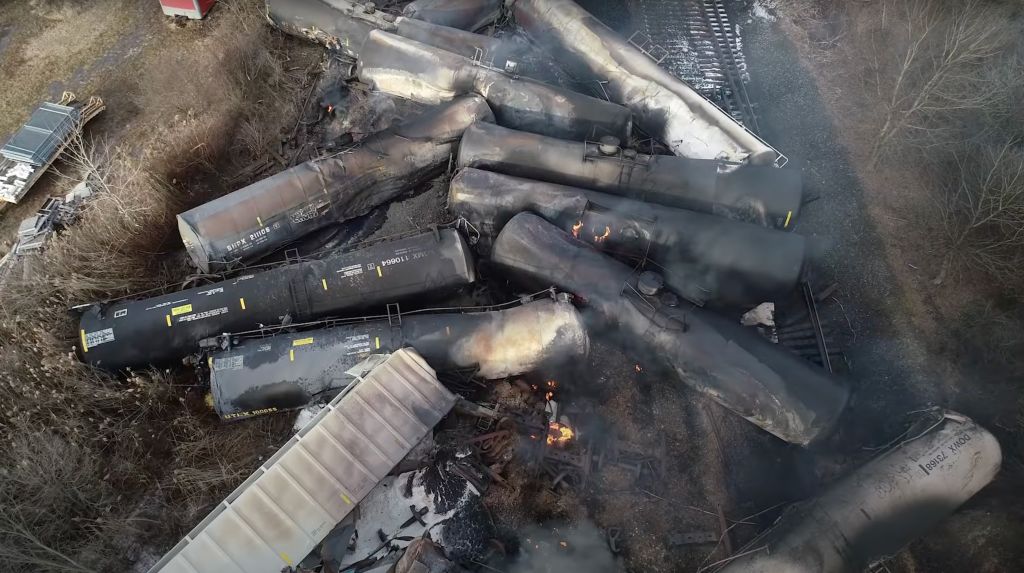
Higher profits and lower labor costs have coincided with increased train accidents. (NTSB / Handout via Xinhua)
All of a sudden, train derailments are everywhere. The East Palestine, Ohio, train disaster has been the most horrifyingly spectacular thus far, but more than a dozen train derailments had already taken place in the United States this year alone.
The weeks that followed added several more: a train carrying coal derailing near Gothenburg, Nebraska; another chemical-bearing train going off the trails near Detroit, this one also operated by the same Norfolk Southern company behind the East Palestine crash; a pickup truck smashing into a train in New Caney, Texas, sending sixteen train cars off the rails. Maybe that last one doesn’t count, since a truck was the instigating factor. Then again, given how often trucks crash in the United States, especially those carrying the same kinds of dangerous chemicals that were spewed in Ohio, and how much deadlier those crashes are when you stack them up, that’s hardly a cause for relief.
A shocking number of train derailments take place in the United States every year: an average of 1,705, or 54,570 over the span of 1990 to 2021, according to the Bureau of Transportation Statistics. While falling after 2008, the next thirteen years still saw over a thousand derailments a year, killing a total of thirty-one people and injuring 1,759. And East Palestine is far from the first time we’ve seen a derailment this destructive. In the winter of 2002, a Canadian Pacific train carrying anhydrous ammonia, a chemical that aggressively sucks all the moisture out from the human body, crashed outside Minot, North Dakota, injuring more than 1,400 people and trapping residents in their homes, stuck there in below-freezing weather while unable to turn on their furnaces.