The Global South Must Be at the Center of the Making of a Just Global Economic Order
The US-dominated economic order constructed after Bretton Woods did not take the Global South into consideration. A new, just system will have to change that.
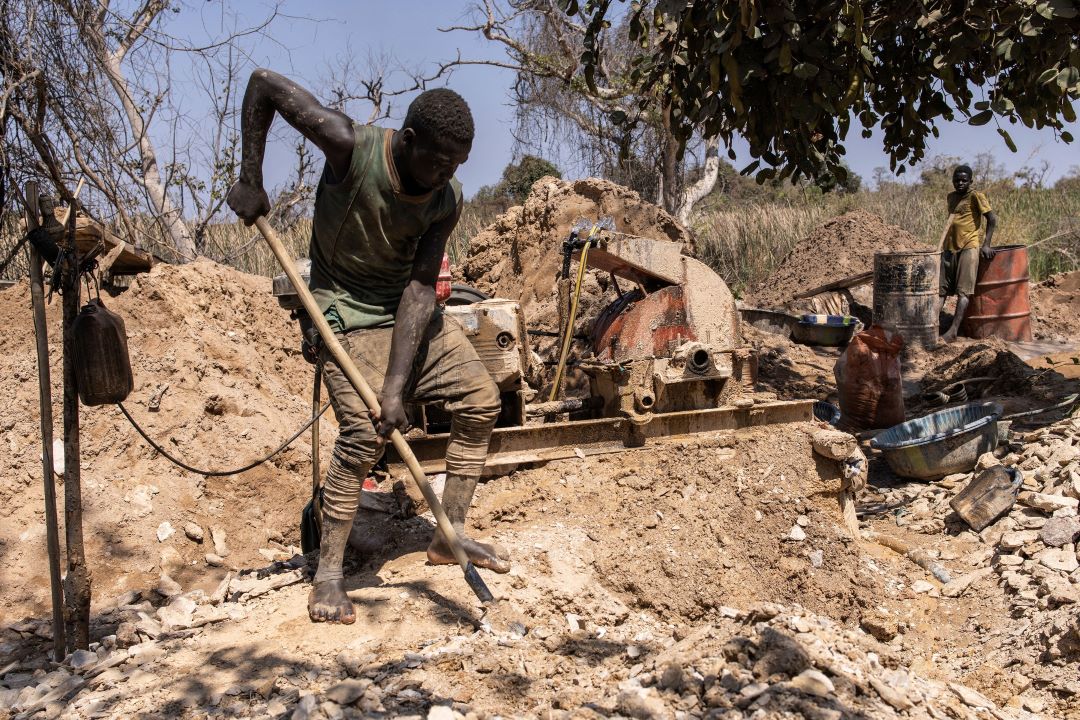
An artisanal gold miner digs at the Bantakokouta gold mine in southeastern Senegal on February 2, 2023. (John Wessels / AFP via Getty Images)
The most damming indictment of the world’s economic system is that poverty is disproportionately concentrated in previously colonized nations and wealthy former colonizers continue to set the rules that govern finance and trade. This state of affairs, in which the Global North has economic and regulatory control over the world economy, is in part to blame for the poverty of much of the Global South.
Critics of inequality often point out that that these disparities have their origin in colonialism. Although this is in part correct, the main cause for the persistence of inequality is that the nations that are home to the majority of the world’s population have rarely had an opportunity to be involved in deciding what rules should govern trade between nations. The economic orthodoxy that came to dominate in postwar era — what some have called the Washington Consensus — discouraged poor nations from developing the industrial and administrative capacity that allowed countries in the Global North to become prosperous. Instead, this consensus insisted that liberalizing trade and selling off state-owned assets was the key to economic prosperity.
The economists Daniela Gabor and Ndongo Samba Sylla spoke to Olúfemi Táíwò for the Jacobin Radio podcast The Dig last year about the limitations of this approach, the economic legacies of colonialism, how the Washington Consensus reinforced colonial power relations, what new forms of exploitation are emerging to replace the postwar system, and the possibility of challenging Western hegemony in the interests of the poor across the globe. You can listen to the conversation here.