Neoliberalism Hasn’t Helped Much of the Global South
For a brief period after World War II, Third World nations played an active role in shaping the world economic order and fostering development. For all its promises and a few success stories, neoliberalism hasn’t done the same.
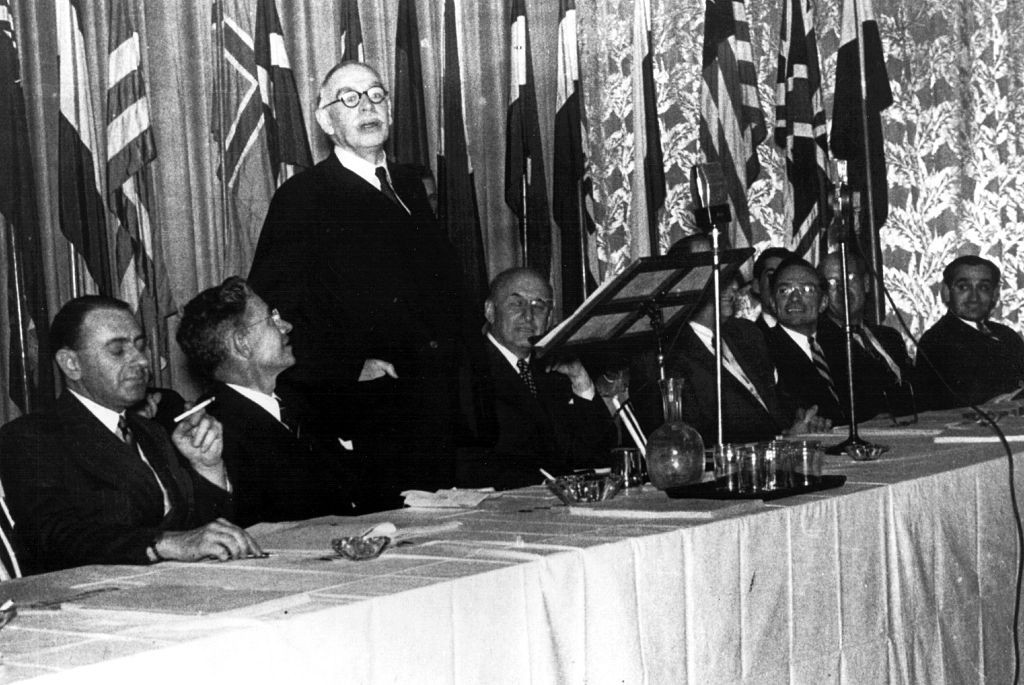
British economist John Maynard Keynes addresses the Bretton Woods conference, where the International Monetary Fund and precursor to the World Bank were established, in 1944. (Universal History Archive / Universal Images Group via Getty Images)
Whatever happened to the liberal world order? As nations from the Global North sought to unite against Russia’s attack on Ukraine, reluctance to take a similarly hostile attitude toward Vladimir Putin’s government characterized the response of much of the developing world. Although most of the governments of the Global South were willing to vote for a UN resolution condemning Russia’s invasion, many responded tepidly to Western calls for “world” unity on sanctions.
There is a simple, material explanation for this: economic life in the Global South is considerably more precarious than in the Global North, and therefore considerably more sensitive to fluctuations in the supply of Russian-produced commodities like oil and wheat. Together, Russia and Ukraine produce 15 percent of the world’s grain, and the disruption to global supplies resulting from the ongoing war has been felt most severely in the Global South. Russia is the source of 100 percent of Somalia and Benin’s imported wheat, 94 percent of Laos’s, 82 percent of Egypt’s, and 75 percent of Sudan’s.
On March 28, the Financial Times reported that, the “war in Ukraine threatens to do lasting damage to the economies of low- and middle-income countries pushing millions . . . into poverty and . . . dozens of countries into a debt crisis.” Lacking the vast capital reserves, large populations of sufficiently wealthy consumers, and diversified economies common in Europe and North America, the “developing economies” of the southern hemisphere are uniquely vulnerable to swift changes in commodity prices like those caused by the war and sanctions regime.