No, Countries in the Global South Shouldn’t be Scrapping Fuel Subsidies
International organizations like the IMF are pressing Global South countries to cut their fuel subsidies in the name of fighting climate change. But don't be fooled: these are neoliberal measures that do little to reduce emissions while hammering the livelihoods of poor and working-class people.
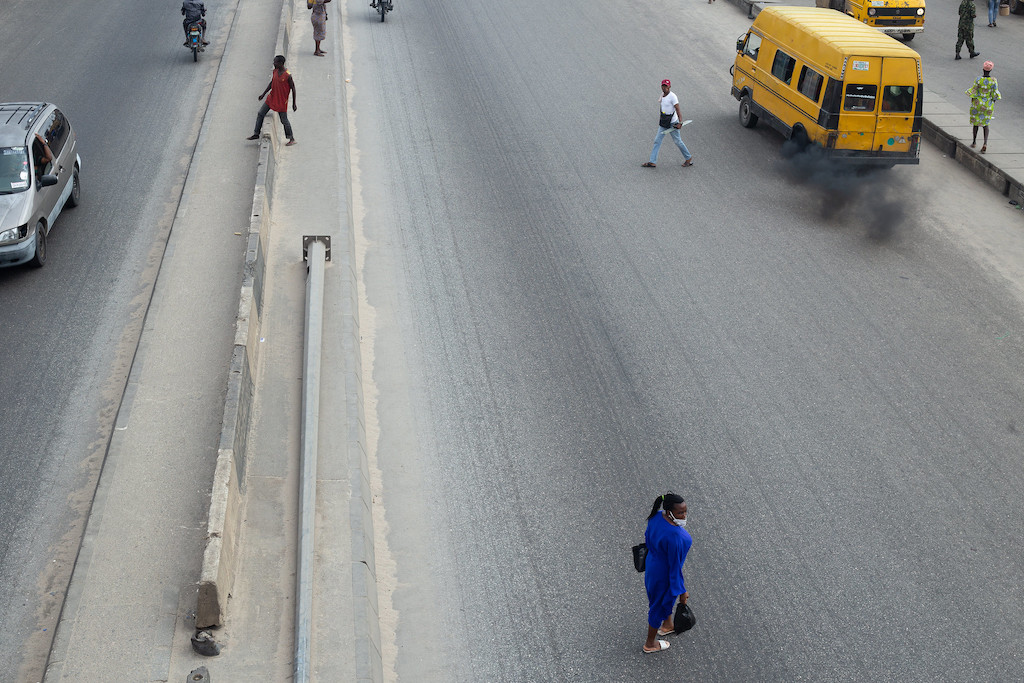
Lagos, Nigeria in September 2020. (International Monetary Fund / Flickr)
Since the G20 meeting in 2009, a range of international organizations have used climate change arguments to press for fossil fuel subsidy reform. A widely read International Monetary Fund (IMF) study from the same year estimates that the global cost of fossil subsidies in 2017 was about $5.2 trillion, and that cutting these would reduce global carbon emissions by 28 percent. These amounts include direct subsidies to production and consumption, as well as external costs such as health and environment.
Now, the World Bank, Organization for Economic Co-operation and Development (OECD), and the International Energy Agency (IEA) want to use COVID-19 as an opportunity to get rid of what they consider inefficient fossil fuel subsidies. The G20 did not achieve much before 2020, only reducing fossil fuel subsidies by 9 percent. Most of this reduction was the result not of active policies, but lower costs of the subsidies, due to reduced international petroleum prices.
However, in responding to COVID-19, the G20 is moving in the wrong direction with new subsidies in the form of equity injections, loans, tax exemptions, and the relaxing of environmental standards. G20 countries spent about $170 billion in “public money commitments to fossil fuel-intensive sectors between January 1 and August 12, 2020.” In the US, COVID-19 packages to fossil fuel companies cost the public at least $50 million, in addition to the $20 billion in annual subsidies. In Norway, a member of the non-G20 country group “Friends of Fossil Fuel Subsidy Reform,” the oil industry got tax postponements worth more than $10 billion.