In Bosnia, the End of War Has Not Brought Peace
The Dayton Agreement ended the bloody Bosnian War of the 1990s, but it hasn’t resolved the conflicts plaguing the country. It’s a cautionary tale for finding an effective peace agreement in Ukraine.
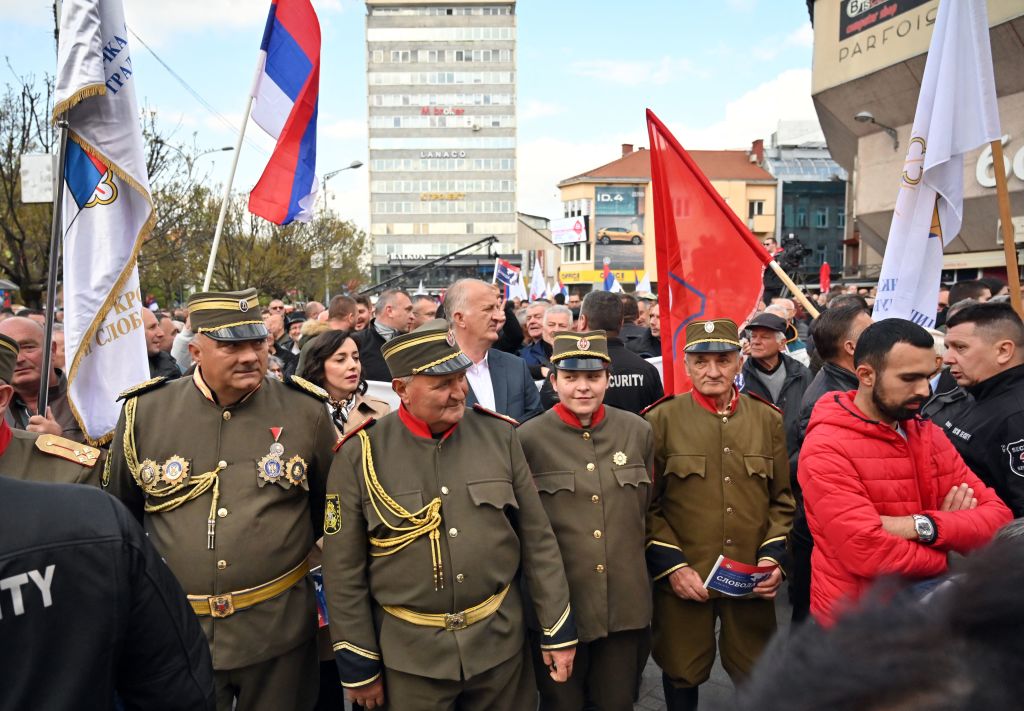
Supporters of the Bosnian-Serb leader Milorad Dodik gather in the center of the northern Bosnian town of Banja Luka on April 20, 2022. (Elvis Barukcic / AFP via Getty Images)
The war in Ukraine has, quite understandably, overshadowed other conflicts in Europe and around the world. The standoff between Armenia and Azerbaijan over Nagorno-Karabakh is one such conflict; the simmering political tension in Bosnia is another. The 1995 Dayton Agreement ended the terrible war in Bosnia, but it set up a wasteful and unwieldy political system that entrenched ethno-national conflicts and crippled the country’s economy. These tensions have not yet erupted into a new armed conflict in the Balkans, but this remains a distinct possibility.
Russia’s inability to forcibly subjugate Ukraine has raised fears that Vladimir Putin could try to open a second front in the region. While its military struggles in Ukraine make this a remote possibility, the geopolitics of war have exacerbated tensions in an already tense region.
Emina Muzaferija is a graduate researcher based at Virginia Tech university in Washington, DC, specializing in the politics of postwar Bosnia. She spoke to Jacobin’s Chris Maisano about the history of the Bosnian War, the conflict-ridden political system created by the Dayton Agreement, and the lessons Bosnia teaches us about the possibilities of finding an effective and durable settlement for the war in Ukraine. This transcript has been edited for clarity.