The Armenia-Azerbaijan Conflict Is a Product of the Soviet Union’s Collapse
The war in Ukraine has overshadowed the ongoing battle between Armenia and Azerbaijan. But both conflicts show the Soviet Union is still unraveling — with devastating, bloody consequences.
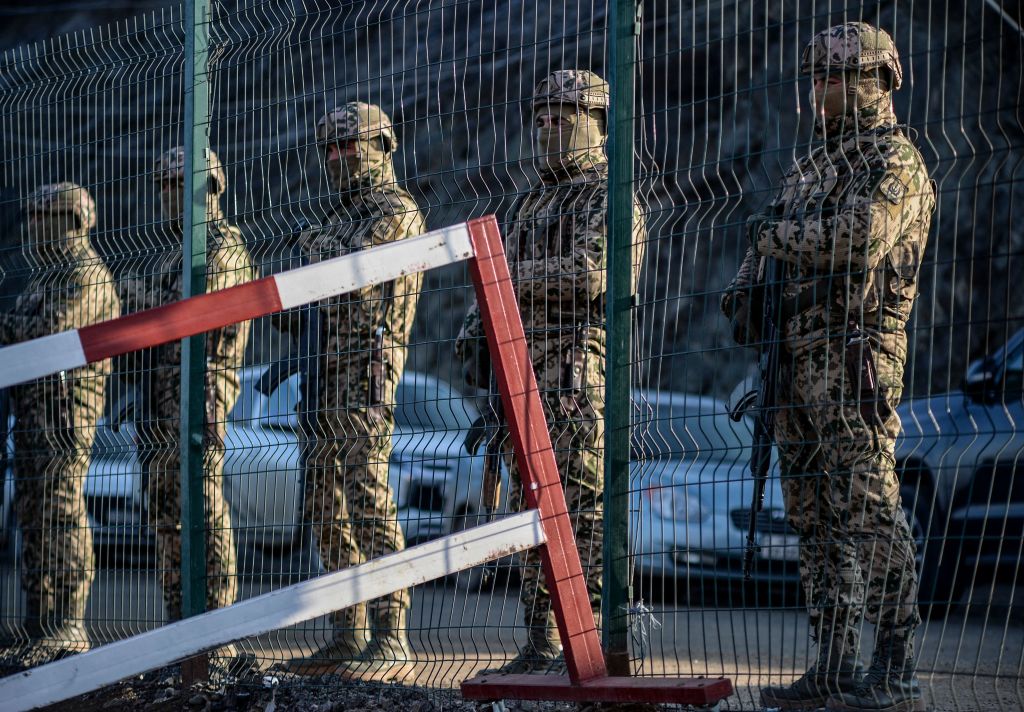
Azerbaijani servicemen stand guard at a checkpoint at the Lachin corridor, the only land link with Armenia for the Armenian-populated breakaway Nagorno-Karabakh region. December 27, 2022. (Tofik Babayev / AFP via Getty Images)
With the world’s attention focused on the war in Ukraine, another bloody post-Soviet conflict is flying under the radar — the ongoing battle between Armenia and Azerbaijan over a territory called Nagorno-Karabakh. These neighboring former Soviet republics have fought two wars against each other in the last three decades — the first from 1989 to 1994, and the second in the fall of 2020.
The 2020 war ended with an uneasy ceasefire, and in late 2022 Azerbaijanis instituted a blockade of the Lachin corridor, a narrow road linking ethnically Armenian Nagorno-Karabakh with Armenia proper. This roadblock has cut off thousands of people from food, fuel, and medicine, and thousands have been unable to return to their homes.
Ronald Suny is a leading historian of the Soviet Union and the author of many books, most recently Stalin: Passage to Revolution. He spoke to Jacobin’s Chris Maisano about the roots of the Nagorno-Karabakh conflict, its place in the ongoing process of Soviet collapse, and the need for complexity and nuance in thinking about the post-Soviet world.