The Wrong Side of the Law
Legislation and case law targeting leftists is something like an American tradition.
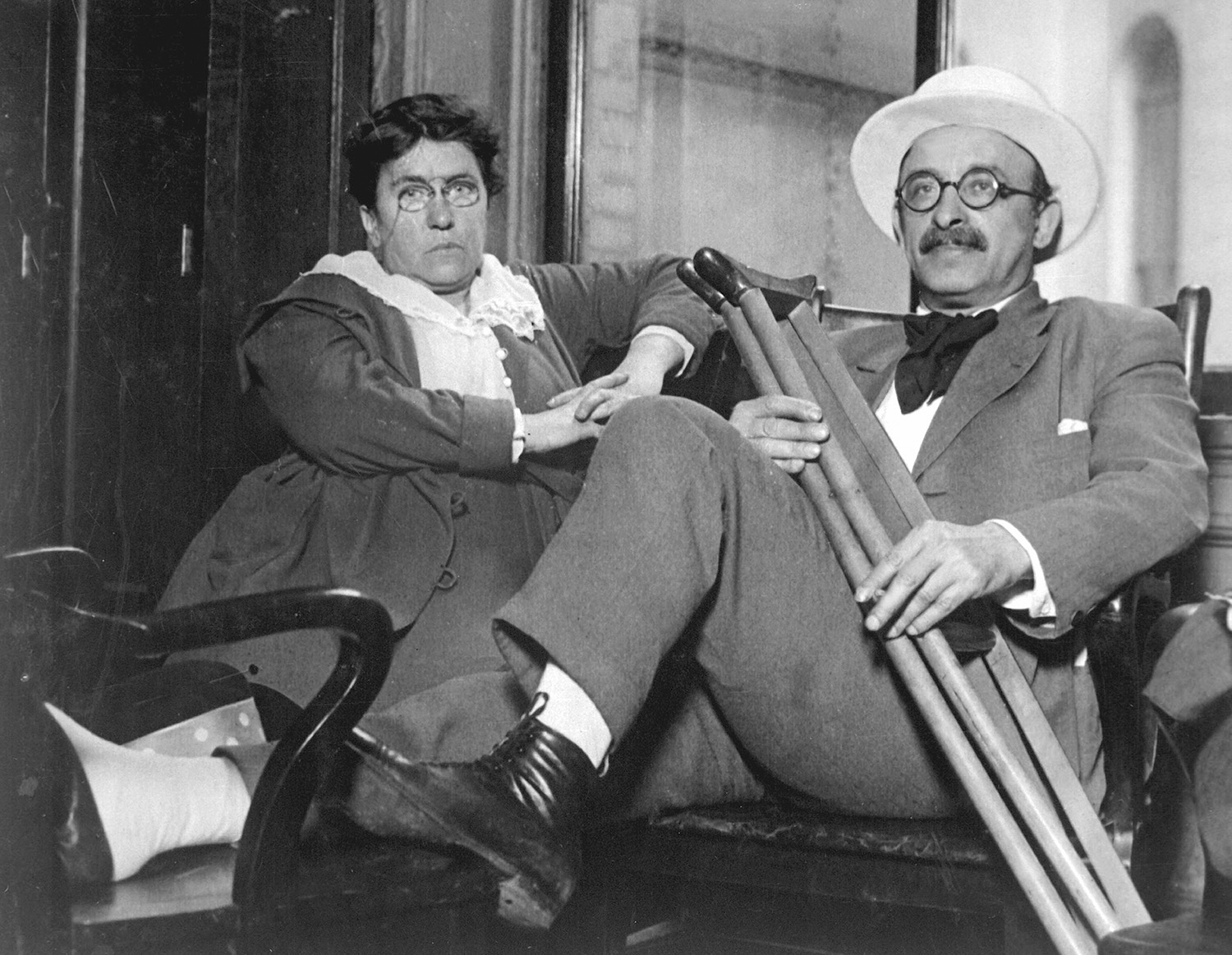
Anarchists Emma Goldman and Alexander Berkman recline side by side. (Interim Archives / Getty Images)
- Immigration Act of 1903
Better known as the Anarchist Exclusion Act, the Immigration Act of 1903 sought to curb the arrival of “idiots, insane persons, epileptics . . . professional beggars . . . polygamists, anarchists . . . prostitutes, and persons who procure . . . prostitutes” into the country. For the first time since the Alien and Sedition Acts of 1798, politics became grounds for denied entry to the United States. Amid working-class strife, legislators were particularly keen to target anyone “who disbelieves in or who is opposed to all organized government, or who is a member of or affiliated with any organization entertaining or teaching such disbelief in or opposition to all organized government.”
- Espionage Act of 1917
Passed soon after the United States declared war on Germany, the Espionage Act prohibited the dissemination of any materials pertaining to national defense with intent to do injury to the nation. But amid the First Red Scare, it was wielded particularly against prominent socialists — including Eugene Debs and Kate Richards O’Hare, both of whom served time in prison — and later expanded in scope by the Sedition Act.
- Immigration Act of 1918
The Immigration Act of 1918 expanded on the Immigration Act of 1903, enhancing the government’s right to expel anarchists, communists, labor organizers, and other political “undesirables” from the United States — an effort to stave off the type of revolution that had just swept through Russia.