A Child of the Weather Underground Looks Back

The moments of doubt and self-criticism in Zayd Ayers Dohrn’s memoir of growing up as the child of two Weather Underground leaders offer a history of the 1960s and ’70s that can inform healthier and more effective left strategy today.
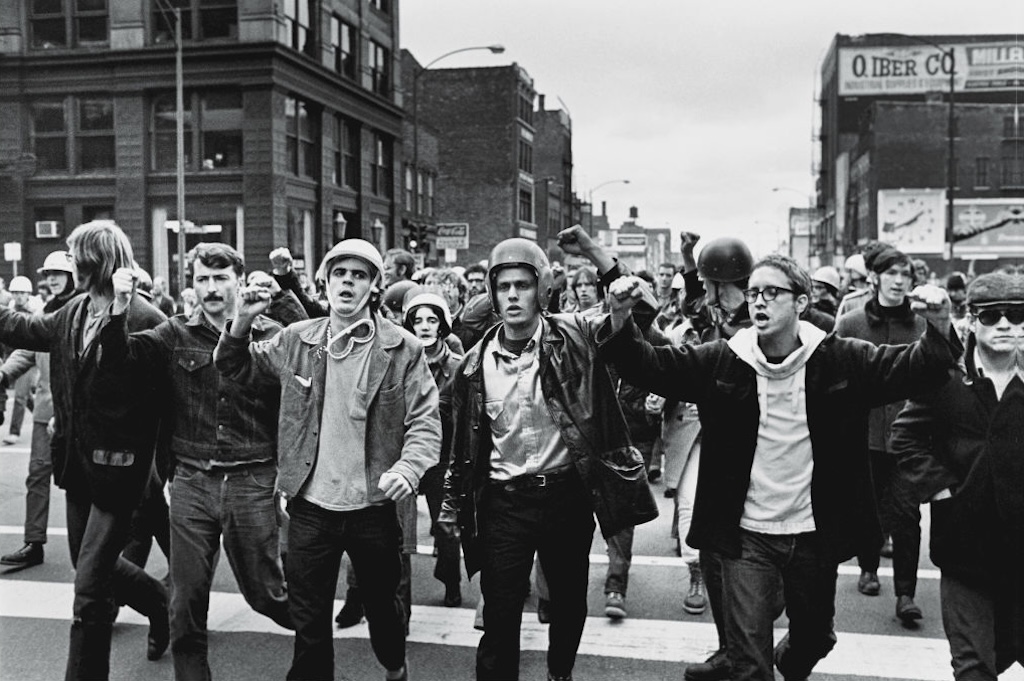
Weatherman activists march in the October 1969 "Days of Rage" in Chicago, Illinois.

Young activists march in Chicago for the Weathermen-organized “Days of Rage” in October 1969. Bill Ayers can be seen second from the right. (David Fenton / Getty Images)


A middle-aged Bill Ayers once asked his then-teenage son, Zayd Ayers Dohrn, to accompany him on a trip to Mississippi for his eighteenth birthday. Ayers and his wife, Bernardine Dohrn, two prominent, charismatic members of the militant group the Weather Underground that emerged out of the ferment of the 1960s, were now living a relatively quiet life above ground with their three children. Their adventurous sides had been dimmed in their later years but were still flickering.

Ayers said he wanted to travel down to Mississippi to kill Byron De La Beckwith. The now-elderly white southerner was the man who murdered National Association for the Advancement of Colored People Field Director Medgar Evers in June 1963, shooting the civil rights activist in the back from 150 feet away. More than three decades after an all-white jury failed to reach a verdict during De La Beckwith’s trial, the assassin was still a free man.

Bill, a symbol of New Left political violence during the Vietnam era, dreamed aloud of retribution with his son by his side.

“And when De La Beckwith came outside, one of us — which one? — would pull the trigger,” Ayers Dohrn recalls his father saying, in his new, sweeping book Dangerous, Dirty, Violent, and Young: A Fugitive Family in the Revolutionary Underground. The ambitious memoir adds new layers to the familiar ’60s story and shows that there is still much to learn about the era’s radical politics. From his vantage point as the son of the Weather Underground’s founders, Ayers Dohrn crafts a warm narrative that also encourages readers to critically examine his parents’ life in the underground and their broader worldview.

Although Ayers’s tone was half-joking when he proposed his plan to his son, Ayers Dohn took it seriously. “He deserved some kind of reckoning. I believed that. . . .  Honestly, I felt kind of proud that my father had asked me.” Soon after their conversation, justice was finally served through the courts rather than the barrel of a gun. The state of Mississippi prosecuted De La Beckwith, and a new trial led to a life sentence in prison. Evers’s killer died there in 2001 at the age of eighty.

Presenting the anecdote as a compelling case study on one’s faith in the moral arc of the universe, Ayers Dohrn now marvels at “how strange that really was.” He presents both sides of the debate over vigilantism and reminds readers, “Waiting for the slow gears of justice to turn was never my parents’ style.”

Bernardine Dohrn’s Ordinary Upbringing

Nearly four years after the release of the award-winning podcast Mother Country Radicals, which Ayers Dohrn created with historian Thai Jones and producer Ariana Gharib Lee, the book is less prone to romanticism and draws on the series’ most compelling moments. Interviews with veterans of the underground dominated the podcast’s retelling of a story that was already well known to most baby boomer activists and scholars of the era. But this history gained new relevance with the rise of a reinvigorated left in the summer of 2020, at its apex. The lines between past efforts to oppose state violence and the present were especially evident, and the main characters of Mother Country Radicals were presented as flawed but courageous revolutionaries.

The podcast’s most thought-provoking moments featured the children and grandchildren of the underground, including one scene in which Bill Ayers’s granddaughter debated him on the merits of John Brown’s 1859 raid on Harper’s Ferry. Ayers, who has a tattoo of John Brown on his back, defended the abolitionist’s actions to his skeptical granddaughter, a fascinating intergenerational exchange that captured the ever-present tension between reform and revolution on the Left.

Written after the podcast’s success, Ayers Dohrn’s memoir is even more impressive for its willingness to examine moments of doubt when evaluating the underground. In a different medium, Ayers Dohrn is more explicit in encouraging readers of his memoir to pause and question the efficacy and morality of political violence at various points in history. He also spends more time fleshing out the connecting points between different organizations opposing racial injustice and the Vietnam War. A generation removed from the shared traumas of the 1960s that shaped his parents, Zayd Dohrn is both warm and penetrating, drawing on his critical distance as he zooms in on his parents’ American upbringings, motivations, actions, and explanations for their complicated legacies for the American left.

“The most remarkable thing about Bernardine was how absolutely ordinary she was,” recalled one of Ayers Dohrn’s mother’s high school classmates. Best known for her dark clothing and high leather boots, Bernardine Dohrn grew up in a lower-middle-class suburban household just north of Milwaukee, where she was a bright, popular student.

She was strong-minded but led a conventional life as a college student at the University of Chicago, where she later enrolled as a law student. Like other young, idealistic liberal-minded college students of her generation, Bernardine was inspired by the Civil Rights Movement in her youth but did not immediately dive headfirst into movement activism. Following the murders of Freedom Summer activists James Chaney, Andrew Goodman, and Michael Schwerner in Mississippi, she initially decided to head down south to join the movement. However, Dohrn changed her mind and stayed in Chicago to avoid a breakup. Her then-boyfriend thought the trip was too risky, and she did not want to lose him. “I would have been starting from scratch,” recalled Dohrn.

Mug shot of Bernardine Dohrn
Bernardine Dohrn’s mug shot, 1970.

It was the last moment when Bernardine let a personal relationship trump the movement. The relationship soon ended, and the soon-to-be revolutionary was fortunate enough to be a “witness to history” with Martin Luther King Jr’s Chicago Freedom Movement in 1966. Watching the backlash to King’s efforts to combat housing discrimination “would set her on the path to revolution.” Within a few years, she would transition from a promising law student to one of the FBI’s ten most wanted fugitives.

By 1968, Dohrn was the president of Students for a Democratic Society (SDS), an organization that had veered away from its reformist origins and toward various strains of revolutionary sectarianism. The limits of the civil rights reforms of the 1960s and the genocidal violence of the Vietnam War drove many young activists to embrace more provocative, destructive rhetoric and tactics.

Bernardine had previously “never been in trouble before, never broken a law,” but was now openly defending the use of political violence at SDS rallies. “There’s no way to be committed to nonviolence, in the middle of the most violent society history has ever created.” The future face of the underground would not miss out on another moment where she felt like she could change history.

Bill Ayers’s Journey

Growing up in a wealthy suburb in Illinois, William Ayers first became involved in the movement as a student at the University of Michigan. Despite his more privileged upbringing, Bill’s path toward the underground was similar to Bernardine’s. As a student at the University of Michigan, Bill also joined SDS after he attended the school’s momentous teach-in on the Vietnam War in April 1965. He couldn’t turn away from what he learned about the war and gradually became more involved in student organizing.

Bill Ayers's mug shot
Bill Ayers’s mug shot, 1970.

Aside from activism, Ayers also immersed himself in early education, working at a progressive preschool, the Children’s Community School. It was there that he met his eventual girlfriend, Diana Oughton, a master’s student at Michigan’s School of Education who had previously worked for the American Friends Service Committee in Guatemala. By 1968, both Bill and Diana became leaders within SDS, concluding that young activists needed to “bring the war home” to save the Vietnamese people.

“Maybe teaching feels like it’s not enough. Maybe nothing feels like enough,” writes Zayd of his father’s decision to bury his passion for teaching and join the revolution. The slow, steady work that could incrementally improve your community was insufficient. After years of teach-ins and other peaceful protests, Bill wanted to be at the tip of the spear.

In one of his more reflective moments, Ayers criticizes how he and his comrades handled their awakening. “We saw something like a flash of light, the kind of insight of a single bright lightbulb in a dark room . . . it’s all about race.” He added, “I think an insight like that can both be illuminating and blinding. . . . If you can’t see nuance and complexity around the edges, you make enemies of people who aren’t your enemies. And you take actions that you shouldn’t take.”

From Mass Organizing to Days of Rage

Bill, Diana, and the other radicals who made up the Weatherman faction of SDS contributed to SDS’s collapse and began to plan for violent actions against the war. The same week that millions of activists participated in the historic Moratorium to End the Vietnam War on October 15, 1969, the Weathermen held the far more combative Days of Rage in Chicago. Organizers framed the Moratorium as a day of protest that could include businessmen, families, and other elements of mainstream America. It was the largest antiwar protest in US history. Years later, it became clear that the broad-based protest helped convince President Richard Nixon to cancel a devastating bombing campaign of North Vietnam. The Weathermen and other like-minded radicals, meanwhile, derided the Moratorium as a Sunday school picnic.

Only a few hundred people attended the Days of Rage, which consisted of fistfights with police officers, property destruction, and other petty acts of vandalism. “It’s Custeristic in that its leaders take people into situations where they can be massacred, and they call that revolution — and it’s nothing but child’s play. It’s folly,” argued Fred Hampton, Chair of the Illinois Black Panther Party, shortly before he was drugged and assassinated by the FBI and Chicago Police.

Bringing the war home failed in Chicago, but the Days of Rage were still representative of a strain of ultraleft radicalism that appealed to a small but growing number of white and black radicals. Ayers Dohrn reminds readers that his parents existed within a multilayered network of radicals and other supporters who were willing to go to war with the state. Weather had its fair share of critics like Hampton, but they also had their supporters who aided their development of an underground network.

For example, none of the Chicago 8 defendants, who faced prosecution in the wake of the 1968 Democratic National Convention protests in Chicago, condemned the Days of Rage. One of the defendants, former SDS President Tom Hayden, even spoke at the Days of Rage and attended Weather’s Flint “War Council” meeting on December 27, 1969. With the belief that they were soldiers, the use of bombs was the next logical step. Escalation was the only way forward. Looking back at the fall of 1969, Bernardine Dohrn declared at the War Council, “We f — ed up,” lamenting, “We didn’t burn Chicago down when Fred [Hampton] was killed!”

Splitting up into cells across the country, Weathermen on the East Coast bombed the Inwood, Manhattan home of State Supreme Court Justice John M. Murtagh, who was presiding over the hearings of the Panther 21 case, which accused Black Panthers of a conspiracy to kill police officers and bomb public spaces. The Weathermen set off the gasoline bombs outside the front door and underneath a car in the garage, destroying the front windows and setting the property’s roof on fire. Graffiti on the sidewalk read, “THE VIETCONG HAVE WON! KILL THE PIGS! FREE THE PANTHER 21!”

More than five decades later, Ayers Dohrn recounts this moment as the “first civilian targets of an increasingly radicalized East Coast Weathermen cell.” He also makes sure to include a quote from Murtagh’s son, John Jr, who was nine at the time of the bombing. “I remember standing in the kitchen with my parents,” he told Fox News. “We could see flames through the window. You’re stuck in a burning house, but you’re not sure whether it’s safe to leave.”

By the end of the winter, Diana Oughton was dead. Along with Ted Gold and Terry Robbins, she was one of the three Weathermen casualties from the Greenwich Village townhouse explosion on March 6, 1970. In their case, bringing the war home involved building a nail bomb that they planned to set off at a noncommissioned officers’ dance at Fort Dix in New Jersey. The goal was to kill military personnel and other attendees.

Instead of committing a brutal act of terrorism, the group accidentally set off their bomb in the basement, killing three of the five who were in the building. Kathy Boudin and Cathy Wilkerson (whose father owned the property) survived and narrowly escaped before police arrived at the scene. Bill was devastated over the death of his partner, a pivotal moment where he could not help but question his past decisions. Ayers Dohrn recalls his father bringing him to the site as a young child. When asked about what happened to his friends, a mournful Ayers replied to his son, “We were all angry back then. About the war. About other things.”

The accidental explosion shook the entire Weather Underground network and convinced Bernardine Dohrn that the group would no longer attempt to kill people with their explosions. Going forward, they would call advanced warnings to security or local police in order to evacuate the buildings they bombed.

Over the next few years, Bernardine, Bill, and what was left of their group organized dozens of bombings that several historians have extensively documented in their books about the Weather Underground. What makes Ayers Dohrn’s memoir unique is his ability to directly question his parents’ choices and present to readers an unsparing depiction of their revolutionary mindset.

At one point, in the wake of the January 6, 2021, attack by supporters of President Donald Trump, Zayd asks his father if regrets the Weather Underground’s bombing of the 1972 US Capitol Building. “Well there are insurrections against the state that I’m all for,” replied Ayers. “But these fascists taking over Washington? Of course. That’s a fascist insurrection. You have to oppose that. The question is what are you doing it for?”

Ayers-Dohrn makes it clear to readers in 2026 that he disagrees with his parents and believes that “means matter,” adding that “a resistance movement that justifies violence, especially against civilians, will often alienate its natural allies and betray its own ideals.” Plenty of others have made this point when debating the impact of the Weather Underground, but hearing it from a Weather kid who holds great affection for his parents makes the argument even more powerful. Ayers Dohrn praises his parents for stepping back from targeting civilians with their bombs, but also acknowledges the danger of their post-townhouse operations.

A Rising Sectarianism Alongside Rising Violence

Ayers Dohrn also takes aim at the more cultish aspects that shaped the Weather Underground and other New Left groups of the early 1970s that weakened the broader movement. The decision to use their bombs to kill created a split within the group, and eventually Bernardine and Bill were both the victims of sectarian infighting. The desire to transform oneself into a revolutionary being led to destructive self-criticism sessions that sought to correct anything that resembled bourgeois individualism.

“You get whipped more . . . and the more you get whipped, the more you feel like you’re being purified,” remembered Kathy Boudin about the sessions.

Ayers recalled one particularly painful self-criticism session following a day where he saw a movie and then ate ice cream with a woman comrade. The woman then condemned him for reading a mournful poem by Bertolt Brecht, one that he felt described his increasingly mixed emotions about joining the underground. “He read me this f–king poem. We had ice cream. I’m critical of myself, but I’m mostly critical of him. F–king Brecht,” said the woman.

Bill was torn up inside but thanked the group for their feedback and “got right back in line.” His son would feel even more ambivalent about losing one’s identity within a collective and even admits to a lingering discomfort at political rallies.

Bernardine and Bill’s commitment to the cause became even more complicated by their decision to build a family together years after they became partners. The second half of the book not only provides a vivid account of their life underground, but also Ayers Dohrn’s discovery that his origin story, that his birth in 1977 had changed everything for his parents, was a lie.

Living in New York City with their young son, Bill worked at a local daycare while Bernardine worked at Broadway Baby, a specialty store selling clothing and other accessories for infants. Continuing to live under aliases, the couple seemed to be settling down. But the path out of the underground was far from linear. The two were still committed to participating in activities, albeit quieter ones, that aided the Black Liberation Army, another underground Marxist-Leninist organization dedicated to waging war on the US government, and the remnants of the Weather Underground.

Through his own research, Ayers Dohrn discovered that Bernardine supplied stolen IDs to radicals-turned-bank-robbers in the late 1970s. He also learned that Bill went as far as to participate in the mission that led to Assata Shakur’s escape from prison in November 1979. “Bill and Bernardine were still desperate to be part of something larger than themselves. Larger than their relationship. Larger, even, than our family,” writes Ayers Dohrn.

Why did Bill put his family at risk in 1979? “Because it mattered. Because the world needed it to happen,” he tells his son. He adds, “Every one of us finds ways to lie to our children.”

The author leaves it somewhat open to his readers to judge his parents’ motivations. Were they primarily driven by a shortsighted need for adrenaline, or a sincere commitment to a better world? Regardless, Ayers Dohrn concludes that his “parents and their comrades chose the cause every time.” The problem here, though, wasn’t choosing the cause. A multitude of organizers, including self-described revolutionaries, chose the cause and did not pick up the gun. Instead of bombings and prison escapes, many movement activists believed the world needed more conventional forms of organizing to strengthen a mass movement. Numerous other SDSers grew frustrated, and at times despondent, over the Vietnam War, but only a small number joined the underground and set off bombs.

A Weather Kid’s Lessons

Bill and Bernardine had a second son, Malik, in 1980, whose full birth name was Zayd Malik Shakur, named after the former minister of information of the Harlem chapter of the Black Panther Party. Shakur was killed in the shoot-out with New Jersey police officers that led to the capture of Assata Shakur in 1973. With a toddler and a baby at home, the radical couple decided to stop hiding. After a decade underground, Bernardine and Bill turned themselves in to federal authorities in 1980.

While Bill’s charges were dropped due to prosecutorial misconduct uncovered during Watergate, Bernardine had a few remaining charges related to aggravated battery and bail jumping. She was ultimately sent to prison for seven months due to her refusal to provide information on comrades involved in bank robberies. In 1981, their close friends Kathy Boudin and David Gilbert were arrested for their roles in a failed robbery carried out by members of the Black Liberation Army in Nyack, New York. A shoot-out occurred, and the robbers killed a Brinks armored guard and two local police officers. Boudin and Gilbert were in the getaway car and were both given lengthy prison sentences. Boudin was released in 2003, and Gilbert was granted parole in 2021. They left behind their eighteen-month-old son, future San Francisco District Attorney Chesa Boudin, who Bernardine and Bill adopted.

As a new addition to the Ayers Dohrn household, Chesa was a daily reminder of the risks that nearly upended their own family unit. Prior to her release from prison, Dohrn told the court, “I believe that it is necessary for me to resist. I have a very intense desire that our children grow up in a better world than we have now offered.”

Ayers Dohrn pulls from his family’s archive throughout the book to show how the tensions between his parents’ form of sectarian revolutionary politics and his own needs as a child shaped his earliest memories. Ranging from Bernardine’s letters documenting her marital problems and struggles with early motherhood to his campaign to convince his parents to purchase a “G.I. Joe” action figure, the Weather kid admirably allows us to scan his loving family’s secrets, contradictions, and unresolved debates over their shared history.

The story of the Weather Underground still looms large in popular culture (most recently, for example, in Paul Thomas Anderson’s One Battle After Another), as it has repeatedly served as a warning that hope and idealism in the face of rising authoritarianism can transform into reckless adventurism. Despite the book’s evenhanded depictions of his parents’ activism, Ayers Dohrn still makes the case to not only focus on the mistakes of the New Left’s underground: “If all we inherit is their failure and tragedy, we lose the value of their hope and idealism.” Situating Bernardine, Bill, and the other radicals who chose the underground within a broader context is healthy, but so is measuring their effectiveness against the many others who chose more traditional forms of organizing for civil rights and against the Vietnam War — organizing that actually helped move the needle on fighting racism and ending the war.

“There’s something that feels uncomfortable — disloyal — about this kind of investigation,” writes Ayers Dohrn. “Poring over my parents’ private histories still feels risky, and even a bit dangerous.” The willingness to be disloyal leads to a much more interesting history of his parents and the broader history that produced them.

Dangerous, Dirty, Violent, and Young: A Fugitive Family in the Revolutionary Underground should encourage movement veterans, scholars, and today’s activists to open the door to more candid assessments of the New Left, from the underground to the grassroots organizers who chose a more productive path. The moments of doubt and sincere self-criticism in Ayers Dohrn’s memoir contribute to a better history of the ’60s, one that can supply healthier lessons for those seeking to combat the current administration’s wars at home and abroad.