Queen Elizabeth II’s Reign Glamorized Britain’s Political Backwardness
During Queen Elizabeth II’s 70-year reign, the UK witnessed immense social transformation. Throughout this tumultuous period, the monarchy served one purpose: suppressing Britain’s political divisions in the name of unity and deference to the Crown.
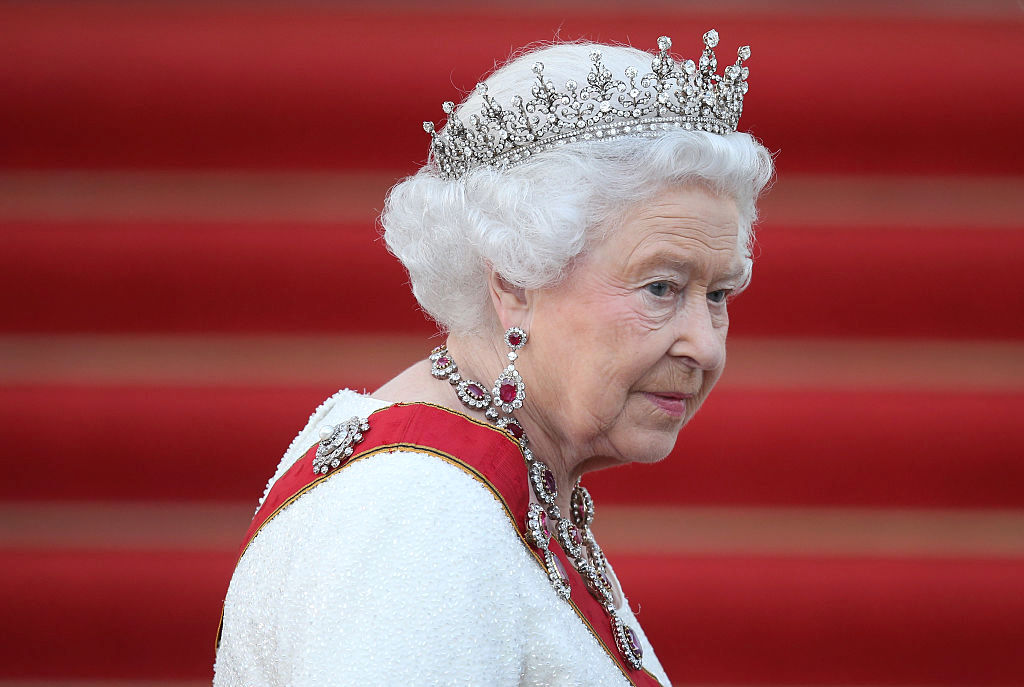
Queen Elizabeth II on a four-day visit to Berlin, Germany in June 2015. (Sean Gallup / Getty Images)
Queen Elizabeth II, who died yesterday at Balmoral Castle in Scotland at the age of ninety-six, became monarch in the early hours of February 6, 1952, while on safari holiday in the then British colony of Kenya. That she would reign for seventy years, becoming in the process the country’s longest-serving monarch, was a fact no one at the time could have foreseen.
Since her death, much has been made of the scale of social and political change that occurred in the years after she ascended the throne, as well as the modernization she oversaw in the institution of the monarchy itself — even if, for the most part, she merely acquiesced to the changes rather than driving them herself. She was, to hear the eulogies, that most oxymoronic of things: a “modern monarch,” who dragged the archaic institution into a new century.
The role of the monarch has undoubtedly undergone a profound series of changes in the past seventy years. Already a purely ceremonial role, it has retreated further from the everyday realities of political power in Britain; rare has been the occasion on which the queen’s mask of impartiality has slipped. Yet one of the enduring truths of British politics is that, as the political role of the monarch has declined, the constitutional — and ceremonial — one has increased, sometimes enormously.