Has Sinn Féin’s Day Come?
Sinn Féin is now the leading party across Ireland. But its real test will happen in power.
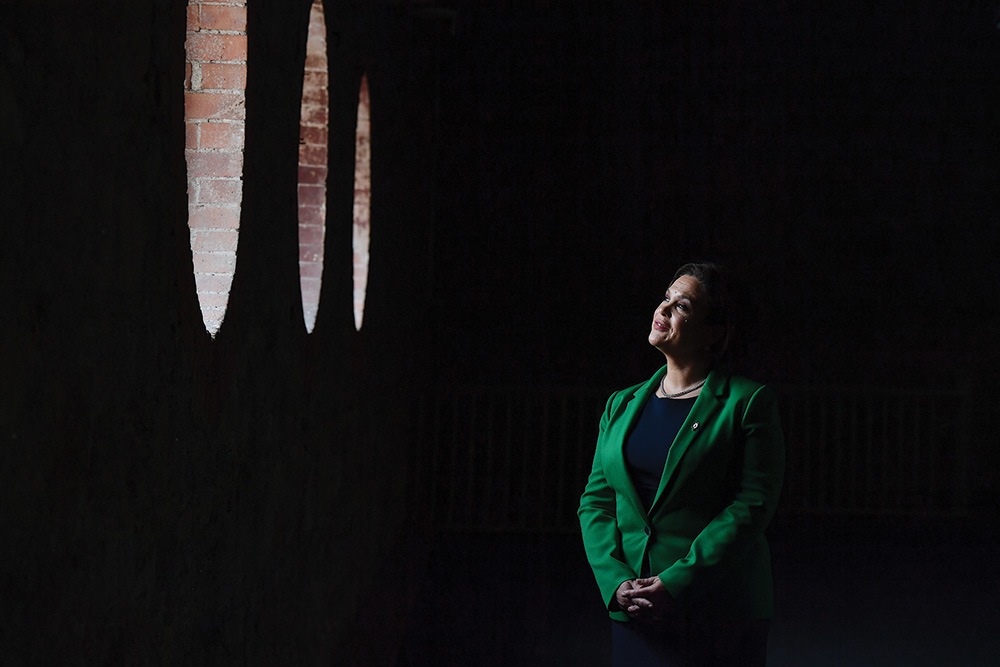
Getty Images
The unthinkable has happened: Sinn Féin has established itself as Ireland’s best-supported political party on both sides of the Irish border. In the Northern Ireland Assembly election held on May 7, the party overtook its unionist rival, the Democratic Unionist Party (DUP), to become the region’s leading political force. In the Republic of Ireland, Sinn Féin had already claimed the biggest vote share in the February 2020 general election. Having achieved a higher level of support during the covid-19 pandemic, it enjoyed an average polling score of about 34 percent between January and June of this year — nearly ten points higher than its 2020 result, and with a double-digit lead over its closest competitor.
Sinn Féin belongs to a loose family of parties in Western European countries where there is an unresolved national question, along with Plaid Cymru in Wales, the Scottish National Party (SNP), the Basque coalition eh Bildu, and the Republican Left of Catalonia. All of these organizations situate themselves on the political left or center left and put forward social and economic policy platforms as well as calling for national independence (or, in Sinn Féin’s case, the unification of Ireland). What sets Sinn Féin apart from its sister parties — or any other major European party, for that matter — is the fact that it organizes in two different jurisdictions that have been developing along separate lines for more than a century.
In the North of Ireland, Sinn Féin has built its electoral base as the main representative of the nationalist community, which had long experienced exclusion and discrimination before the 1998 Good Friday Agreement established a regional power-sharing government. Although Sinn Féin has spent most of the time since 2007 governing Northern Ireland in an awkward partnership with the dup, its long-term goal is to dismantle the statelet altogether. The fallout from the Brexit referendum has made this seem far more plausible than it did just a few years ago.