Jean-Paul Sartre’s Anti-Imperialism Is Still Too Radical for France Today
Jean-Paul Sartre’s uncompromising opposition to the crimes of empire makes him a taboo figure in French culture. The French political mainstream is still in denial about the bloody history of colonialism.
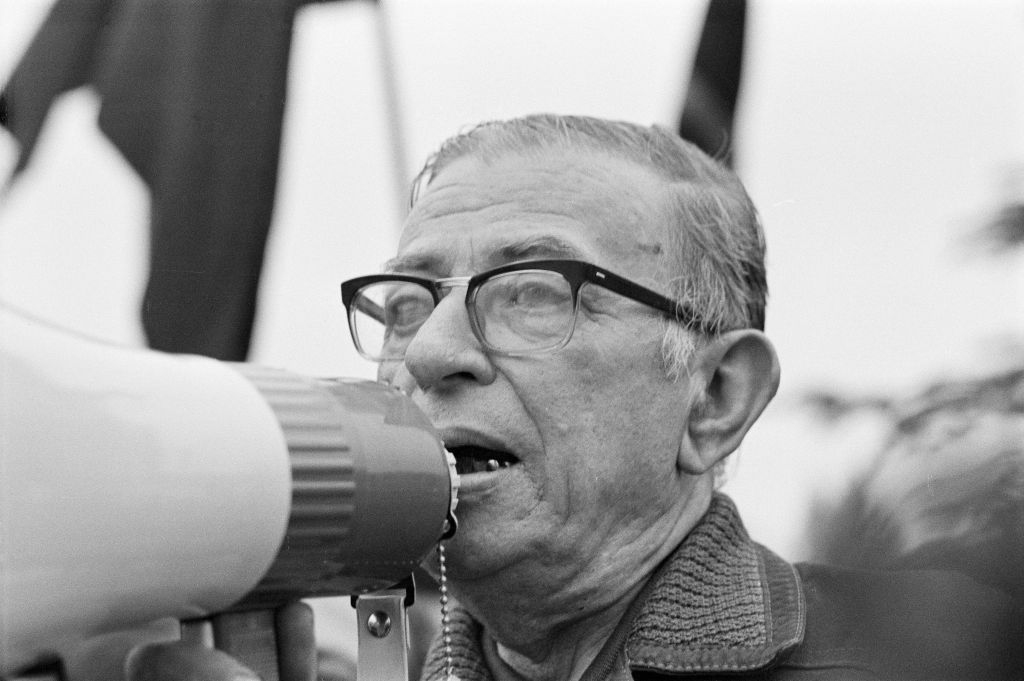
French existentialist philosopher Jean-Paul Sartre demonstrates against racism in 1971. (Michel Ginfray / Sygma via Getty Images)
The French philosopher Jean-Paul Sartre was one of the most influential thinkers of the last century. His death, in 1980, left many people in France and the wider world feeling bereft of political guidance.
One of the main ethical and political questions that he addressed in his work was the colonial relationship between Western countries and the Global South. From his own country’s brutal war in Algeria to the US invasion of Vietnam, Sartre spoke out fiercely against the crimes of empire.
Oliver Gloag teaches French and francophone studies at the University of North Carolina, and is the author of Albert Camus: A Very Short Introduction. This is an edited transcript from Jacobin Radio’s Long Reads podcast. You can listen to the episode here.