After Trump’s Colonial Carve-Up, Western Sahara Has Risen Up
In one of his last acts as president, Donald Trump gave US recognition for Morocco's illegal occupation of Western Sahara in exchange for Moroccan recognition of Israel. It's unclear if Joe Biden will reverse the move — but the Saharawi population has now risen up against the occupation, refusing to let foreign powers dictate its future.
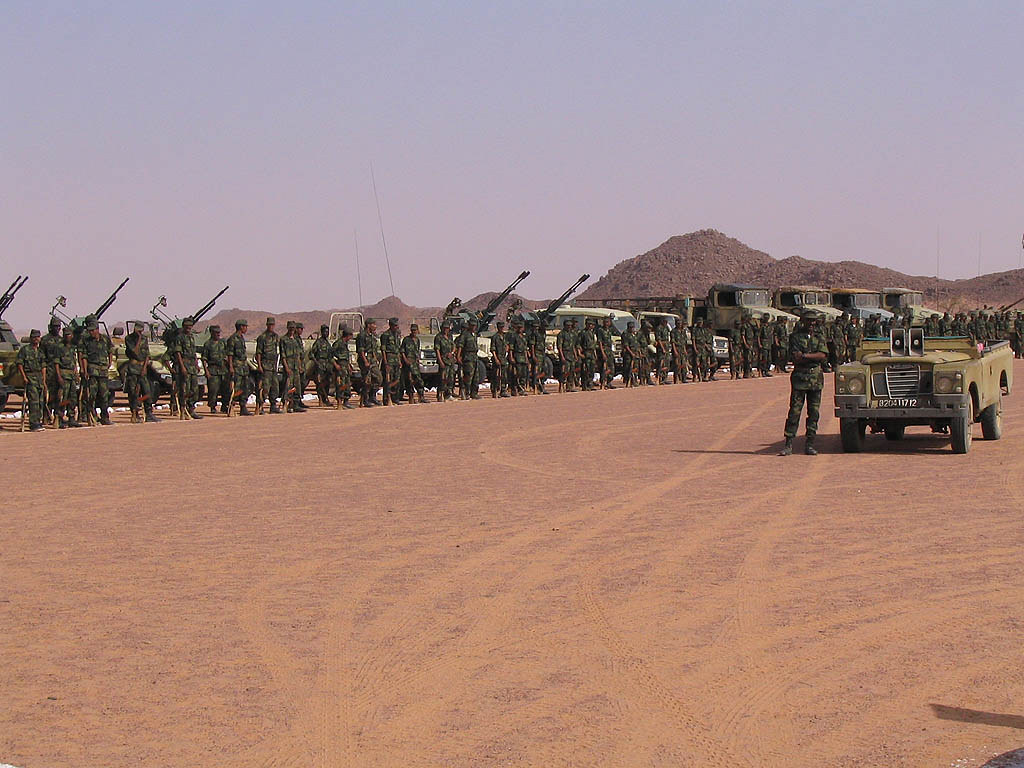
Saharawi troops near Tifariti, Western Sahara, awaiting the celebration of the 32nd anniversary of the Polisario Front. (Western Sahara / Flickr)
When Donald Trump announced on December 10 that his administration was recognizing the legitimacy of Morocco’s occupation of Western Sahara in exchange for Moroccan recognition of Israel, it was the first time many people had heard of Western Sahara. This is despite the fact that less than a month earlier, on November 13, a three-decade-old cease-fire ended — and active hostilities between Saharawi liberation forces and the Moroccan occupiers resumed.
If often overlooked in Western media, the conflict dates all the way back to 1975, when the departing colonial power, Spain, made a secret deal for the sparsely populated country to be partitioned between Morocco and Mauritania. France was also part of the deal: as a former colonial power in both Morocco and Mauritania, it had a strongly neocolonial relationship with both.
The partition was resisted by the Saharawi liberation movement the Polisario Front. It had begun an armed independence struggle against Spain a few years earlier, declaring the independence of the Saharawi Arab Democratic Republic (SADR). The Polisario Front achieved a number of victories, their troops even reaching the Mauritanian capital, Nouakchott. Mauritania and Western Sahara have been at peace since 1978, and Mauritania, like most African nations and the African Union, now recognizes the SADR.