The Problem With Alice Waters and the “Slow Food” Movement
If we followed the advice of “slow food” advocates like Alice Water, we’d end up with literally billions hungry and more workers hyperexploited. There’s nothing progressive about the “slow food revolution.”
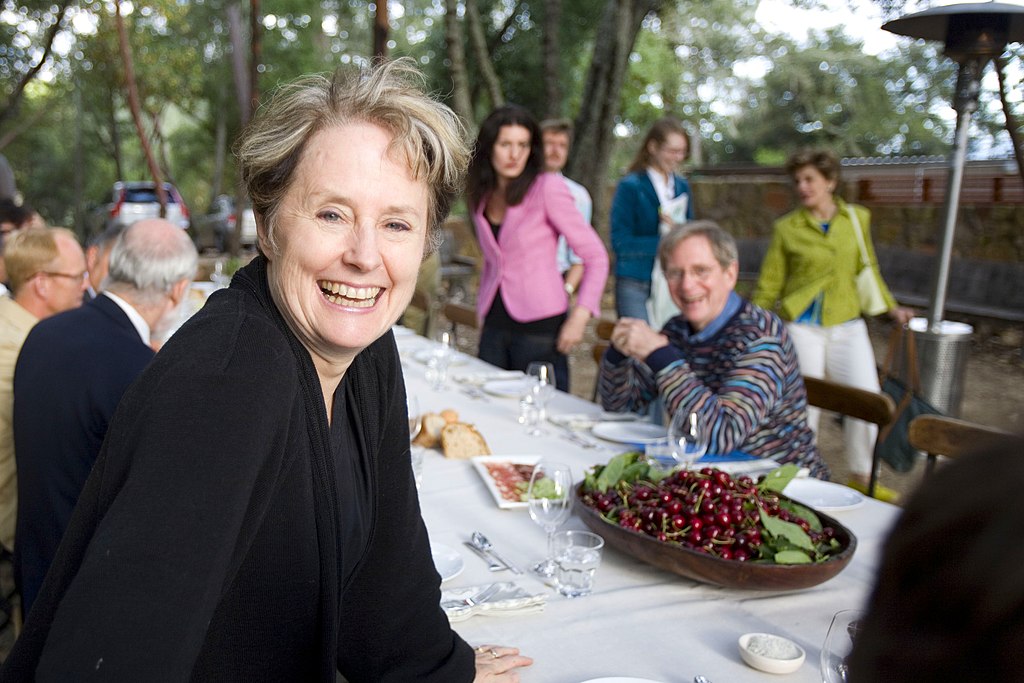
Alice Waters hosting a dinner at Viader Vineyards in Napa, California, on June 4, 2007. (David Sifry / Wikimedia Commons)
Alice Waters, the doyenne of farm-to-table cooking, organic farming, and all things California cuisine, has long been a celebrated figure. Her brand of industry-defying, Berkeley-inspired, slow food idolatry has captured the minds of both the culinary world and many progressives. But Waters and the ideology she has been so instrumental in constructing have also clashed with many traditionally leftist goals.
That’s something some conservatives have picked up on; in 2008, philosopher John Schwenkler authored a provocative article for the American Conservative arguing that Waters’s social and political agenda ought to be embraced by the modern conservative movement.
America’s industrialized and mass-produced food system, Schwenkler argued, was a product of big government, overregulation, rent seeking, and subsidies. Water’s vision, by contrast, “binds us most fundamentally to place, family, market, and community,” representing, Schwenkler claimed, “a crucial step in the restoration of culture” and “the kinds of projects that will build community; revitalize regional economies; encourage stable, healthy families; and instill the kinds of civic attitudes that make centralized government appear burdensome.”