The US Blockade on Cuba Must End
For sixty years, the United States has aimed to strangle Cuba’s economy and inflict misery on the Cuban people. Blockades are methods of war — and it’s time for the war on Cuba to end.
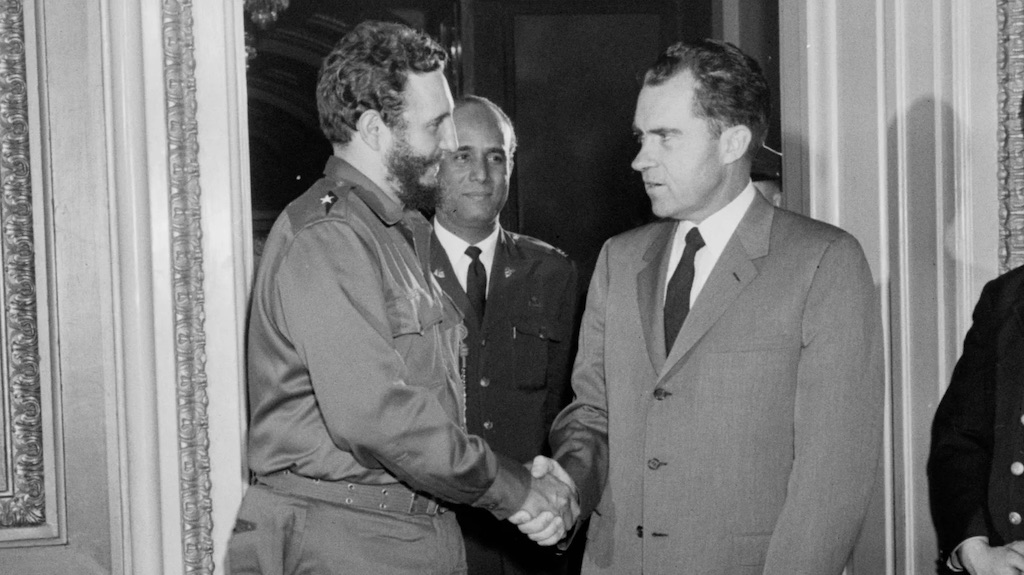
Richard Nixon, then Dwight D. Eisenhower’s vice president, met with Cuba’s Fidel Castro on April 19, 1959, in Washington, DC.
“They always blame the United States,” Sen. Marco Rubio (R-FL) said on the Senate floor this week. “The embargo, the first thing they blame, it’s the embargo. ‘The embargo is causing all this.’”
Not long after the UN General Assembly voted for the twenty-ninth straight year to condemn the six-decade-long US embargo on Cuba — a 184-2 vote that pitted only the US and Israeli governments against the rest of the entire world — the country has erupted in massive protests over widespread food and medicine shortages. A chorus of voices, ranging from Bernie Sanders and other congressional progressives to former Brazilian president Luiz Inácio Lula da Silva and Mexican president Andrés Manuel López Obrador, have blamed the conditions on the long-standing US policy, and called for it to be finally lifted.
Regime-change advocates like Rubio have pushed back against this. For them, the embargo is irrelevant to what’s now happening in the country, which they claim instead is a product of “six decades of suffering under totalitarian socialism and communism.” Predictably, their preferred response to the current protests doesn’t involve ending the policy.