Trade Agreements Like NAFTA Are a Menace to Democracy
Free-trade agreements enable companies to sue governments if they interfere with profit-making activities, no matter how destructive. The Biden administration now faces a legal threat for halting the Keystone XL project. These trade deals put us in an antidemocratic straitjacket — it's time we got rid of them.
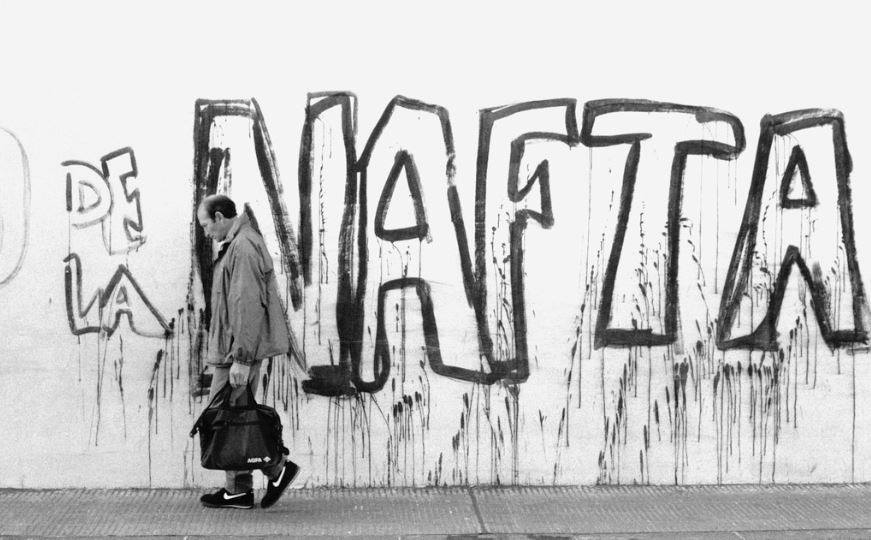
When NAFTA was signed, there had been only a handful of treaty-based arbitrations globally. By 2020, arbitrations had ballooned globally to 1,061 known cases, many of them dealing with challenges to nondiscriminatory public interest regulation. (Woody Wood / Flickr)
On his first day in office, US president Joe Biden revoked the permit for the controversial Keystone XL (KXL) pipeline. The partially built project was supposed to carry bitumen from the Alberta tar sands to Gulf Coast refineries in the United States. Green-lighted by Donald Trump in 2017, but delayed in the courts for years, this climate-busting project is now thankfully dead.
While the pipeline will not be built, the company behind it will almost certainly pursue hefty compensation from Washington, with the Alberta government at its side. To do this, they will sidestep the regular court system and appeal to the North American Free Trade Agreement’s (NAFTA) decommissioned investor-state dispute settlement (ISDS) mechanism.
These clauses may seem technical, and they’ve long been hidden away from proper democratic scrutiny. But they give companies the power to sue elected governments for making decisions in the interests of their citizens. The Keystone XL case should be the catalyst for a fightback against the threat ISDS clauses pose to democracy.