El Salvador President Nayib Bukele Has Blood on His Hands
An attack on El Salvador’s main opposition party has left two people dead and amounts to one of the worst acts of political violence since the peace accords signing in 1992. The country’s right-wing president, Nayib Bukele, should be held responsible for helping to stoke the violence.
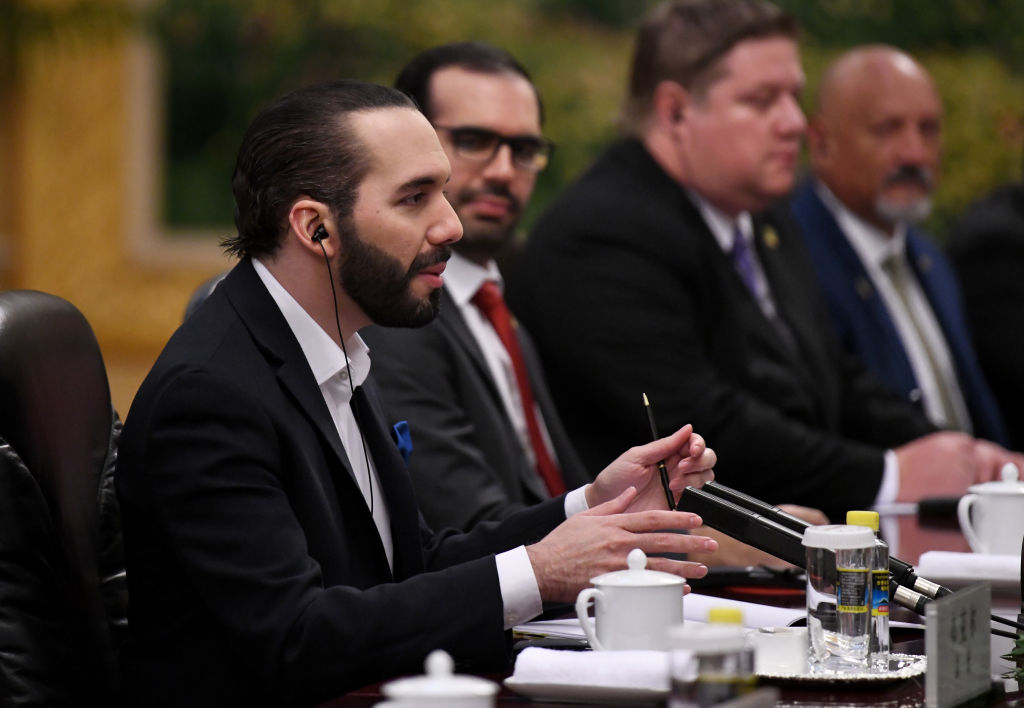
El Salvador president Nayib Bukele talks at the Great Hall of the People on December 3, 2019 in Beijing, China. (Noel Celis / Getty Images)
On the evening of Sunday, January 31, a pickup truck carrying members of El Salvador’s main opposition party, the Farabundo Martí National Liberation Front (FMLN), was intercepted. The truck had been traveling from a campaign event in the capital, San Salvador, when three assailants stopped the vehicle and opened fire. Two people were killed: Juan de Dios Tejada and Gloria Rogel del Cid, both veterans of the civil war between the FMLN and the US-backed military dictatorship. Three more were wounded.
Rather than condemn the violence, President Nayib Bukele responded by spreading conspiracy theories, reversing the roles between the assailants and their victims. Bukele, the thirty-nine-year-old millionaire who campaigned as an irreverent and rebellious political outsider, has waged a hate-filled crusade against the FMLN ever since his expulsion from the party in 2017. Using social networks, private digital media, and the government communication apparatus, the president has targeted his former party with relentless incendiary insults and disinformation.
Moments after the attack, Bukele insinuated that the shooting was a false flag, contrived by the FMLN itself: “It appears that the dying parties have begun their final plan. So desperate not to lose their privileges and their corruption. I thought they couldn’t stoop any lower, but they did,” he tweeted. Following revelations that one of the suspects was an agent of the National Civil Police, assigned to the Health Ministry with the Protection of Important Persons unit (PPI, in Spanish), Bukele changed tactics and claimed the attack was actually an armed confrontation between both parties.