How Class-Conscious Women Garment Workers Shaped the Movement for Women’s Suffrage
On the one-hundredth anniversary of American women’s right to vote, let’s remember the working-class socialist suffragists who struggled for the franchise. And let’s devote the next hundred years to realizing their vision.
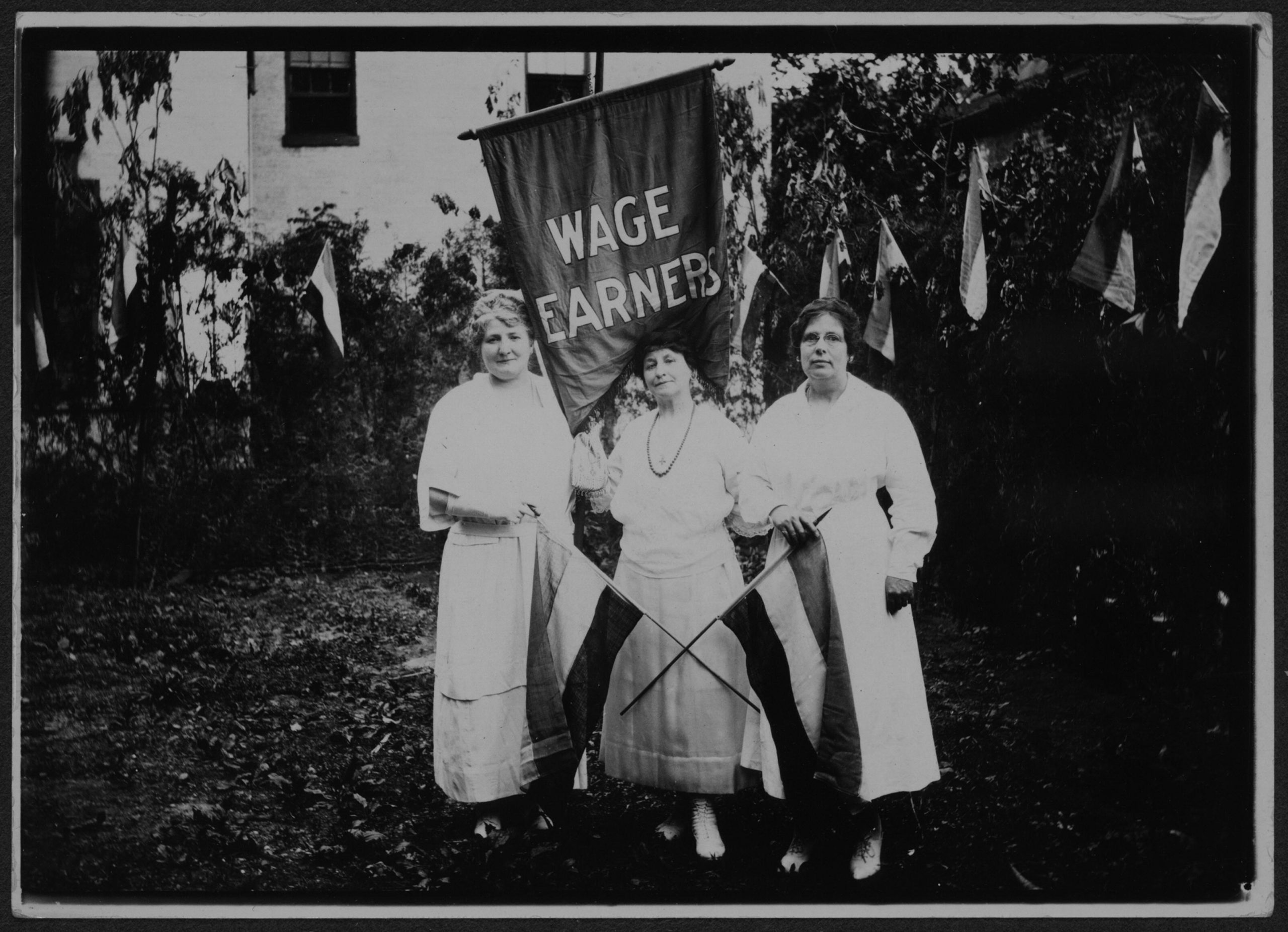
Three National Woman’s Party members with “Wage Earners” banner during the dedication ceremonies for the Alva E. Belmont House, 1922. Photo: Library of Congress
American women pursued the right to vote for nearly a century. Many suffragists died before they could see their vision realized, having lived their whole lives without ever casting a ballot. When women won the franchise, it was not a destination along the inexorable march of progress but rather a reward for decades of great struggle and sacrifice. On August 26, 1920, the adoption of the Nineteenth Amendment was certified, one hundred years ago today.
The movement for women’s suffrage was national and indeed international, but if there was a focal point in the United States, it was the state of New York. The first women’s rights convention was held in 1848 in Seneca Falls, New York. The state was home to two of the movement’s leading lights: Susan B. Anthony and Elizabeth Cady Stanton. Their organization, the National Woman Suffrage Association, was formed in New York in 1869. Its successor organization, the National American Woman Suffrage Association, which spearheaded the final push to suffrage, was also headquartered in New York.
In order to develop a full picture of the political forces that combined to produce women’s suffrage, we must comprehend what transpired in New York specifically. And we can’t properly tell the story of women’s suffrage in New York state without accounting for the importance of the working-class immigrant women of its garment-industry cities, from New York City to Rochester.