To Defund the Police, We Have to Dethrone the Law Enforcement Lobby
Police unions, prison guard unions, district attorney associations, and others in the law enforcement lobby have long wielded their power to nix any reforms that attack the carceral state. To defund the police, we’ll have to challenge their power head-on.
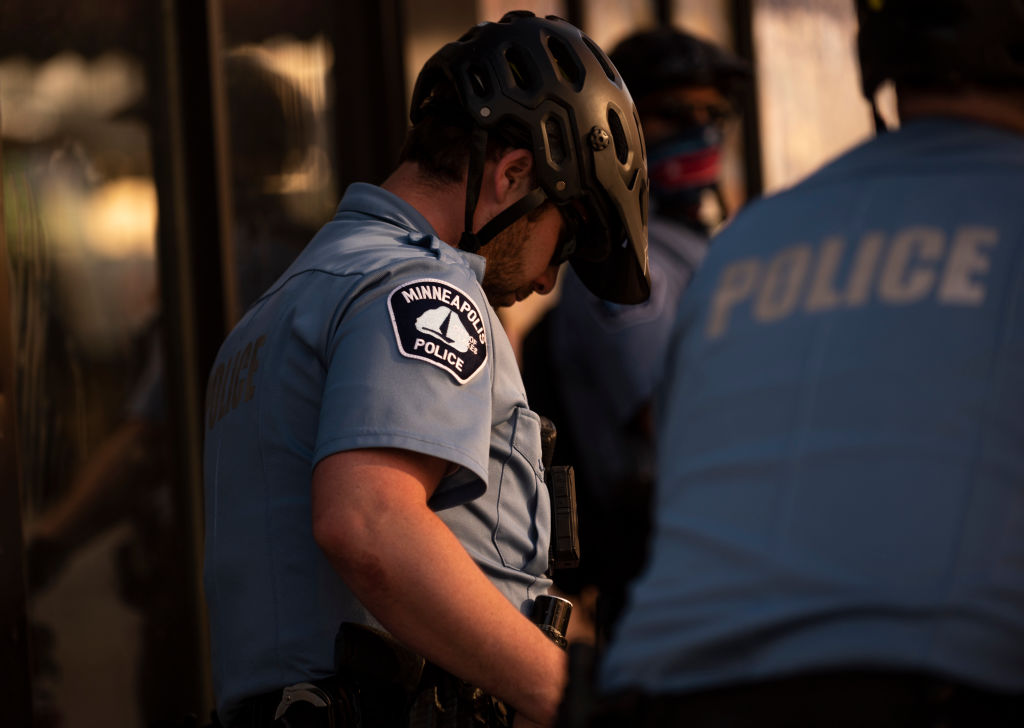
Members of the Minneapolis Police Department on June 11, 2020 in Minneapolis, Minnesota. (Stephen Maturen / Getty Images)
In recent weeks, as protests erupted in Minneapolis and around the country over the police killing of George Floyd, Minnesota lawmakers promised quick action: they’d make it easier to fire abusive officers, raise the standard for using deadly force, give the attorney general (rather than local district attorneys) the authority to charge and prosecute abusive cops, ban choke holds and “warrior-style” training, and fund community-based violence intervention programs. These measures wouldn’t defund or dismantle the police. They were quite modest, given the breadth of protests and radical demands emanating from the movement. Still, on the morning of June 20, the Minnesota Legislature ended its special session without passing a single police bill.
In a moment of deep pain and anguish, with hundreds of thousands of people taking to the streets to press for an end to state violence — risking their safety from police reprisal and coronavirus — how can lawmakers turn their backs on this uprising?
The answer for many is police unions. But the problem isn’t just the police or other law enforcement unions. Scholarship on criminal justice policymaking in the United States finds that a multisided law enforcement lobby, made up of prison guard unions, district attorney associations, sheriffs’ associations, police chief organizations, and, yes, police unions, wields inordinate power. In our research on California, Florida, Texas, and other states, we’ve chronicled how the lobby has blocked efforts to change sentencing laws, abolish solitary confinement, outlaw capital punishment, close prisons and jails, end commercial bail, and on and on. Legislators tell us outright: major reform legislation has little chance of passing unless law enforcement is on board (or gets out of the way).