El Salvador’s Neoliberal Populism Runs Into Coronavirus
El Salvador’s president, Nayib Bukele, is enforcing one of the strictest social distancing orders in the world, subjecting thousands to arrest and expanding an already ravenous and bloated prison system. With millions facing destitution and abuse, coronavirus is laying bare the instability that has always been at the core of neoliberalism in countries like El Salvador.
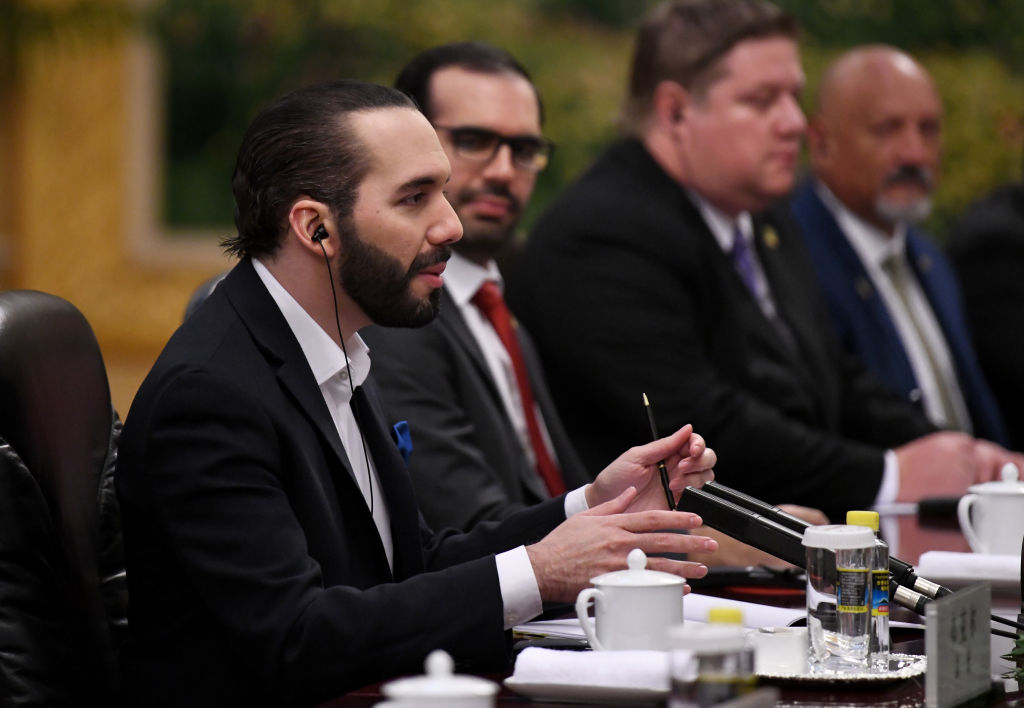
El Salvador president Nayib Bukele talks at the Great Hall of the People on December 3, 2019 in Beijing, China. (Noel Celis / Getty Images)
For a few brief moments in March, it looked like El Salvador might be stumbling towards a relatively orderly period of mandatory self-isolation.
President Nayib Bukele, an aspiring autocrat, gambled on an absurd display of political theater in February, weeks before the first cases of COVID-19 were reported in Central America. During a budget dispute that hinged on security funding, he mobilized soldiers to encircle the legislative chamber prior to his entrance, evoking El Salvador’s history of military dictatorship.
But he paid a high political price for those antics: social organizations around the country condemned the “Bukelazo,” and opposition parties like the FMLN took legal action against his administration. Going into the coronavirus crisis, Bukele’s authoritarian tendencies appeared limited, to an extent, by popular pressure and political opposition.