Privacy Versus Health Is a False Trade-Off
As tech firms team up with governments to fight the coronavirus pandemic, we’re being asked to accept a trade-off between our digital privacy and our health. It’s a false choice: we can achieve the public health benefits of data without accepting abusive and illicit surveillance.
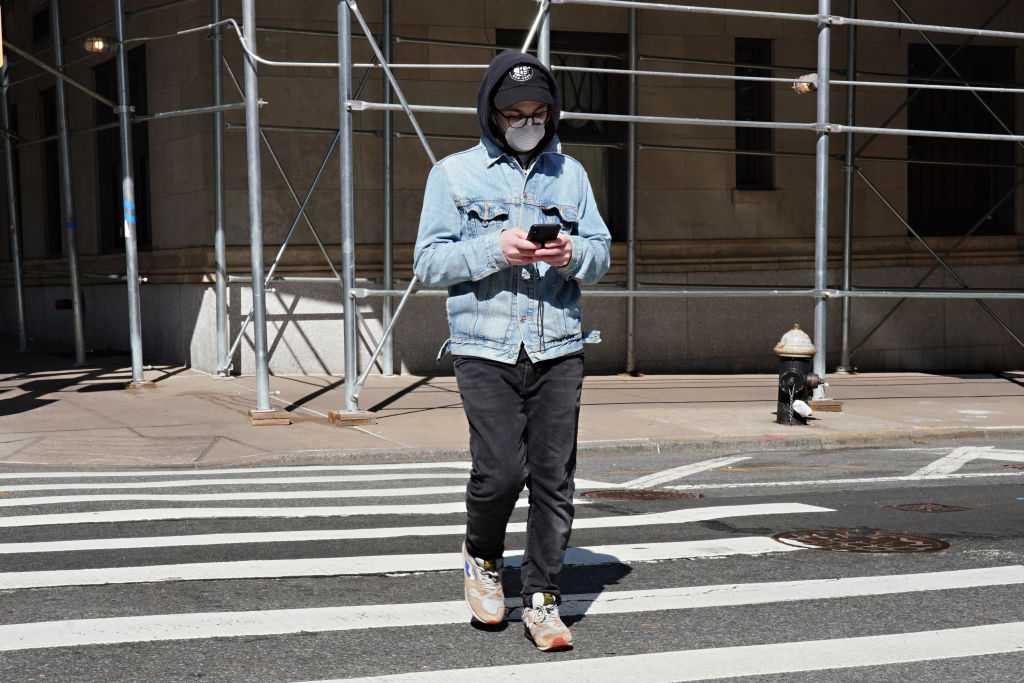
A man wearing a protective mask uses his phone during the coronavirus pandemic on April 15, 2020 in New York City.Cindy Ord / Getty
As the world scrambles to stop the coronavirus pandemic, governments and technology companies have begun exploring new partnerships to track the spread of COVID-19 and target preventative interventions. Emerging reports about these collaborations have sparked a debate: do you want privacy or public health? Despite its beguiling simplicity, this question presents a false choice. Rather than accept this trade-off at face value, we must instead recognize that responding to the pandemic effectively and democratically — protecting health and privacy — requires reimagining how personal data is collected and governed.
Rather than privacy being an inhibitor of public health (or vice versa), our eroded privacy stems from the same exploitative logics that undergird our inadequate capacity to fund and provide public health. Addressing the pandemic requires first addressing these underlying forms of exploitation.
Tracking the Virus
Combating COVID-19 clearly requires good data. The statistics and models that inform the worldwide pandemic response require comprehensive and accurate information about who has been infected and how, and which interventions did or did not work. For instance, South Korea credits widespread testing as a central component of its successful effort to contain the coronavirus. Sharing clinical research data will also be essential to developing effective and safe coronavirus tests and vaccines, allowing public health officials and researchers to assess which interventions hold promise and to disseminate effective treatment rapidly.