Wall Street Is High on Government Supply
For more than a decade, the US government has been taking over ever larger portions of the financial system to prop up shaky markets. It hasn’t worked. We need a real socialization of finance — for the majority, not the banks.
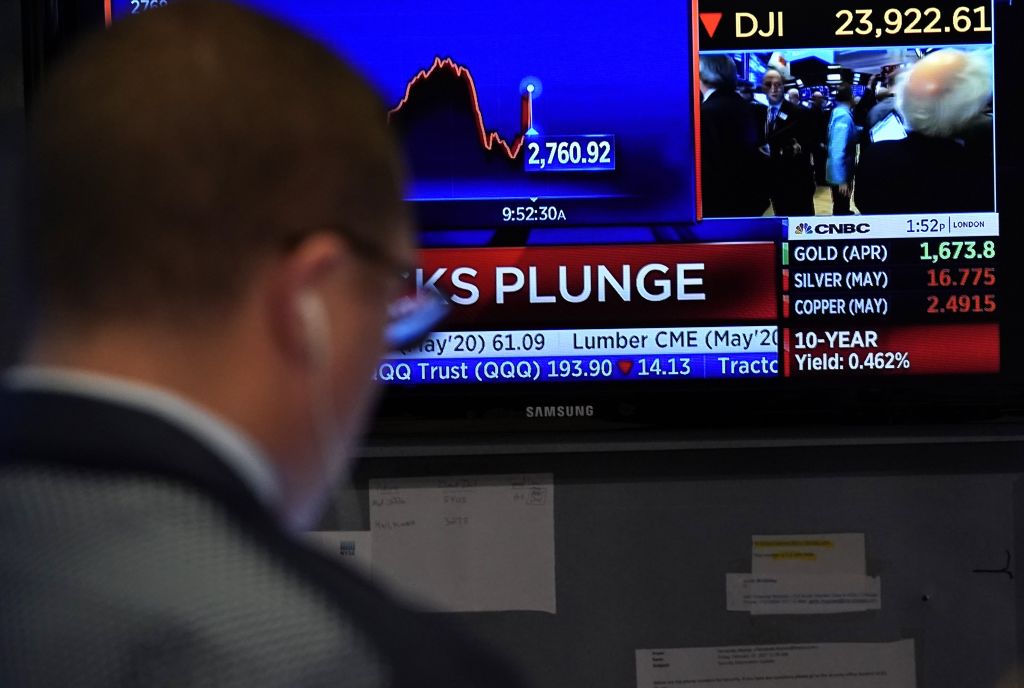
Traders work on the floor during the opening bell on the New York Stock Exchange on March 9, 2020 in New York.Timothy A. Clary / AFP via Getty
In the last week of February, the stock market saw its fourth most severe decline in modern history. On February 27 the Dow Jones Industrial Average and S&P 500 both suffered their fastest ever “corrections” (defined as a drop of 10 percent or more). The Dow dropped 12 percent. The S&P fell 11 percent. On Tuesday, March 3, the Federal Reserve intervened with an emergency rate cut of fifty basis points or half a percentage point — the first unplanned rate cut since the height of the 2008 crisis. But the emergency response did little to stop the downward slide of financial markets.
All this despite the fact that by conventional metrics the economy has been in good shape as of late: the lowest unemployment rates since the late 1960s, low inflation, and even some moderate wage growth.
The sell-off was triggered by the coronavirus, or rather the economic impact of efforts to contain it. But the outbreak was only the trip wire. The deeper causes of this crisis are decades of neoliberal austerity, asset stripping, and underinvestment in the real economy coupled with massive flows of cheap money from the Federal Reserve to the financial sector.