Wall Street Bonuses Are Out of Control
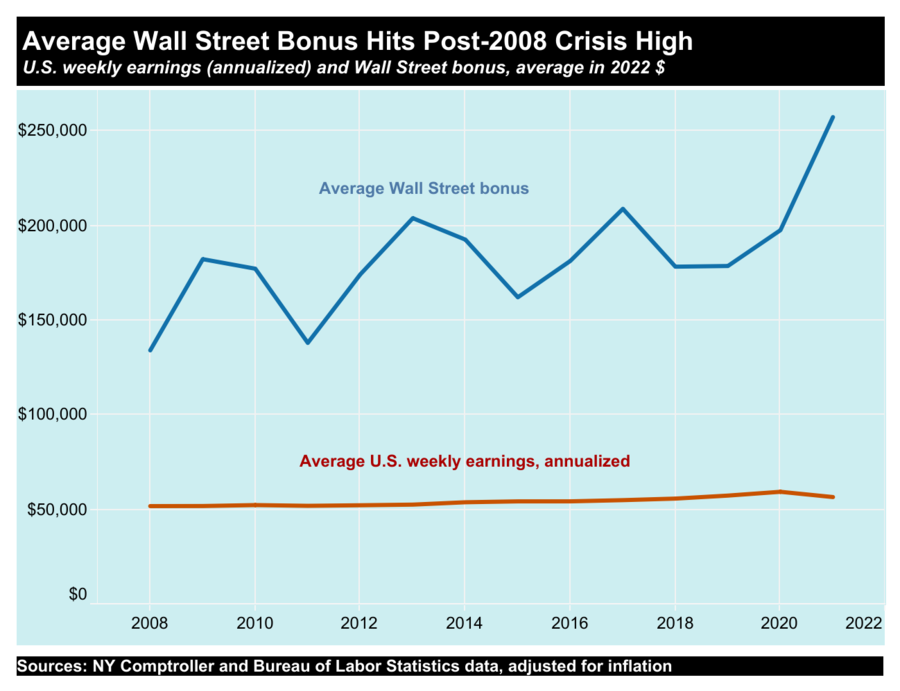
As workers struggled throughout the pandemic, Wall Street bonuses hit a nearly 15-year high.

Since 1985, Wall Street bonuses have increased an astonishing 1,743 percent. (Timothy A. Clary / AFP via Getty Images)
At the zenith of the Reagan revolution and since, the market has consistently been defended on grounds of its supposed efficiency. Market outcomes, or so the argument goes, may not always yield egalitarian results but they do at least allocate resources effectively and reward productive activity. But evidence is plentiful that the hyper-financialization of America’s economy has actually had something like the opposite effect.
According to findings from the Economic Policy Institute, the growth in worker productivity over the past seventy years hasn’t been mirrored by anything like a commensurate increase in wages. In recent decades, however, compensation for those now at the commanding heights of financial activity has ballooned — average Wall Street bonuses growing by an astonishing 1,743 percent since 1985 when adjusted for inflation (had the minimum wage grown at the same rate, it would currently be $61.75 rather than a meager $7.25).