Kreuzberg Against the Machine
How the West Berlin squatter scene produced Germany’s greatest rock band.
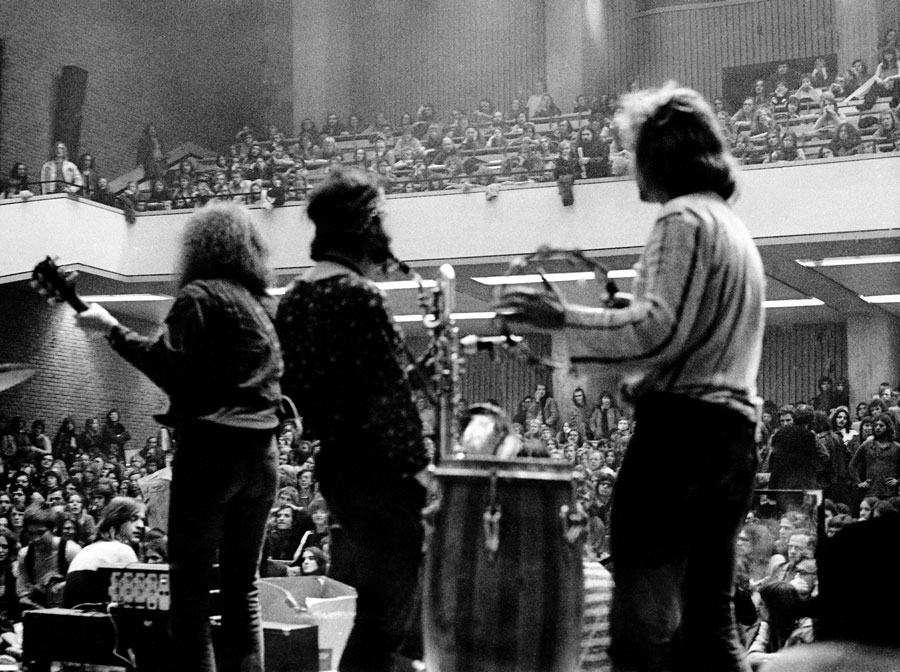
Ton Steine Scherben concert in the Technical University hours before the occupation (Photo by Jutta Matthess / Umbruch Bildarchiv).
If you’ve ever studied at a German university you’ve probably witnessed some kind of “occupation.” In most of these rather curious spectacles several hundred indignant students refuse to leave a lecture hall until their demands are met, while wizened administrators humor them for a few hours before they trickle home and things return to normal.
Both sides know the drill. One working group drafts a mission statement, another cooks food (probably vegan), and the police wait outside annoyed. Over the course of any occupation someone inevitably puts on the music of Ton Steine Scherben, the West Berlin rock band whose 1972 double LP Keine Macht für Niemand (“No Power for Nobody”) is a both a pop music treasure and an angry broadside against the status quo, delivered with an earnestness and enthusiasm that would make most listeners cringe if recorded today.
The album was a milestone for rock music performed in the German language and remains popular to this day. But what makes it particularly unique (and explains its exuberant sloganeering) is the environment from which it emerged: West Germany’s militant squatter movement in the early 1970s.