Belgium’s Hottest Winter
Tens of thousands of students in Europe have launched "school strikes" to demand a Green New Deal and reject their governments' moderation on climate change.
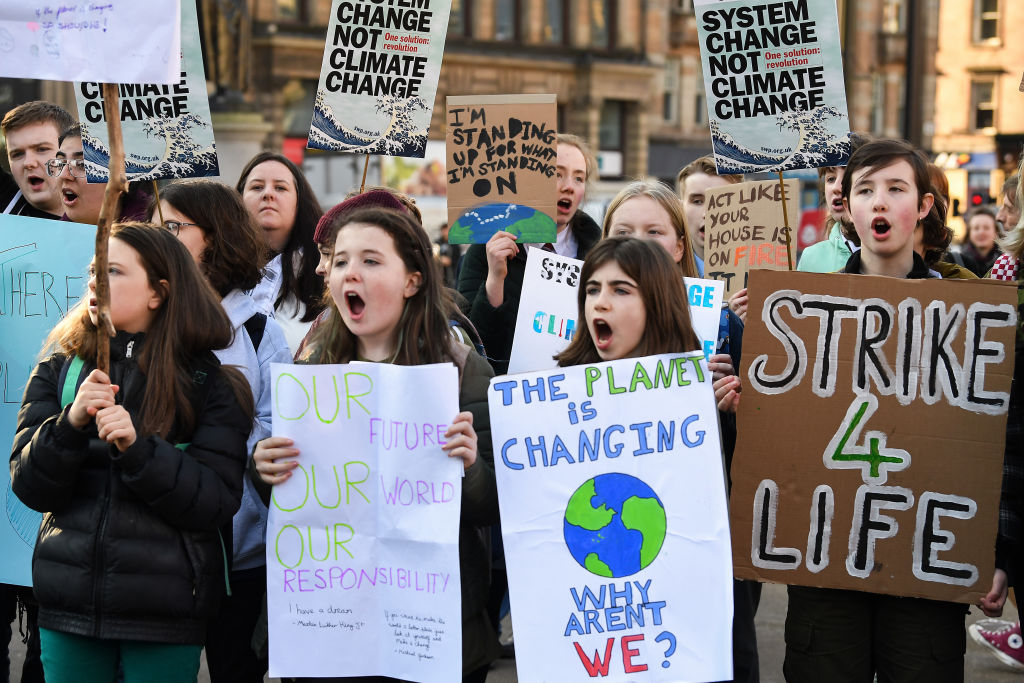
Schoolchildren take part in a nationwide student climate march in George Square on February 15, 2019 in Glasgow, United Kingdom. (Jeff J Mitchell / Getty Images)
On December 29, two Belgian girls launched a call for a school students’ strike in defense of the climate. Angered by the Belgian government’s lack of climate policy, they were also inspired by the example of Swedish sixteen-year-old Greta Thunberg, who had started a similar strike in her country. Nobody expected a big turnout; the girls themselves hoped for a few dozens of protesters. The most important thing was to give the signal that they cared. But two weeks later, the country was stunned as a least three thousand school kids marched through the streets of Brussels in an unauthorized but enthusiastic demonstration.
Stern responses piled in to dismiss their efforts. “I am not a fan of religious fundamentalism, or of climate fundamentalism either.” Thus spoke Rik Torfs, former headmaster of the Catholic University of Louvain. “The climate movement seems friendly enough, but it is infiltrated by the Belgian Workers’ Party and other extremists,” tweeted liberal economist Geert Noels.
The school kids’ response? “Thanks for underestimating us.” The following week, 12,500 took to the streets the week after. “All this striking is seriously damaging the youth’s development” droned Peter De Roover, leader of the hard-right N-VA fraction in parliament. “Smartphones don’t grow on trees,” warned Marc De Vos of think tank Itinera. But by January 24, thirty-five thousand school kids were out in the streets, demanding an ambitious climate policy.