The Long Transition
Four decades since the passing of Spain's democratic Constitution, the "regime of '78" is sharply criticized by the Left and the Catalan independence movements. Yet former prime minister Felipe González still defends it.
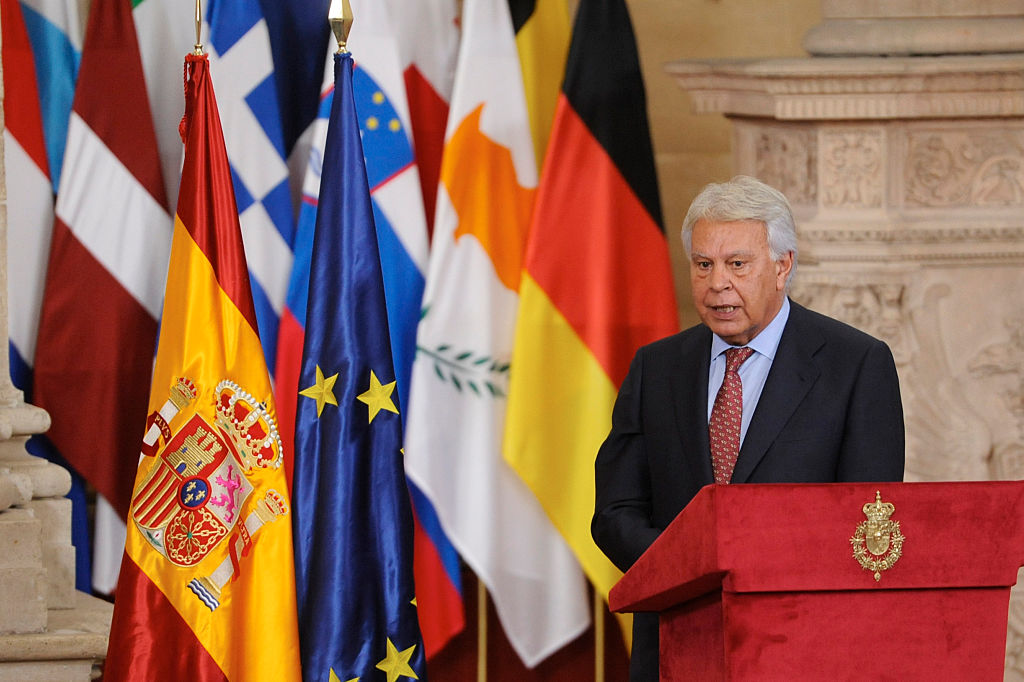
Former Spanish Prime Minister Felipe Gonzalez at the Royal Palace on June 24, 2015 in Madrid, Spain. Ricardo Garcia – Pool / Getty Images
Spanish democracy is entering middle age. After General Francisco Franco died on November 20, 1975, King Juan Carlos was sworn in as head of state, as the dictator had planned. The royally appointed prime minister, Adolfo Suárez of the center-right Union of the Democratic Center (UCD), won the first elections in June 1977, which were swiftly followed by the Moncloa Pacts.
In this agreement, the major political players agreed to prioritize reform over rupture via a series of emergency measures designed to address Spain’s structural deficits. At a time of economic recession in which democracy was repeatedly held to ransom both by regime nostalgists and the Basque separatist group ETA, this spirit of consensus and moderation formed the basis of an expedient democratic constitution, ratified by referendum on December 6, 1978. Given these beleaguered origins, the document has proven surprisingly resilient.
This is no mean feat in a country lacking a strong tradition of stable parliamentary democracy, with Spaniards prone to become jaded. The future appeared particularly rocky at the start of 1981. Escalating violence and tensions forced the resignation of Suárez, who no longer enjoyed the king’s personal and political support.