Ninety-Minute Nationalists
Yugoslavia’s communists recruited so many football players that some even joined the partisans while still wearing their kits. But today, football in the Balkans is famous for its far-right extremism.
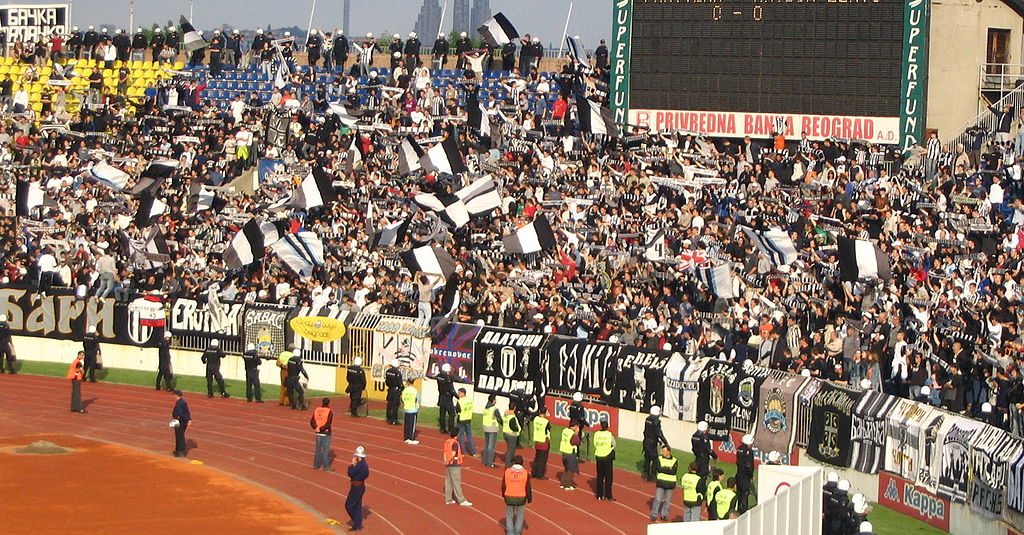
Grobari, fans of FK Partizan, celebrate their nineteenth champions title, 2005.Grobar / Wikimedia
Football grounds in the former Yugoslavia have a grim record of sectarian violence. After the collapse of the postwar socialist state and the region’s descent into all-out war in the 1990s, some stadiums were used for prison camps and even for mass executions. Even in more recent times, football in the Balkans has been marred by violent hooliganism and player and fan tributes to war criminals.
But if football sometimes puts on show the ugliest aspects of the Balkans, this was not always the case. In the first part of the twentieth century, Yugoslavia had a rich tradition of workers’ sport clubs, and even before the partisans of 1941–45 finally drove out the Nazi occupation, the communists had begun using football to promote an internationalist and anti-fascist identity for the new Yugoslavia.
This all ended in 1990, with a football riot often (exaggeratedly) claimed to have triggered the final downfall of Yugoslavia. But can sport drive political change, or does it just reflect existing social mores? Jacobin asked Richard Mills, author of The Politics of Football in Yugoslavia: Sport, Nationalism and the State, to explain how football in the Balkans turned from a tool of coexistence into an arena of conflict.