When Cameroon Convinced Themselves They Couldn’t Win
Why do African teams struggle in the World Cup? It has everything to do with colonialism.
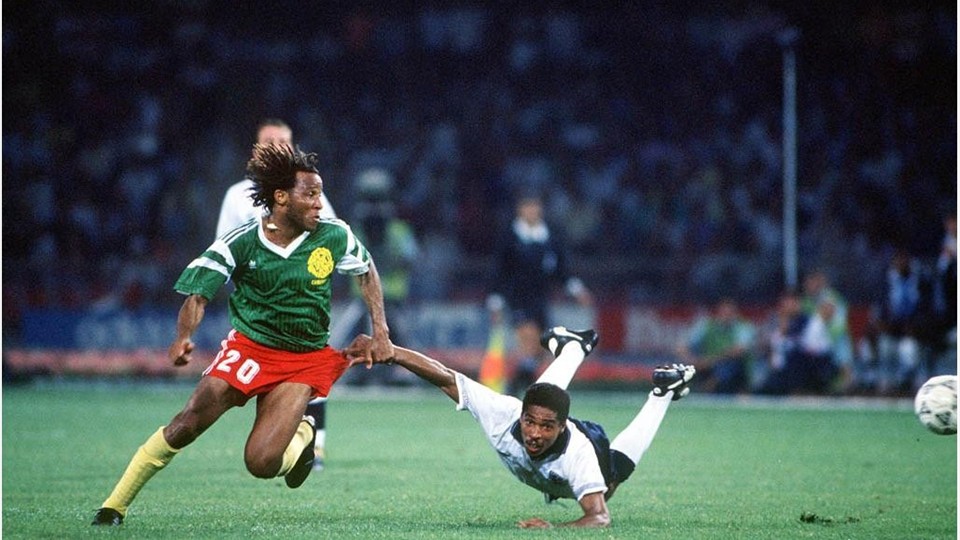
Popper Foto / fifa.com
If the spirits of Frantz Fanon and Steve Biko were hovering unseen above a football stadium in Naples in July, 1990, they would not have liked what they saw. But they would have found it sadly predictable.
The stadium hosted a World Cup quarter-final between Cameroon and England. The more skilled team, Cameroon, lost. They were beaten not by England but by themselves.
The 1990 Cameroon team captivated football fans around the world — especially those in South Africa. This was the country’s first live televised World Cup (previously fans had to make do with watching matches at clubs or restaurants a couple of days late) and the first after the bans on liberation movements were lifted and the negotiations which ended apartheid began. Although South Africa was two years away from competing in international football (beginning, not by accident, with a match against Cameroon), this was the first time South Africans could identify in real time with a team representing Africa. Cameroon would have generated excitement even in less heady times — they turned out to be probably the best African team to play in a World Cup finals.