After We Sacked the Ministers
Last winter, powerful student protests in Albania forced the removal of half the cabinet. Amidst the chaos in the country’s institutions, it’s time to put an end to decades of privatization and rampant speculation.
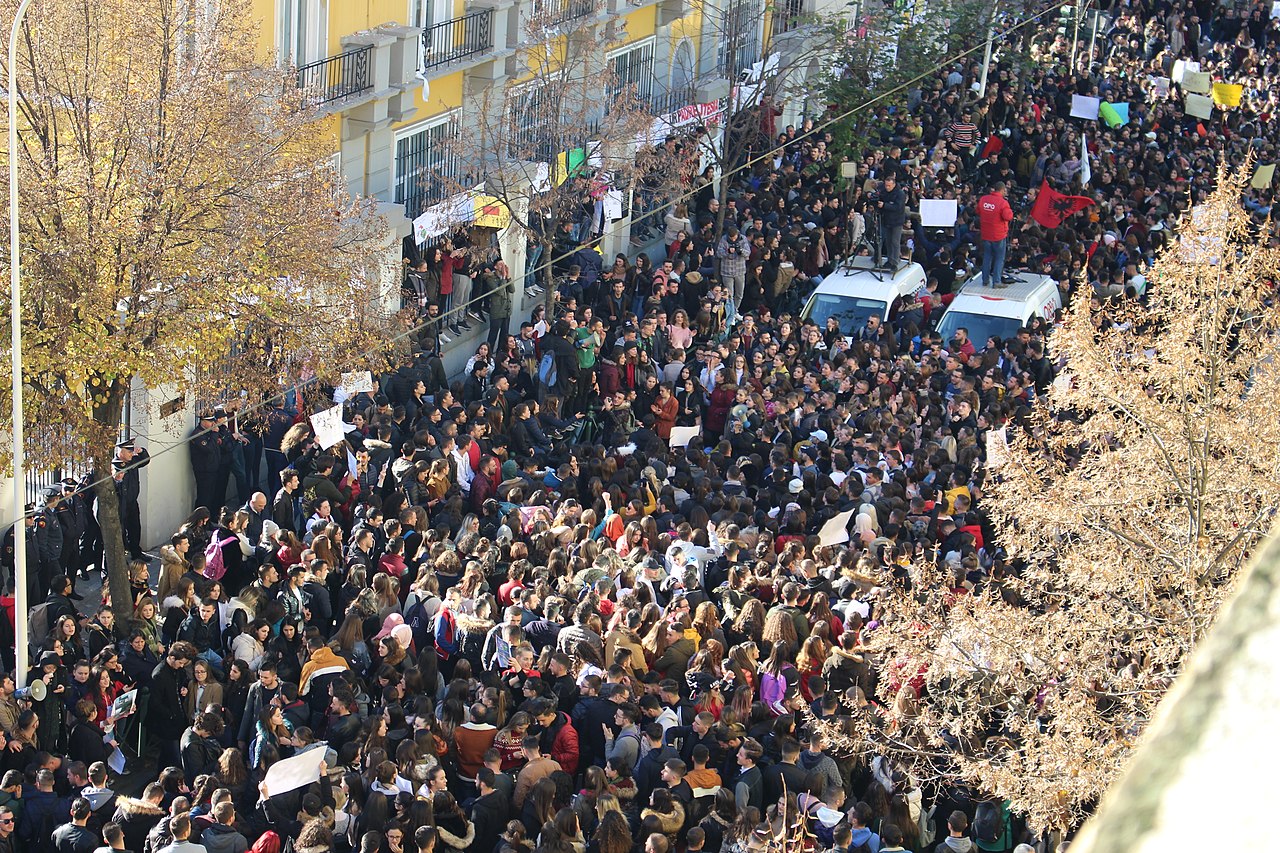
Students protest in Albania, December 7, 2018.Kristina Millona / Wikimedia
Albania’s democratic history appears as a vast accumulation of political crises. The country’s public life is marked by a constant series of corruption scandals, criminal allegations, and rigged elections. But if in the past solutions seemed always viable, never were Albania’s key institutions so totally engulfed by chaos as they are today. The opposition has renounced its seats in parliament, while those MPs who remain have started proceedings to impeach the president.
This upheaval in the state apparatus may not yet be the “revolution” the opposition has called for. But today, as new actors come to the fore of Albanian public life, and foreign powers directly intervene in its judicial system, the situation seems pregnant with the rise of something new. Albania is today seeing an upheaval in the ways of doing politics that had become established since the transition to capitalism in the early 1990s.
The chaos at the top of Albanian politics is, in part, the result of pressure from below. Over the end of 2018 and the start of 2019 Albania was shaken by a student protest movement unprecedented since the one that helped bring down the Communist regime at the turn of the 1990s.