Girls to the Rescue
Workers need independent and strong unions, not corporate-sponsored NGOs, to fight their bosses and support their families.
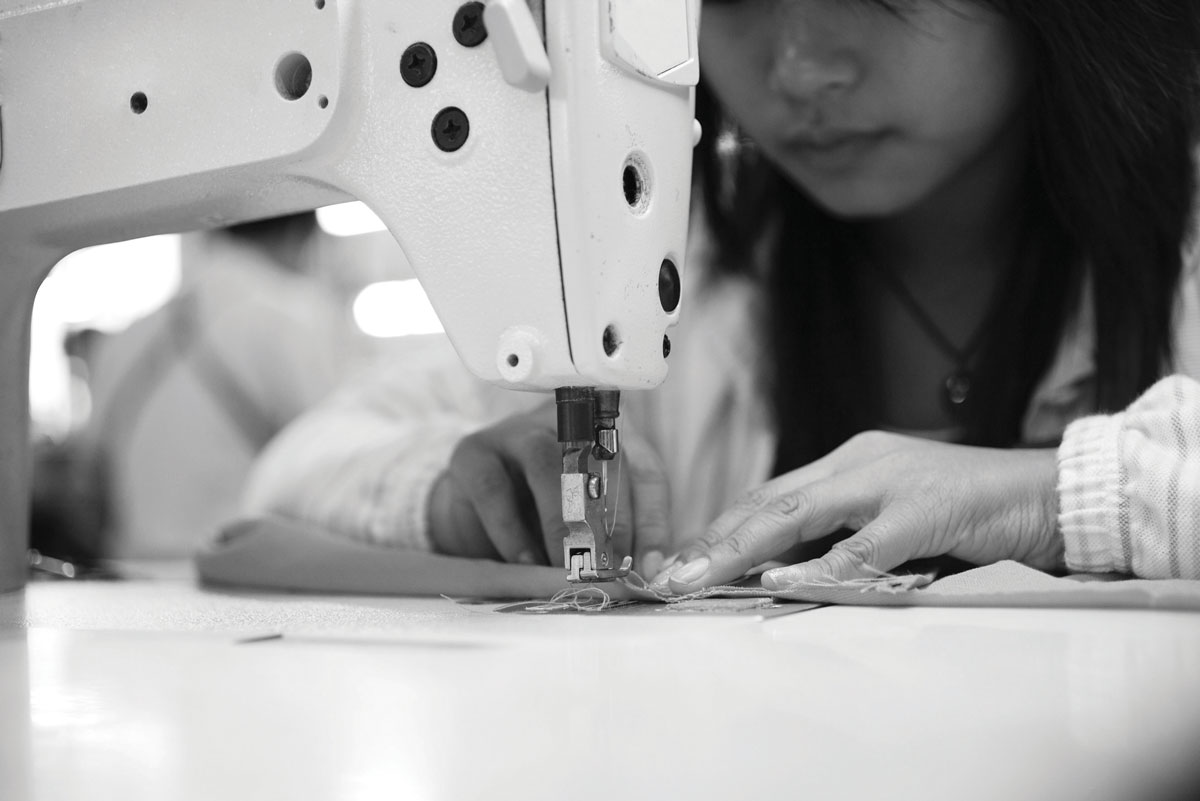
Guangdong Province, China: Worker using sewing machine in textile factory — James Hardy / AltoPress.
Fashion has long had a love/hate relationship with youth. As consumers, the kids are alright — influencers, even — but as laborers in textile factories, they’ve been known to reduce Kathy Lee Gifford to tears on national television. When a litany of bad press and the work of groups like United Students Against Sweatshops brought the idea of sweat-free apparel to the mainstream in the late 1990s, brand executives were faced with two choices: give up the overwhelming powers they had accumulated under globalization, or change the way that consumers understood their power.
They went the public-relations route. Rebranding themselves from pariahs to ethical businesses — and rhetorically repositioning themselves on the side of the sweatshop worker — meant that corporations had to replace the anti-sweatshop activist language of conflict and accountability with the logic of “win-win” partnerships, responsible business ethics, collective challenges, and “continuous learning journeys.”
They pulled the sweatshop issue away from unions and campus activists and into the domain of the business school, the NGO, and the United Nations. In the new environment, blame was shifted to transnational corporations’ business partners, the factory bosses. Since brands were the only actors with real bargaining power over the factories they contracted with, they argued that they were in a unique position to coach their partners toward humane treatment of workers. Corporate power had to be seen as a force to be harnessed through collaborative self-regulation with NGOs, rather than curbed through regulators and unions.