The Wall and the Sea
Steve Bannon thinks the Mediterranean can be a laboratory for anti-migrant politics worldwide. Unfortunately, he’s right.
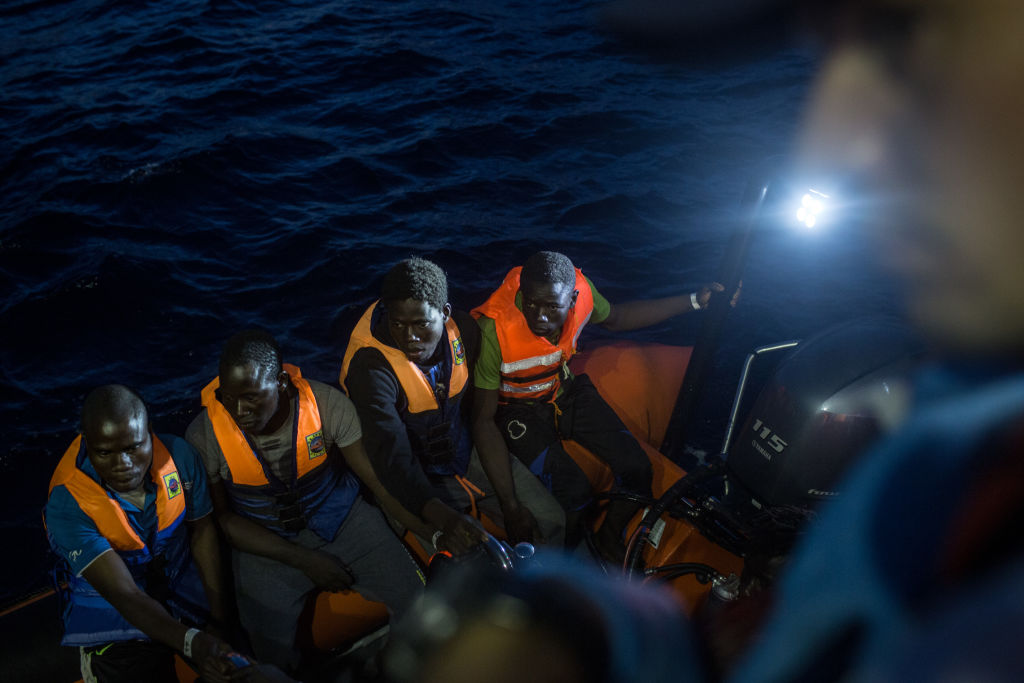
Refugees and migrants after being rescued at sea on June 10, 2017 off Lampedusa, Italy. Chris McGrath / Getty
Anti-migrant politics made a major advance in June as Italy’s “anti-establishment” Five Star Movement and the virulently racist League formed a new government, with hard-right leader Matteo Salvini as interior minister. What has unfolded since is highly reminiscent of the United States’ journey under Trump. The Italian hard right, in fact, is directly supported by America’s most famous white nationalist, former Trump adviser Steve Bannon. He traveled to Italy several times this year and praised the new government’s anti-migrant crackdown. “If it works in Italy, it is going to work everywhere,” Bannon mused.
Bannon is right that Italy could be a laboratory for anti-migrant politics everywhere. In recent years, its proximity to war-ravaged Libya has made it the key point of entry for African migration to the European continent. As immigration has become central to European Union politics, Italy has become central to the immigration debate. Now its new government is pushing a Trumpian approach to immigration. Fighting the new status quo will require understanding the policies governments are implementing on both sides of the Atlantic, as well as the strategies that migrant solidarity movements have pursued to confront them.
Safe Passage
Hundreds of thousands of migrants and asylum seekers from Africa and beyond have crossed the Mediterranean in recent years. The collapse of Libya’s government has led to a proliferation of organized crime, including militia groups and smuggling networks who have made the transportation of migrants their business. Their human cargo risks detention, torture, forced labor, enslavement, or even death in the hope of eventually reaching Europe. There, they seek relief from the persecution and violence of their home countries — or simply a livelihood for themselves and their families. Many will remain in Italy, due to a European regulation that stipulates that asylum seekers must claim asylum in the first country they arrive in.