Year of the Zombie
George Romero’s Night of the Living Dead showed a new society devouring the old.
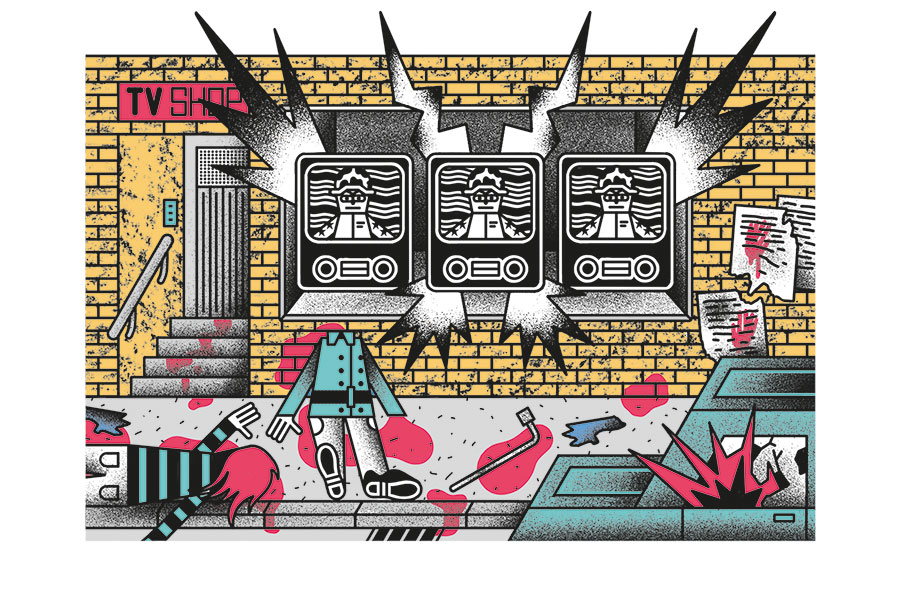
Illustrations by Christoph Kleinstück
The most radical film of 1968 wasn’t French — it was a low-budget horror feature made in Pittsburgh, PA. First-time feature director George A. Romero later said, regarding the way Night of the Living Dead seemed to reflect so many aspects of the violence and despair of that year, that this film like all his zombie films were “snapshots of the time they were made.”

A political lefty living and working in what he called the “dead towns” of Rust Belt Pennsylvania, Romero knew that aspects of the film would be recognized as highly topical. For example, during production, he and his filmmaking partners referred to the harrowing last sequence of the film as the “Search and Destroy” sequence, borrowing language and imagery from the Vietnam War familiar to everyone from tv news coverage. Later when they delivered the final cut of the film to the lab for processing, they heard announced on the car radio the assassination of Martin Luther King Jr. Recalling that Night ends with its protagonist, a black man, gunned down by a white man, they wondered in the guilty manner of obsessed film-makers if this latest horrific real-life event would hurt the film, or help it.